








The Dynamics of the Recent Precious Metal Correction
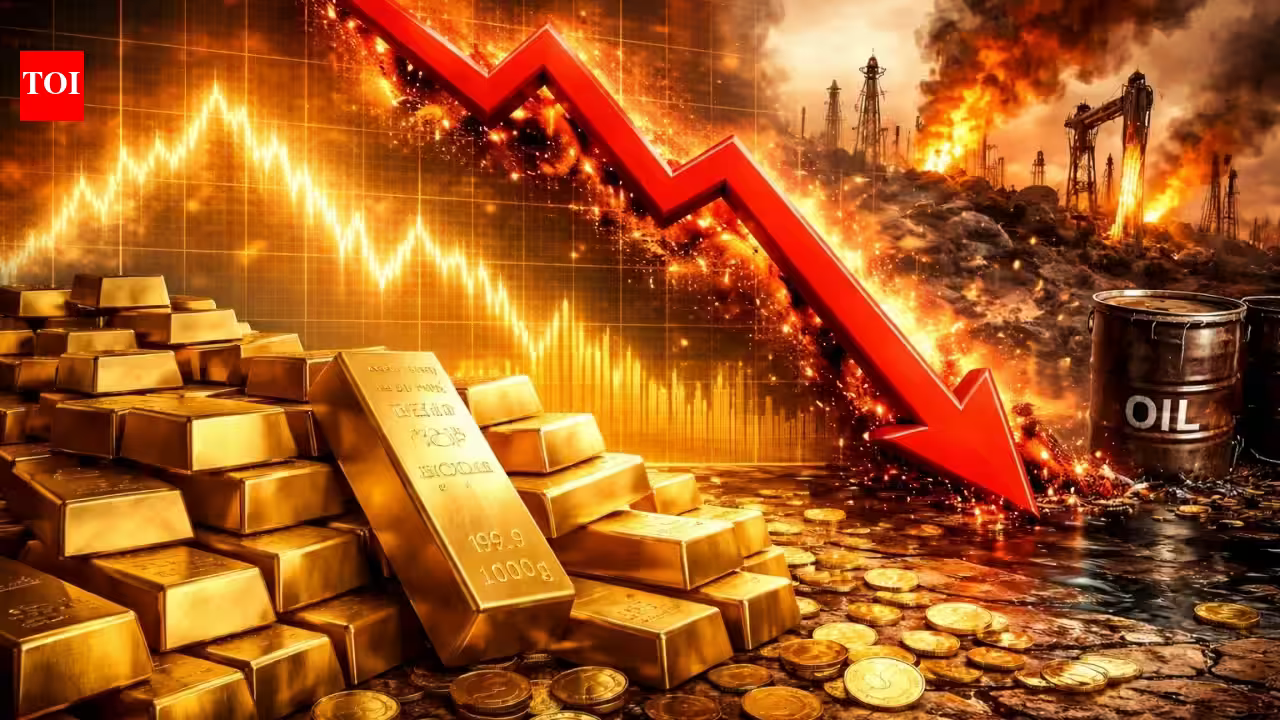
The global commodities market has experienced a significant paradigm shift throughout 2026. After reaching unprecedented peaks in January, both gold and silver have entered a period of pronounced contraction. For investors accustomed to the long-standing narrative of gold as a perpetual hedge against uncertainty, the recent performance serves as a stark reminder of the inverse relationship between non-yielding assets and high-interest-rate environments. MCX Gold, which saw valuations climb toward Rs 1.8 lakh per 10 grams at the start of the year, has retreated by over 25 percent, while silver has endured a sharper decline of nearly 60 percent from its peak of Rs 4.2 lakh per kilogram.
This correction is not merely a localized phenomenon but a consequence of macroeconomic recalibration. The primary driver remains the shift in United States monetary policy. As the Federal Reserve moves toward more aggressive interest rate hikes, the global financial landscape has responded by pivoting toward yield-generating assets. When central banks tighten liquidity and raise interest rates, the opportunity cost of holding gold—an asset that provides no dividends or interest—rises exponentially. Consequently, investors are opting for government bonds and other fixed-income instruments that now offer competitive returns without the volatility associated with precious metals.
The Impact of Federal Reserve Policy on Global Markets
The influence of the US Federal Reserve on the Indian commodity market cannot be overstated. With current market indicators suggesting a 95 percent probability of a 25-basis-point interest rate hike, the strength of the US dollar has become a major headwind for gold prices. A robust dollar inherently makes commodities priced in the currency more expensive for buyers in emerging markets, including India. As the dollar climbs to multi-month highs, the purchasing power of the rupee in the global bullion market is effectively dampened, further depressing demand.
This correlation is intensified by the role of real yields. When inflation remains sticky, but nominal interest rates rise, real yields become more attractive. For the past several years, low or negative real yields fueled the gold bull run. Today, that trend has reversed. As US Treasury yields climb, capital flows out of bullion and into traditional safe-haven debt, removing a primary pillar of support for gold. Analysts observing this cycle note that the current price action is a functional response to expectations of how high the Federal Reserve intends to push the terminal rate. The market is currently undergoing a painful process of price discovery, attempting to establish a floor while grappling with the reality of sustained high-interest policies.
Structural Challenges and Silver’s High-Beta Sensitivity
While gold has suffered a significant decline, the situation for silver is even more precarious. Often described as a high-beta play on gold, silver historically amplifies the movements of its yellow counterpart. Because silver possesses a dual nature as both an investment asset and an industrial metal, it is susceptible to two distinct sets of risks. When industrial demand softens due to concerns over a broader economic slowdown, and when gold prices face downward pressure, silver often witnesses a disproportionate sell-off.
The volatility in silver reflects a lack of structural support. Unlike gold, which is widely held as a core portfolio hedge, silver is frequently traded as a speculative proxy. In the current environment, the lack of a strong industrial growth narrative makes it difficult for silver to decouple from the broader downward trend seen in the precious metals sector. The nearly 60 percent crash from its record high indicates that leveraged positions were likely liquidated in bulk as the market sentiment shifted from optimism to risk mitigation.
Geopolitics and the Inflationary Context
The narrative of this price correction is intertwined with the evolving geopolitical landscape. Earlier in the year, the outbreak of the US-Iran conflict injected significant fear into the markets, driving crude oil prices above $120 per barrel. This spike contributed to inflationary pressures that initially kept gold prices elevated. However, as the market adjusted to the geopolitical environment and focused more heavily on monetary tightening, the inflationary “fear premium” that had bolstered gold began to erode.
In the Indian context, the rising cost of imports—specifically oil—combined with the weakening of the rupee against the dollar, creates a complex environment for domestic consumers. While the price crash in gold might appear favorable for retail buyers, it is shadowed by broader economic concerns. Sustained high prices for energy and imported goods can suppress household savings, which traditionally act as the primary funding source for physical gold purchases in the Indian market. Consequently, while the price of gold per gram is lower, the capacity for the average investor to accumulate wealth through bullion is challenged by the rising cost of living.
Looking Ahead: Is the Market Reaching a Floor?
As investors look toward the minutes of the latest Federal Open Market Committee meeting, the question remains whether the worst of the volatility is behind us. Market analysts suggest that demand in physical markets remains resilient, as long-term investors often view these price corrections as accumulation opportunities. However, the macro-headwinds—specifically the trajectory of US interest rates—remain the dominant force governing the market.
For institutional and retail participants alike, the current cycle highlights the necessity of portfolio diversification. Relying solely on the “gold as a hedge” hypothesis has proven risky in a period where real yields are rising. Investors are now required to account for the impact of central bank liquidity cycles more precisely than they have in the past decade. If inflation continues to moderate, the pressure on the Fed to hike rates may lessen, potentially offering some relief to the precious metals sector. However, until such a signal is clearly articulated, the market will likely remain sensitive to any data that suggests the Fed will maintain a restrictive policy stance.
The current adjustment is a critical period for the gold and silver markets. It serves as a test of the metal’s underlying support levels. As global markets transition from an era of cheap capital to one of disciplined monetary policy, the precious metals sector must adapt to a reality where its value is no longer guaranteed by central bank expansion, but rather contested by the performance of the global bond market.
Disclaimer: This content is auto-generated for informational purposes only.
Source: Read Original News