







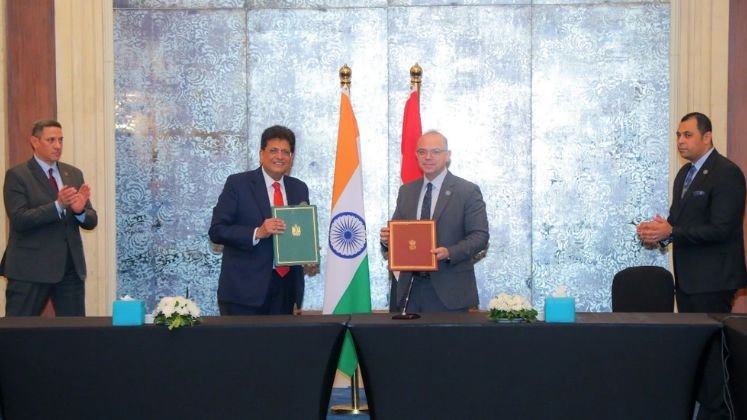
India and Egypt Pave Way for Landmark Trade Agreement to Boost Textiles and Cotton Cooperation
In a significant stride toward strengthening economic ties, India and Egypt have officially committed to exploring a Preferential Trade Agreement (PTA) or a Free Trade Agreement (FTA). The decision, reached during the 7th India-Egypt Joint Trade Committee (JTC) meeting, marks a pivotal shift in bilateral relations, with a specific focus on transforming the textile and cotton sectors into engines of mutual growth.
The ministerial-level meeting, held in Egypt’s New Administrative Capital, was co-chaired by India’s Union Minister of Commerce and Industry, Piyush Goyal, and Egypt’s Minister of Investment and Foreign Trade, Dr. Mohamed Farid Saleh. This historic engagement reflects the growing strategic partnership between the two nations, who are now eyeing a robust roadmap to elevate their economic integration.
A Balanced Approach to Cotton Sourcing
A centerpiece of the discussions was the potential for a new cotton-sourcing arrangement. India, a global textile powerhouse, is seeking access to high-quality Egyptian cotton to meet the increasing demand for high-end exports destined for European and US markets.
Minister Goyal emphasized that while the initiative aims to provide Indian manufacturers with superior raw materials, it will be executed with a cautious, balanced approach. The government intends to structure the deal to ensure that the influx of foreign cotton does not negatively impact the livelihoods of domestic farmers, who remain the backbone of India’s agricultural economy. This dual-focus—protecting local growers while fostering international industrial competitiveness—is expected to be a critical component of the upcoming negotiations.
Rapid Growth in Bilateral Trade
The momentum for a formal trade agreement comes against a backdrop of surging economic cooperation. According to official data from the Ministry of Commerce and Industry, the trade relationship has seen an impressive uptick. Bilateral trade reached US $6.5 billion in FY 2025-26, a 35 per cent increase over the previous year.
The growth trajectory has accelerated further in the current fiscal year; trade volume for the period between April and September 2026 reached US $5.04 billion, representing a dramatic 65 per cent surge compared to the same period in 2025. With both governments reaffirming their goal to reach a US $12 billion trade target, the push for an FTA is seen as the necessary next step to sustain this momentum.
Strategic Geographical Advantages
Beyond cotton, the two nations are exploring deeper synergies in manufacturing and value-added exports. Egypt’s strategic location, providing proximity to the Suez Canal and seamless access to African, Arab, and European markets, offers India a gateway to expand its manufacturing footprint and integrate into regional supply chains. Conversely, India offers Egypt a massive, expanding consumer market and expertise in industrial technology partnerships.
Minister Goyal confirmed that formal negotiations for the trade agreement are slated to commence within the next 90 days. To maintain the pace of progress, the countries have agreed to exchange sector-specific delegations over the next year. These visits will be instrumental in identifying niche opportunities for cooperation and addressing existing trade challenges. As these discussions unfold, the India-Egypt partnership appears poised to become a cornerstone of regional trade, driving industrial modernization and economic prosperity for both nations.
Disclaimer: This content is auto-generated for informational purposes only.
Source: Read Original News