


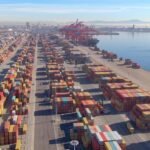



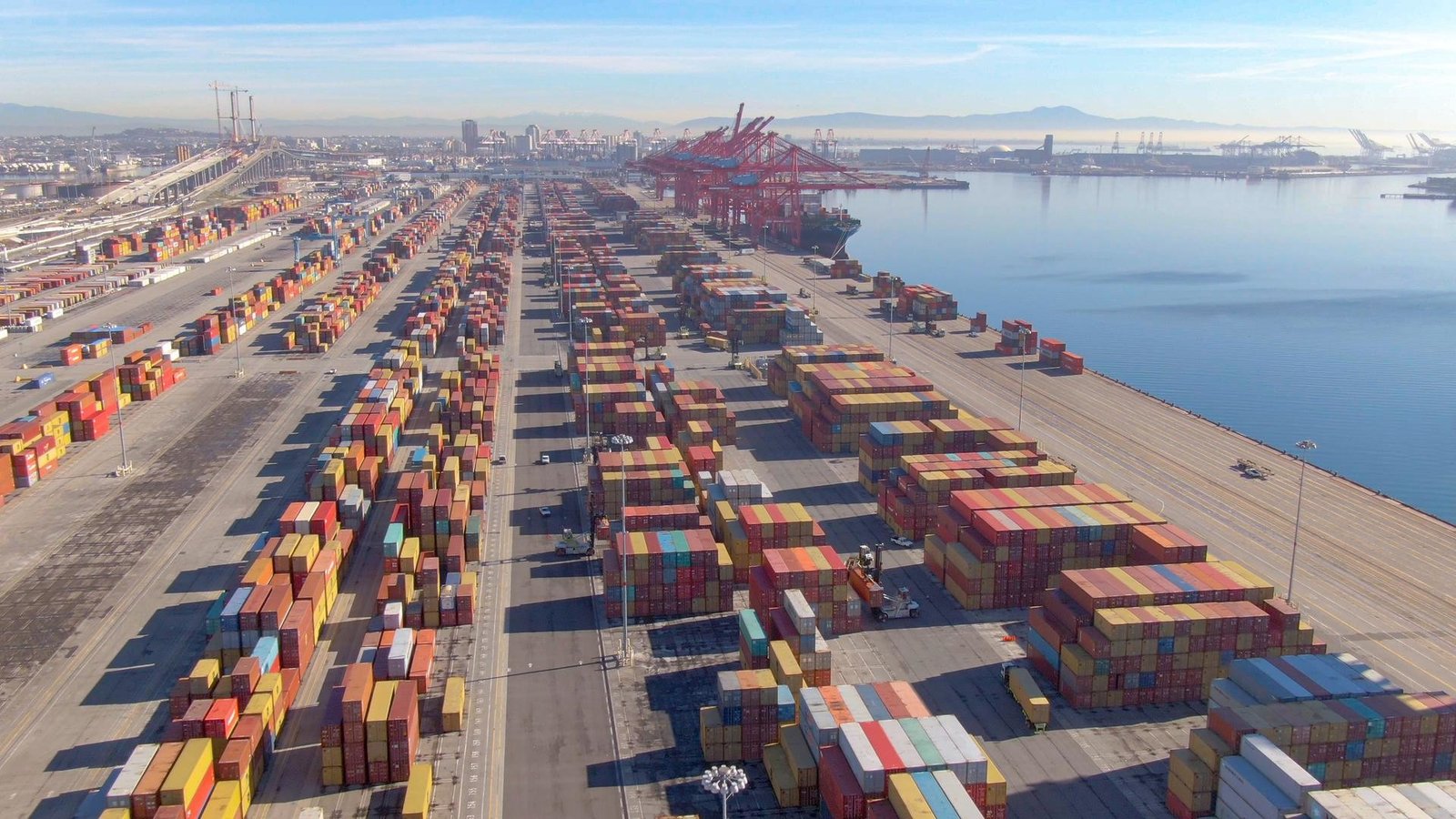
The Port of Long Beach has officially recorded the busiest month in its 116-year history. During September 2026, the facility processed just shy of 1 million TEUs (twenty-foot equivalent units), marking a staggering 25% surge compared to the same month last year. This historic milestone puts the California hub on track for its first-ever 10 million TEU year, with volumes already up 3.9% for the first nine months of 2026.
However, behind these record-breaking figures lies a landscape defined by volatility rather than steady growth. Speaking at the World Ports Conference in London, Port of Long Beach chief executive Noel Hacegaba acknowledged that while the numbers are impressive, they are largely the result of a “perfect storm” of global disruptions.
“We haven’t had a normal year in quite some time,” Hacegaba said.
Current volumes are being heavily influenced by carriers seeking refuge from climate and geopolitical crises. Drought-related transit restrictions at the Panama Canal have diverted significant cargo to the US West Coast, while rising bunker prices—driven by instability in the Middle East—have forced shipping lines to consolidate services onto the massive 24,000-TEU vessels that only elite ports like Long Beach can accommodate.
Looking ahead, the port faces renewed uncertainty. With a trade truce between the US and China extended until January 2027, shippers are currently front-loading cargo to mitigate the risk of looming tariff hikes. While this bolsters immediate demand, it leaves the industry questioning whether the current momentum is sustainable or merely a transient outlier.
Despite these variables, the Port of Long Beach is doubling down on a long-term strategy of expansion and decarbonization. Rather than seeking to increase its physical footprint—a move Hacegaba dismissed as too costly and slow—the port is focusing on “densification” and modernization. Central to this strategy is the $1.8 billion Pier B on-dock rail project, slated for completion in 2032. The project aims to slash the transit time for containers leaving the terminal from four days to just 24 hours, tripling on-dock rail capacity to nearly 5 million TEUs.
This focus on efficiency is a strategic response to shifting global trade patterns. While China’s share of the port’s total volume has dropped from 70% in 2019 to 55% today, the gap is being filled by surging trade with Southeast Asia. By accelerating rail throughput, Long Beach intends to offset the added sailing time required for goods traveling from countries like Vietnam, cementing its status as the premier gateway for trans-Pacific commerce.
“We’re going to densify, we’re going to electrify, and we’re going to move more cargo out of the port on rail,” Hacegaba stated. With a $3.3 billion commitment toward a 2050 vision of 20 million TEUs and zero-emission operations, the port is betting heavily on its own ability to turn global disruption into a lasting operational advantage.
Disclaimer: This content is auto-generated for informational purposes only.
Source: Read Original News