







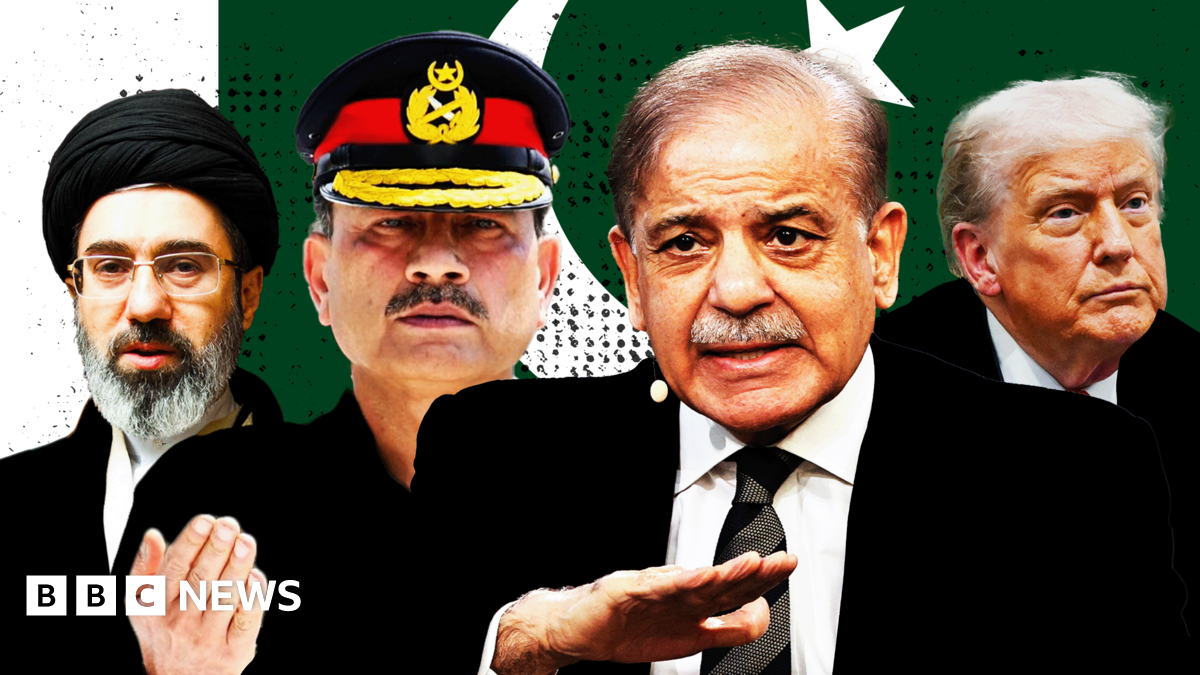
However, these close ties did not stop Pakistan officially condemning the first US-Israeli attacks in Iran. But when Iran bombed the oil fields of Saudi Arabia, a military ally, Pakistan also issued a strongly worded statement against Iran.
On 7 April, Pakistan abstained from a UN Security Council resolution urging states to coordinate efforts to reopen the Strait of Hormuz. Syed calls it “one-sided” as the solution does not mention that the US and Israel attacked first.
This “principled stance” and “balanced approach” has helped to enhance the trust of Iran and other Gulf countries, says Syed.
It is with these countries that Prime Minister Shehbaz Sharif has played a crucial role in the negotiations, former Foreign Secretary of Pakistan Aizaz Chaudhry says.
Over the past five weeks, Sharif and his deputy, Foreign Minister Ishaq Dar, spoke with more than a dozen world leaders and senior officials in Washington, Moscow, Beijing, key European capitals, Turkey, Egypt and GCC states such as Saudi Arabia and Qatar.
On the day when the ceasefire was announced, Sharif said he had a “warm and substantive conversation” with Iran’s President Masoud Pezeshkian, who “reaffirmed Iran’s participation in the upcoming negotiations and expressed appreciation for Pakistan’s efforts”.
It seems Sharif has been able to leverage Pakistan’s long-standing relationship with Iran on this occasion. The two countries share a 920km border with Iran and have been cooperating for decades as a result, former Pakistan ambassador to Iran Asif Durrani says.
They also share other concerns: militants and the “unstable” Afghanistan.
“For the past five decades, we both have been facing instability in our countries in the form of refugees,” Durrani says.