







Synthetic Drug Crisis Escalates in Northeast India Amid Myanmar Instability
New Delhi: The ongoing civil conflict in Myanmar has triggered a severe narcotics emergency across India’s northeastern states. In 2025, authorities reported a staggering surge in the trafficking of synthetic drugs, with seizures reaching record-breaking levels that underscore the deepening security challenges at the border.
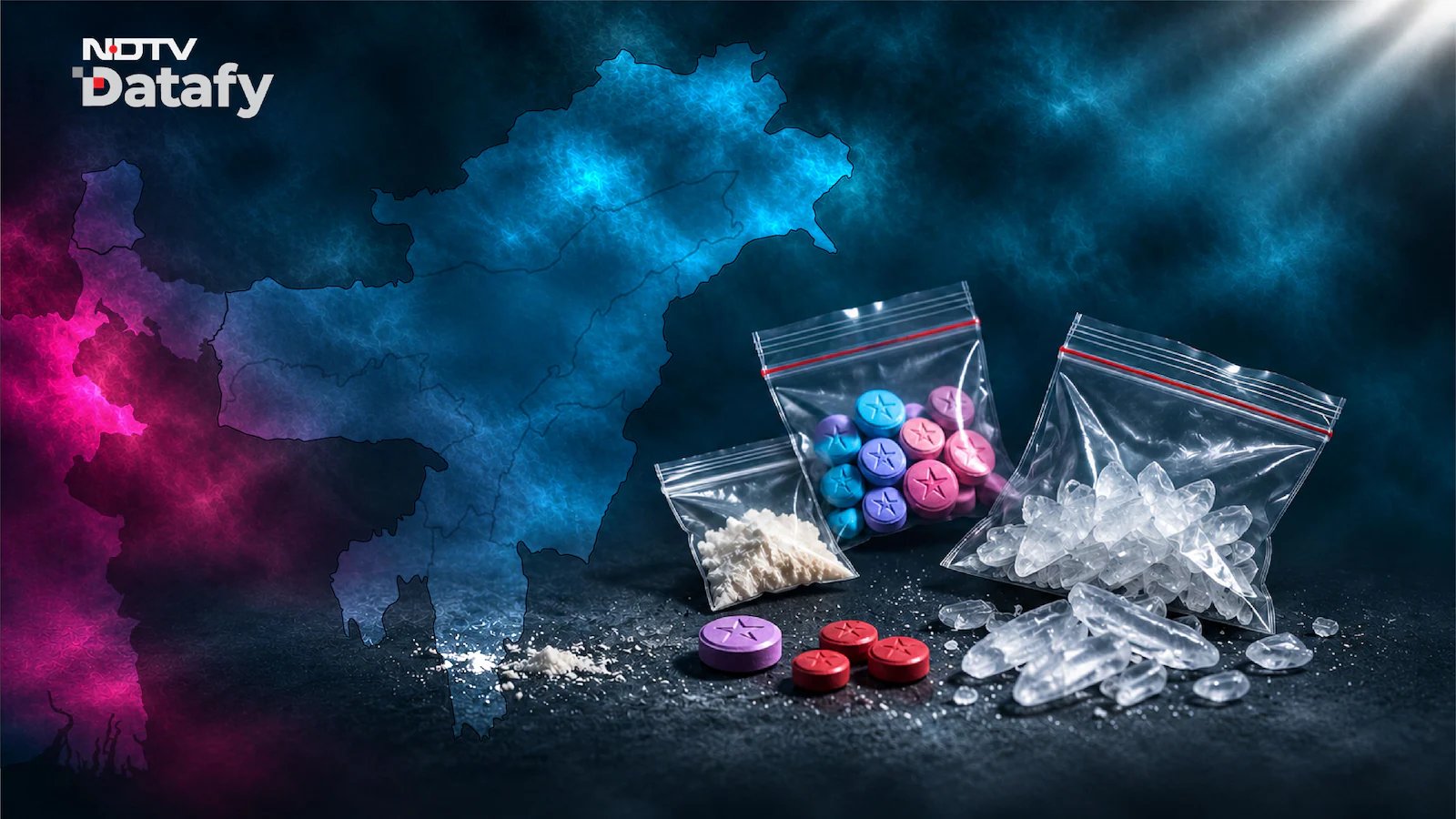
Data released by the Narcotics Control Bureau (NCB) reveals that law enforcement agencies confiscated 4,626 kg of synthetic substances—primarily methamphetamine and Yaba tablets—alongside 2,652 kg of heroin. The disproportionate volume of synthetic narcotics, which now outpace traditional opiates by a two-to-one margin, highlights a paradigm shift in the regional drug trade.
The Epicenter of the Crisis
The Moreh-Tamu border in Manipur has been identified by the Ministry of Home Affairs as a critical transit corridor for this illicit influx. While Manipur has frequently been at the center of discussions regarding drug routes, the neighboring state of Mizoram has emerged as the worst-hit region. Since the 2021 military coup in Myanmar, Mizoram has witnessed an eightfold increase in synthetic drug seizures, reflecting the volatility of the porous border shared with the conflict-ridden nation.
The rise in smuggling is also corroborated by the increasing number of foreign nationals involved in the trade. Official records show a sharp escalation in arrests of Myanmar citizens under the Narcotic Drugs and Psychotropic Substances (NDPS) Act, jumping from 25 in 2024 to 97 in 2025.
Industrial-Scale Production and Conflict
The surge in supply is directly linked to the collapse of central authority within Myanmar. With the country fractured by a six-year civil war, non-state armed groups and transnational crime syndicates have leveraged the power vacuum to establish industrial-scale manufacturing hubs.
A 2026 report by the United Nations Office on Drugs and Crime (UNODC) confirms that Myanmar remains the primary source of methamphetamine for the Southeast Asian and South Asian regions. In January 2026, the military junta conducted high-profile raids in northern Shan State, dismantling 14 drug manufacturing sites. The scale of the operation was unprecedented, resulting in the seizure of nearly 2.5 tonnes of crystal meth and over 93 tonnes of precursor chemicals.
Notably, these sites were found in close proximity to illicit online scam centers, where investigators discovered satellite internet terminals and stacks of computing equipment, suggesting a diversified criminal ecosystem operating under the cover of war.
A Growing Opium Challenge
Beyond synthetic stimulants, Myanmar has also surpassed Afghanistan as the leading source of opium in South Asia. UN survey data indicates a steady expansion of poppy cultivation, which grew from roughly 30,000 hectares in 2021 to over 53,000 hectares in 2025.
Government officials have described the situation as the “greatest challenge” to regional stability. As long as Myanmar remains divided among competing armed factions, curbing the flow of narcotics remains a daunting task for Indian security agencies. The convergence of regional insurgency, organized crime, and synthetic drug production continues to pose a profound threat to the safety and social fabric of Northeast India.
Disclaimer: This content is auto-generated for informational purposes only.
Source: Read Original News