






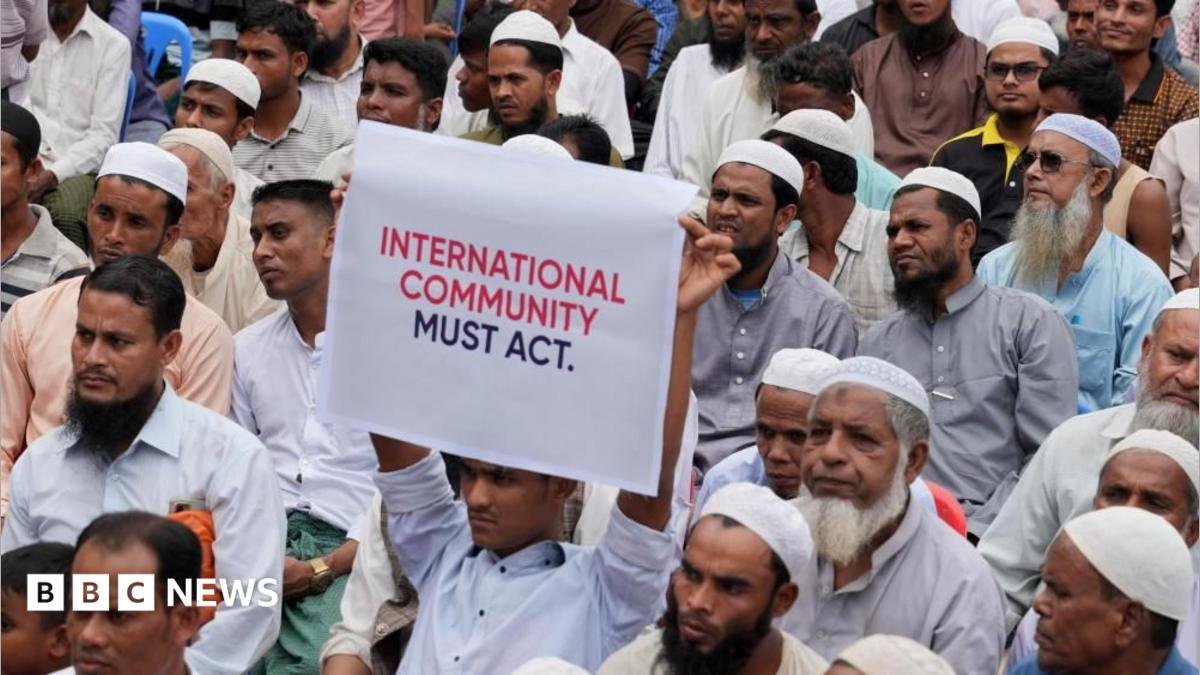
In a landmark ruling that has sent shockwaves through the international legal community, the International Court of Justice (ICJ) has delivered a historic judgment regarding atrocities in Myanmar. The decision, hailed by leading human rights lawyers as a watershed moment for global justice, marks a significant precedent in the prosecution of genocidal acts.
Philippe Sands KC, a preeminent human rights barrister who played a key role in bringing the case, did not mince words when describing the gravity of the decision. Speaking to BBC Radio 4’s World at One, Sands placed the ruling in the pantheon of legal milestones, alongside the Nuremberg trials of Nazi leadership and the landmark extradition proceedings of Chilean dictator Augusto Pinochet.
While the ruling represents a moral and legal victory, experts are tempering expectations regarding immediate enforcement. Because the ICJ operates as a civil forum rather than a criminal court, it lacks the authority to issue arrest warrants or incarcerate military officials. Instead, the court’s impact hinges on political pressure and the enforcement mechanisms of the UN Security Council.
The ramifications of this judgment extend far beyond the borders of Myanmar, casting a long shadow over other high-profile proceedings pending before the court. Central to the discourse is the case brought by South Africa against Israel regarding the war in Gaza—a case Sands described as the “elephant in the room” during the Myanmar hearings. While legal analysts note that a ruling against one nation does not automatically dictate the outcome of another, they suggest that had the ICJ failed to hold Myanmar accountable, it would have effectively signaled the end of the road for the case against Israel. For its part, Israel continues to maintain that the allegations brought against it are “wholly unfounded.”
Legal experts also pointed to specific shifts in the court’s jurisprudence. Antonia Mulvey, executive director of Legal Action Worldwide, highlighted that the ICJ firmly rejected Myanmar’s “counter-terrorism” defense. Perhaps most crucially, the court recognized sexual violence and rape as acts of genocide for the first time, a development that will undoubtedly serve as a crucial framework for future international litigation.
The international response has been swift. UK Foreign Secretary Ed Miliband announced immediate punitive measures, confirming that the government is expelling Myanmar’s defense attaché and summoning the country’s charge d’affaires. Following intense pressure from a cross-party coalition of MPs, Miliband also pledged that the UK government would outline “further action in the coming days” to ensure those responsible for the violence are held to account, with many anticipating the resumption of comprehensive sanctions against Myanmar’s military regime.
As the dust settles, the ruling serves as a stark reminder of the long reach of international law and the evolving standards by which the global community measures, and ultimately confronts, the most grave of human rights abuses.
Disclaimer: This content is auto-generated for informational purposes only.
Source: Read Original News