









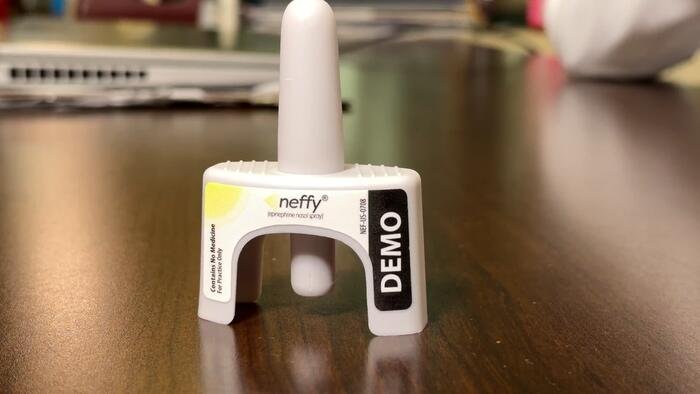
JACKSONVILLE, Fla. – A needle-free epinephrine nasal spray, hailed as a potential breakthrough for allergy patients, is facing significant hurdles as families and medical providers struggle to secure insurance coverage for the life-saving device.
The device, known as Neffy, received FDA approval two years ago and delivers a dose of epinephrine—the same medication found in traditional EpiPens—directly into the nasal cavity. For the millions of Americans managing severe allergies, the spray offers a critical, non-invasive alternative to the traditional auto-injector, particularly for young children who may be fearful of needles or unable to self-administer an injection.
“You put your thumb at the bottom of it and you stick it straight into your nostril and you push the button,” said Dr. Sunil Joshi, a Jacksonville-based allergist. “I 100% trust the product.”
However, despite its clinical utility, many patients are finding that their insurance providers are standing in the way. A healthcare professional working for a local allergist, who requested anonymity to protect her employment, reported a pattern of repeated denials, particularly from Florida Blue. According to the provider, appeals for the device are often met with a requirement that the patient first “fail” an injectable EpiPen before the nasal spray is approved.
“I said, ‘How can I physically prove failure to you if it’s not death?’” the provider asked, pointing to the inherent danger of waiting for a traditional injection to fail during an anaphylactic emergency.
Dr. Joshi echoed these concerns, calling the “fail-first” insurance policy a clinical mismatch. “To say you have to fail injectable epinephrine makes absolutely no sense,” he said. “It’s just an additional burden that is not necessary.”
In a statement, Florida Blue defended its coverage policies, noting that while it covers injectable epinephrine, members with specific medical or anxiety-related needs can work with their physicians to request a coverage review. The insurer pointed to the cost difference, stating that the nasal spray costs two to three times more than traditional injectors and that there is currently no data proving the spray is more effective than the established injectable treatment.
ARS Pharma, the manufacturer of Neffy, lists Florida Blue among the insurers that currently restrict or limit coverage for the device.
For parents like Anna Mountaredes, whose two children have severe food allergies, the availability of options is paramount. While her family relies on the muscle memory developed through practicing with traditional EpiPens, she views Neffy as a welcome alternative in the allergy toolkit.
Healthcare advocates argue that because epinephrine is a life-saving emergency medication, it should not be subjected to the same rigid cost-containment hurdles as maintenance drugs. For now, those unable to get insurance approval face the choice of sticking with traditional methods or paying out-of-pocket, with the manufacturer offering the device for $200 with a valid prescription.
Disclaimer: This content is auto-generated for informational purposes only.
Source: Read Original News