


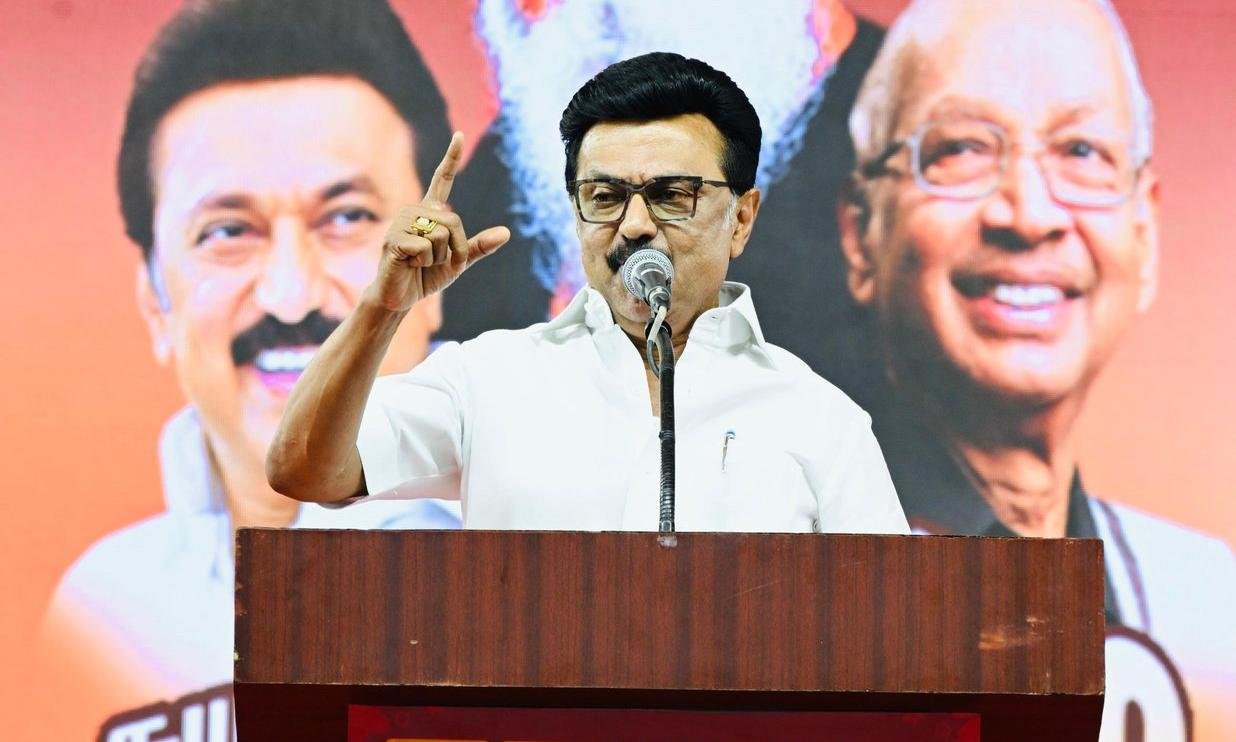
Addressing a massive campaign rally of the DMK-led Progressive Democratic Alliance at Maraimalainagar near Chennai, Chief Minister M K Stalin went for a flashback of a DMK meeting held 55 years ago at the Kongu region. The recall was to put in perspective his retort to the leader of the opposition Edappadi K Palaniswami, who had alleged that Stalin did not come out during the Covid pandemic. Stalin, in that 1971 meeting that he attended as an 18-year-old cadre, sought permission for making a short speech and told the crowd that he was prepared to even lay down his life for protecting the Tamil language and Tamil culture, he recalled.
In the ongoing cacophonic campaign for the April 23 Assembly elections, many such strange charges have been made from party podiums and there have been many instances of recollections of the past. Raking up serious issues that are considered to be outdated and obsolete has also happened. Two interesting recollections of old events were done through the display of photographs in campaign meetings to take voters down memory lane. One photo showed Palaniswami prostrating before V K Sasikala and the other was an old picture of the then DMK stalwarts M Karunanidhi and Murasoli Maran in conversation with former Prime Minister A B Vajpayee to bring back memories of the DMK hobnobbing with the BJP, a political ally once. But more than those photographs, Stalin’s vivid recollection of his maiden political speech at the party conference in 1971 was an example of political parties falling back on their glorious history, too, to drive home a latest point.
One of the DMK’s seminal punch lines in its formative years that endeared itself to the people of the State was ‘the north is growing and the south is waning’ to elucidate the fact that Tamil Nadu was being neglected and that Delhi was dominating over the State. The same sentiment has been repeatedly invoked in 2026 by the DMK, particularly its head honcho Stalin, through the raising of latest issues like delimitation that are portrayed as efforts to stifle Tamil Nadu. Stalin said the unilateral, politically driven delimitation process was aimed at marginalizing the south and undermining social justice, among other things. One of the grave fears expressed by Stalin was that delimitation would tilt the balance of power in favour of north Indian States.
Apart from raising the complaint of the BJP backing northern Indian States, the campaign for the coming election has revived the good old anti-Hindi sentiment in Tamil Nadu, which actually was behind the DMK coming to power for the first time in 1967. Amidst the hectic campaign, Stalin accused the Union Government of imposing Hindi when the Central Board of Secondary Education (CBSE) announced a new curriculum framework, aligned to the National Education Polity 2020. Stalin turned it into a poll plank by shooting a question at his beta noir Palaniswami and other allies of the NDA in Tamil Nadu if they subscribed to the Hindi imposition planned through CBSE, or would stand up for the rights, identity and future of Tamil Nadu students. Looking back, it was the anti-Hindi agitation, locally termed as ‘Mozhi Por’ (language war), that helped C N Annadurai capture power in 1967.
In a political playback of Annadurai’s tenure, Stalin declared that he would be the Chief Minister as long as the welfare schemes launched by his government were being implemented in the State. When Annadurai was Chief Minister between 1967 and 1969 he brought in three path breaking legislations. One was introducing the two language formula in the State schools that did away with Hindi as a compulsory subject of study and the others were renaming the then Madras State as Tamil Nadu and legalizing Self-Respect marriages conducted without religious priests and rituals. After bringing in those laws amidst strong resistance from political rivals, Annadurai said that he would continue to be the Chief Minister as long as attempts were made to repeal those laws that he had brought in. Stalin’s recent remarks, highlighting his welfare schemes, too, resonated in the same spirit.
Who would dare to scrap the women’s ‘rights assistance’ paid every month or cancel the free bus rides for women or the breakfast served for school children, he asked and averred that as long as his signature welfare schemes continued in the State, Stalin would be its Chief Minister. Apart from protesting against the delimitation, imposition of Hindi through the introduction of three language policy in schools and the amendment brought to the FCRA to hamstrung NGOs that served the people at the grassroots level, Stalin labelled all those moves as ‘New Delhi motivated.’ He asked the voters if they wanted a State Government that would boldly question New Delhi to secure the rights of Tamil Nadu or the one that would maintain a silence by not speaking against the stripping of rights and privileges of the State by the Union Government.
So, it was the Union Government and the BJP that helmed it that came under attack from the DMK even when the target was the local ally, the AIADMK. Ever since the AIADMK joined hands with the BJP before the elections were announced, the DMK has been accusing the regional party of pledging the State to New Delhi. So that explains why Palaniswami pulled out the photograph showing DMK’s bonhomie with that New Delhi party from the attic.