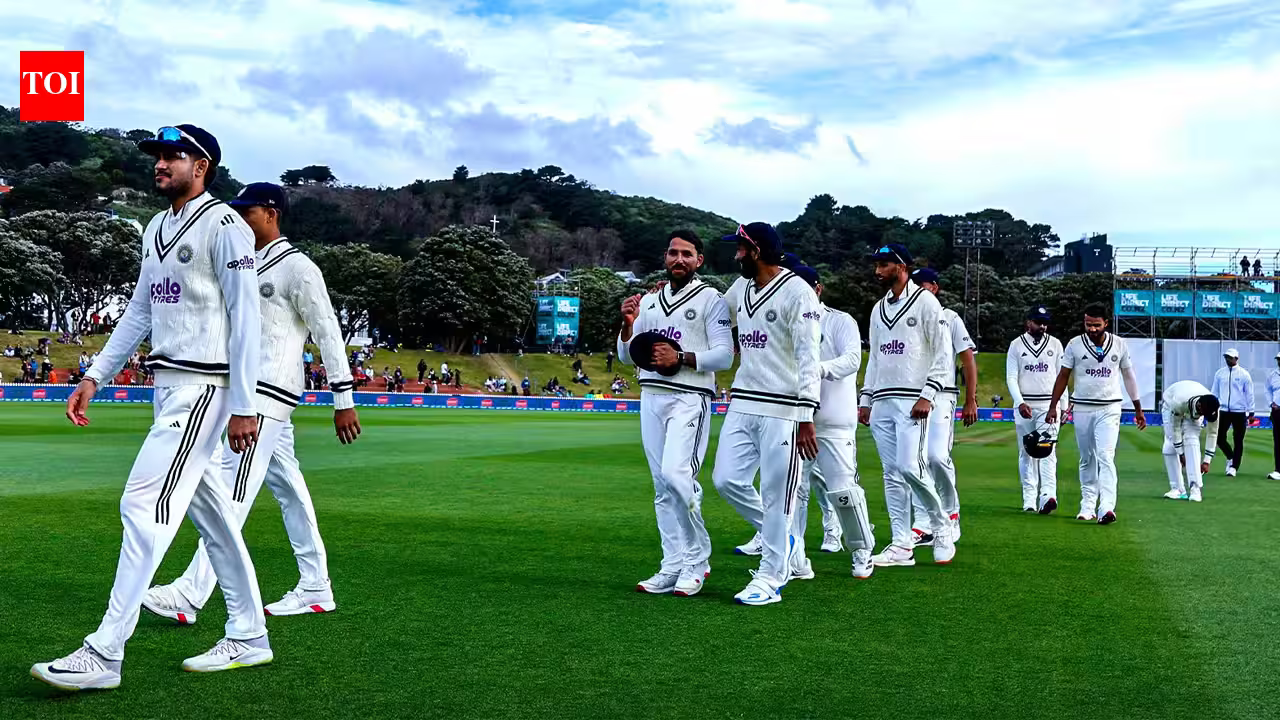










Frustration is an emotion rarely associated with the fluid, aesthetic grace of Shubman Gill’s batting, yet in the aftermath of a stagnant draw at the Basin Reserve, it was the defining sentiment for India’s young leader. As the World Test Championship (WTC) cycle intensifies, the gravity of every dropped point has transformed the nature of the five-day game. For Gill, who wears his heart on his sleeve, the inability to force a result on a flattening Wellington track was not just a professional disappointment—it was an itch he couldn’t scratch.
“If a team used to play a five-Test series, we used to draw two matches,” Gill noted during the post-match press conference. “It was common, but not so much now. That’s why we are not used to draws. That’s why we feel more frustrated.”
The Pitch Problem and the WTC Weight
Gill’s assessment of the surface was characteristically blunt. The Basin Reserve, a venue historically known for offering a fair contest between bat and ball, surrendered its bite far too early for the visitors’ liking. “When we started the Test, we thought there would be a lot more in the wicket,” he observed. “On Days Three, Four, and Five, it just went flatter and flatter. It was not a great Test wicket, especially if you want results.”
This shift in perspective is the hallmark of the WTC era. Where previous generations might have accepted a draw as a respectful conclusion to a hard-fought encounter, modern players operate under the constant shadow of the points table. Draws are no longer neutral outcomes; they are missed opportunities that linger long after the stumps are pulled.
Tactical Rigidity Under Fire
While Gill has earned plaudits for his high-energy captaincy—seen in his constant communication with teammates, infectious enthusiasm, and even lighthearted dance breaks on the field—the scrutiny is now shifting toward his tactical acumen.
The most glaring talking point from the Wellington Test was India’s defensive approach during periods where the game demanded a strike-seeking mindset. Gill admitted that for significant stretches, the team operated without a slip cordon. “We didn’t expect that coming here, playing a Test match in Wellington, that we’d be bowling 100 overs without any slips,” he confessed.
Critics would argue that spreading the field when a wicket is desperately needed—and failing to place close-in fielders for a batter like Daryl Mitchell—falls into the category of “basic errors.” For a captain of Gill’s stature, the challenge is now evolving. He is no longer just a talented batter tasked with scoring centuries; he is the architect of a victory-hungry unit. Success in the long run will require him to recognize the “kill moments” in a game, proactively shifting field settings when Plan A stagnates, and demonstrating a more daring command of his resources.
The Burden of Selection
A captain’s legacy is often built on the decisions he makes behind closed doors, particularly regarding team composition. Gill is currently part of a decision-making collective that has raised eyebrows, specifically regarding the exclusion of key personnel like Mohammed Siraj and Ravindra Jadeja, and the departure of players like Kuldeep Yadav.
While it is tempting to point toward the influence of a powerful coaching staff, a leader of Gill’s caliber must eventually assert his own vision. If he believes a specific combination offers the best path to victory, the burden is on him to argue that case forcefully.
The decision to bench Siraj was particularly telling, given the deep personal history between the two. Having debuted together at the Melbourne Cricket Ground in 2020 and sharing a bond from their IPL association, the choice was emotionally taxing. Gill’s honesty in navigating this was refreshing, shunning the typical media jargon to address the human element of captaincy.
“Siraj is a great player and a great bowler who has done very well for India. But before all of that, he’s a really good friend of mine,” Gill stated. “Leaving him out was actually a very tough decision for me as well.” Gill took the responsibility of delivering the news personally—a hallmark of a leader who understands the weight of the jersey. “I don’t know if he agreed or not, but he understood the logic behind it.”
A Leader in Transition
Shubman Gill is clearly a player who leads with authenticity. He is not hiding from the frustration of a draw, nor is he hiding from the difficult conversations required to manage a modern squad. However, the honeymoon phase of his captaincy is drawing to a close.
The runs will undoubtedly continue to flow from his bat; his technical proficiency ensures that. But the next chapter of his career will be judged by the scoreboard at the end of five days. To transcend from a talented skipper to a master of the format, Gill must pair his passion with a sharper, more clinical tactical edge. He has the energy, he has the trust of his teammates, and he has the temperament. Now, he must prove he has the ruthlessness to ensure that when the dust settles, those frustrating draws turn into celebrated wins.
Disclaimer: This content is auto-generated for informational purposes only.
Source: Read Original News