








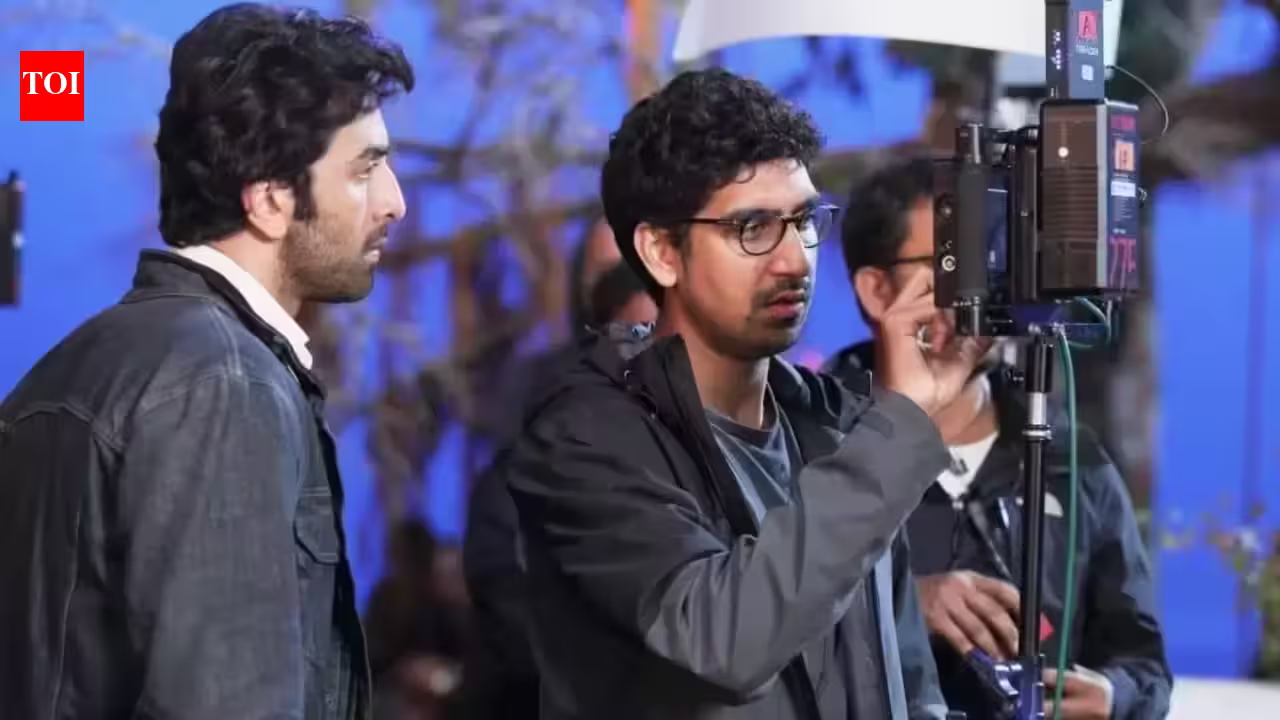
The air in Goa during the 57th International Film Festival of India (IFFI) 2026 was thick with anticipation as Ayan Mukerji took the stage. For years, the Brahmastra universe has remained one of the most debated, scrutinized, and ambitious experiments in modern Indian cinema. While the 2022 release of Part One – Shiva set the cash registers ringing, the radio silence surrounding its sequels has been deafening for fans. Addressing a crowd of cinephiles and industry insiders, Mukerji finally pulled back the curtain on the logistical and financial hurdles that have kept the Astraverse in a state of extended intermission.
The Reality of Scale: Why Parallel Production Wasn’t an Option
In an industry where comparisons to international franchises like The Lord of the Rings are common, there is often a misunderstanding regarding how these giants are built. Many fans expected a “back-to-back” production schedule—the kind where a studio films multiple installments in one massive, uninterrupted sweep. However, Mukerji was candid about the fiscal reality of his production.
“Most of the time, unless the producers have deep pockets, it is hard to fully make Part 2 of a big film,” Mukerji explained, tempering expectations with cold, hard logic. He pointed to the industry standard of “wait and see,” noting that even massive successes like S.S. Rajamouli’s Baahubali 2 operated on a model of calculated progression. While the Brahmastra team certainly entertained the idea of filming the sequel concurrently, the budget simply didn’t support such a high-stakes gamble before the first film had proven its viability. It is a sobering reminder that even in the age of billion-rupee budgets, the commercial viability of a Part One is the ultimate gatekeeper for the destiny of Part Two.
Financial Constraints vs. Creative Ambition
The filmmaker emphasized that every massive production carries a unique set of circumstances. For Brahmastra, the decision to hold off on the sequel wasn’t born from a lack of vision, but from a necessity of fiscal responsibility. Mukerji articulated that while the narrative arc for the entire trilogy has been etched in his mind for years, the actual execution requires a rhythm that aligns with the producers’ capabilities.
By de-coupling the filming schedules, the team managed to insulate the franchise from a catastrophic financial collapse. It’s a pragmatic approach that differentiates Indian blockbuster filmmaking from the studio-backed models in Hollywood. While fans are eager for the next chapter, Mukerji’s transparency offers a glimpse into the tightrope walk that directors perform: balancing the artistic desire to build an expansive, cohesive universe with the brutal constraints of a bottom-line budget.
Embracing Criticism: A Refined Approach to Storytelling
Perhaps the most refreshing aspect of Mukerji’s IFFI session was his humility regarding the reception of Part One. While the film was a significant box-office performer, it wasn’t immune to critique—particularly concerning its dialogue and narrative pacing. Rather than doubling down or dismissing the chatter, Mukerji displayed the temperament of a director who understands the evolution of his audience.
“Our audiences are very smart,” he acknowledged. “If there are things they didn’t like, we definitely need to improve our storytelling.” This isn’t just PR-speak; it suggests that the delay in production might actually be a blessing in disguise for the quality of the upcoming sequels. By taking the time to process the feedback from the first film, Mukerji is signaling that Part Two will be a more refined iteration of his vision—a lesson in how modern filmmakers are increasingly treating audience feedback as a tool for sharpening their craft rather than an attack on their work.
Prioritizing the Astraverse
The path forward for Brahmastra Part Two seems clearer than it has been in months. During his talk, Mukerji confirmed that he is actively laboring over the screenplay for the next installment. Most importantly, he made a firm commitment to his own focus: he is not taking on any other directorial assignments until the script and the subsequent production are well underway.
This move effectively silences the speculation that he might be jumping ship or spreading himself too thin. By planting his flag in the Brahmastra sequel, he has provided the clearest signal yet that the franchise is his absolute priority. While he has previously teased other projects that promised to help him grow as a creative, it is clear that he recognizes the Astraverse is the defining project of his career.
The Road Ahead for the Franchise
The landscape surrounding the film has changed significantly since the release of Shiva. With leading man Ranbir Kapoor currently dominating headlines with his work in the Ramayana franchise and the high-profile Love & War, the star power associated with the Astraverse has only grown.
As the pieces of the puzzle align, the industry is watching closely. The delay, while frustrating for the most ardent followers of the franchise, appears to be a strategic pause. With a screenplay in progress and a director fully dedicated to the task, the “Astraverse” is not dead—it is simply being forged with more caution and consideration than before. If the first film was a test of ambition, the upcoming sequels will be the test of execution. For now, the audience waits, armed with the knowledge that the man at the helm is finally listening as much as he is leading.
Disclaimer: This content is auto-generated for informational purposes only.
Source: Read Original News