







The Union Cabinet’s recent approval of an Rs 11,000-crore scheme dedicated to the construction and infrastructure equipment (CIE) sector marks a significant strategic pivot in India’s industrial policy. By targeting the enhancement of domestic manufacturing capabilities, the government is addressing a critical bottleneck in the nation’s infrastructure development roadmap. As India aims to become the world’s third-largest construction equipment market, this initiative serves as both an economic catalyst and a necessary step toward supply chain sovereignty.
Strategic Rationale Behind the Investment
India’s CIE sector has witnessed rapid expansion, currently holding the position of the third-largest market globally, trailing only China and the United States. With a market size estimated at Rs 97,500 crore in the 2024-25 fiscal year, the domestic demand for heavy machinery is poised for exponential growth. Government projections indicate that this market is expected to more than double, reaching approximately Rs 2.28 lakh crore by the 2029-30 fiscal year.
This surge in demand is fundamentally linked to the government’s aggressive push for capital expenditure in physical infrastructure, including port expansion, airport modernization, and road network development. Relying heavily on imported machinery for high-value projects poses risks to project timelines, costs, and the overall balance of trade. By incentivizing domestic production, the scheme aligns with the broader Atmanirbhar Bharat initiative, aiming to transform India from a consumer of global equipment into a manufacturing hub that can cater to both domestic requirements and international export demand.
Structural Components of the Incentive Scheme
The Rs 11,000-crore allocation is bifurcated into two distinct operational components designed to foster an integrated industrial ecosystem. The primary pillar consists of a sales-linked incentive program. This mechanism is specifically engineered to provide fiscal support to both Original Equipment Manufacturers (OEMs) and domestic component makers. By offering incentives ranging from 8% to 13% of incremental sales value over a five-year window, the government is essentially de-risking the capital-intensive process of scaling up production lines and upgrading technology.
The second pillar focuses on the establishment of a dedicated, world-class testing facility with an allocation of Rs 375 crore. This is a crucial intervention, as the lack of localized, high-standard testing infrastructure often forces domestic manufacturers to rely on overseas laboratories for quality certification and compliance testing. Providing this facility through viability gap funding ensures that the domestic industry can maintain global standards of quality and safety without incurring the prohibitive logistics and time costs associated with international testing. This holistic approach ensures that the sector does not just grow in terms of volume, but also gains technical maturity.
Execution Roadmap and Implementation Phases
The scheme’s implementation timeline spans eight years, from 2026-27 to 2033-34, acknowledging the long gestation period required to set up heavy manufacturing units. The structure is methodical, divided into three clear phases to allow companies to pivot their business models and investments.
The first phase, covering 2026-27 and 2027-28, serves as a gestation period during which manufacturers will finalize plant layouts and production capacities. This is vital for capital-intensive sectors like tunnelling machines and hydraulic excavators, where manufacturing lead times are significant. The second phase, spanning 2028-29 to 2032-33, marks the primary window for incentive disbursement, tied directly to performance metrics. The final year, 2033-34, provides a settlement period to ensure that all claims related to the final year of operations are fully processed. This long-term horizon is designed to provide the industry with the policy predictability required to make significant investments in fixed assets.
Addressing Critical Equipment Bottlenecks
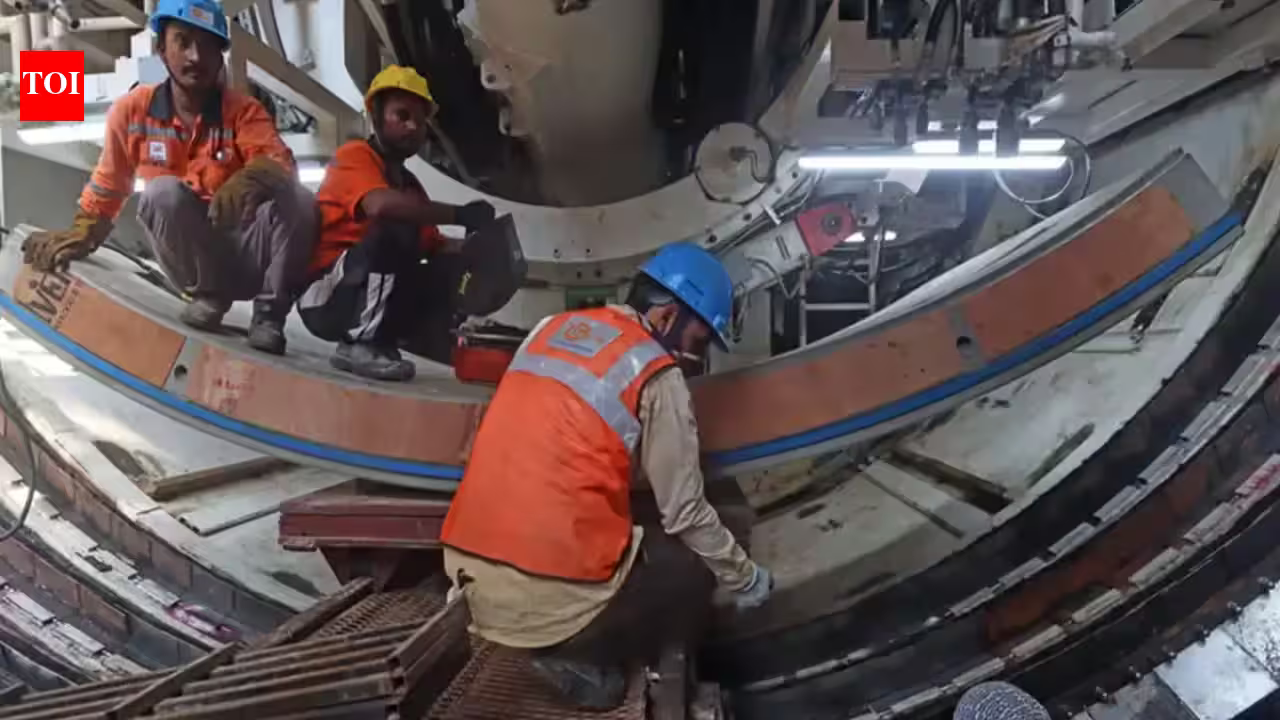
A defining characteristic of this scheme is its focus on high-technology equipment that has historically been the preserve of global conglomerates. The government has identified ship-to-shore cranes, tunnel boring machines, hydraulic excavators, and off-highway trucks as priority areas. These machines are the bedrock of India’s most complex infrastructure projects. For instance, the demand for tunnel boring machines is peaking due to the focus on Himalayan connectivity and urban metro expansion, while ship-to-shore cranes are essential for the expansion of major container ports.
By targeting these specific categories, the government is deliberately tackling areas where India’s trade deficit is high. Promoting the local manufacturing of components—rather than just the assembly of imported kits—is a strategic move to deepen the value chain. This will likely spark a ripple effect among ancillary industries, encouraging local SMEs to upgrade their technical capabilities to meet the stringent quality standards demanded by OEM partners.
Market Outlook and Macroeconomic Impact
The broader implications of this scheme extend beyond mere industrial growth; it represents a fundamental strengthening of the domestic supply chain. With projects like the new container terminal at Kamarajar Port and various greenfield airport developments moving forward, the demand for heavy equipment is guaranteed. If domestic manufacturers can achieve price parity and quality reliability, they will be the primary beneficiaries of this public investment.
Furthermore, the integration of these manufacturers into the global supply chain is a distinct possibility. As regional trade dynamics shift, India is positioning itself as a reliable alternative for manufacturing specialized infrastructure equipment. The combination of fiscal incentives and enhanced testing capabilities provides a strong incentive for global companies to explore manufacturing joint ventures within India. If executed effectively, this scheme could reduce the total cost of ownership for infrastructure projects across the country, as indigenous equipment becomes cheaper to maintain and source compared to imported machinery.
In conclusion, the government’s move is a calculated attempt to secure the industrial infrastructure necessary for the country’s projected growth. By focusing on the entire lifecycle of equipment manufacturing—from the production of sophisticated machinery to the final rigorous testing—the scheme addresses the systemic gaps in the Indian manufacturing sector. Success will depend on how efficiently the Ministry of Heavy Industries manages the transition of OEMs into local production and how successfully domestic component suppliers bridge the quality gap. Should the initiative meet its objectives, it will establish a self-sustaining industrial base capable of fueling India’s infrastructure ambitions for the next decade and beyond.
Disclaimer: This content is auto-generated for informational purposes only.
Source: Read Original News