






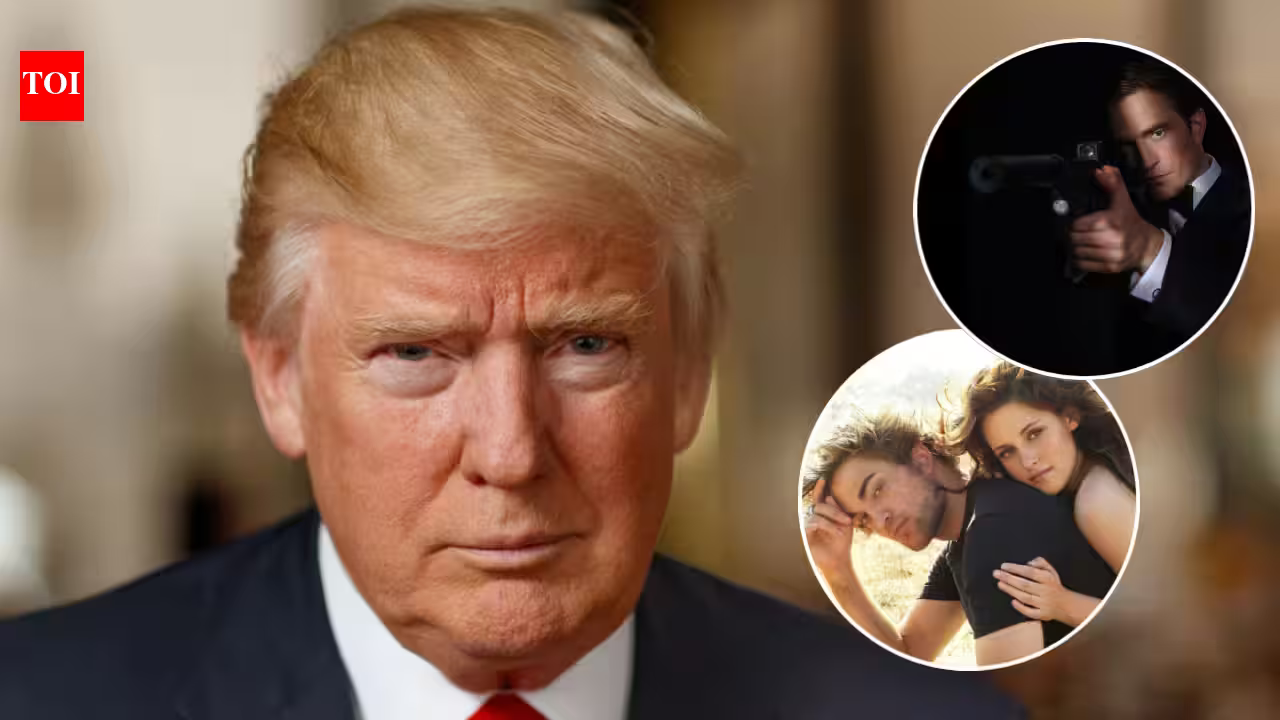
In the strange, intersecting Venn diagram of high-stakes global politics and the glitzy ecosystem of Hollywood, few figures occupy as much space as Donald Trump. The US President, known for his penchant for reality television drama, social media commentary, and a decades-long history of critiquing celebrity culture, has once again waded into the waters of Tinseltown. This time, the subject is the most coveted role in British cinema: James Bond.
Following the seismic industry announcement that Robert Pattinson has been tapped as the seventh iteration of 007, President Trump took a moment during a recent Oval Office interview to weigh in. His reaction—a mix of measured presidential diplomacy and the trademark, unfiltered commentary that characterized his pre-political life—serves as a bizarre reminder that no corner of the cultural zeitgeist is beyond his reach.
A Presidential Stamp of Approval for 007
The casting of Robert Pattinson as James Bond has sent shockwaves through the industry, effectively ending years of speculative betting markets and endless fan debates. When the topic was broached by the New York Post during a visit to the White House, the President was remarkably composed.
“He looks nice,” Trump remarked, glancing over the coverage of the casting announcement. “You know, I wish him luck.”
While the statement was brief, it underscored a shift in how the administration interacts with entertainment news. Rather than offering a sweeping critique or a biting remark, the President’s reaction leaned toward a casual acknowledgment. However, the scene was anything but standard press procedure. Before addressing the casting, the President requested that his aide, Natalie Harper, gather background information on the actor, explicitly seeking to gauge the star’s political alignment. “I always like people that like me,” he mused, a candid admission that sets the stage for how he consumes celebrity news: through the lens of loyalty and public perception.
The Ghost of 2012: Revisiting the Twilight Saga
The interview took a surreal turn when the aides presented the President with printouts of old news stories—including a blast from the past that proved the internet, as they say, never forgets. Among the papers was a viral tweet from 2012, penned by then-reality star Donald Trump, regarding the highly publicized romantic turmoil between Pattinson and his Twilight co-star, Kristen Stewart.
Reading the words aloud from a decade ago, Trump revisited his infamous take: “Robert Pattinson should not take back Kristen Stewart. She cheated on him like a dog and will do it again — just watch.”
It was a jarring moment of temporal whiplash. In 2012, the Twilight drama was one of the biggest tabloid stories on the planet, following the revelation of Stewart’s brief affair with director Rupert Sanders. Trump, always quick to capitalize on trending topics, had fired off a series of tweets that solidified his reputation as a digital agitator. Seeing him revisit these archived musings in the Oval Office serves as a testament to the longevity of the “Trump Twitter” era, where the boundaries between global political commentary and celebrity relationship advice were routinely blurred.
The Evolution of the Bond Franchise
Beyond the political commentary, the casting of Robert Pattinson marks a radical turning point for the Bond franchise. Amazon MGM Studios’ confirmation of the 40-year-old actor’s role has been positioned as the start of a “new era.” With a tuxedo-clad first look that has already ignited intense social media discourse, the production team is clearly aiming to pivot away from the gritty, grounded realism that defined the Daniel Craig years.
Pattinson, who has spent the better part of the last decade shedding his “heartthrob” image from his vampire-franchise days to chase complex, independent roles—most notably in The Lighthouse, Good Time, and his tenure as the Dark Knight—is an unexpected choice. He is a character actor masquerading as a leading man, a dichotomy that suggests the new Bond will likely lean into the psychological espionage tropes that have defined his recent filmography. For his part, the actor has described the appointment as “the honour of a lifetime,” stepping into the shoes of iconic predecessors like Sean Connery, Roger Moore, and Pierce Brosnan.
Celebrity, Politics, and the Public Eye
Why does a sitting President care about the casting of a fictional British spy? The answer likely lies in the unique bridge Trump has built between political power and celebrity tabloid culture. For the President, Hollywood isn’t just an industry; it’s an arena where he has historically played a significant role as a spectator and a commentator.
As he sifted through the remaining printouts brought to his desk, the mood seemed to brighten. “That’s cute. He says nice things,” the President noted, seemingly satisfied with what he uncovered regarding Pattinson’s public statements. The interaction highlights a fascinating aspect of modern celebrity: the expectation that even the highest office in the land will comment on the casting of an action hero.
As the dust settles on the announcement, the irony remains palpable. A man who once live-tweeted the dissolution of a young couple’s relationship is now offering his blessing to that same man as he assumes the mantle of the world’s most famous secret agent. Whether Robert Pattinson’s Bond will be “nice,” as the President put it, or a darker, more volatile iteration remains to be seen. But one thing is certain: in the age of global media, the reception of an entertainment icon is now subject to the scrutiny of the most powerful office in the world. As the Bond franchise prepares for its “new era,” it finds itself, perhaps inadvertently, under the watchful, retrospective gaze of Donald Trump.
Disclaimer: This content is auto-generated for informational purposes only.
Source: Read Original News