






The Significance of a Sovereign Browser Engine
The landscape of modern web browsing is defined by a deep-seated technological monoculture. With the overwhelming majority of internet traffic flowing through browsers powered by Google’s Blink engine—including Chrome, Edge, Brave, and Opera—the web has effectively become a platform optimized for a single architectural implementation. While Firefox remains a stalwart with its Gecko engine and Apple continues to develop WebKit for Safari, the industry lacks the pluralism necessary to keep web standards truly robust and independent.
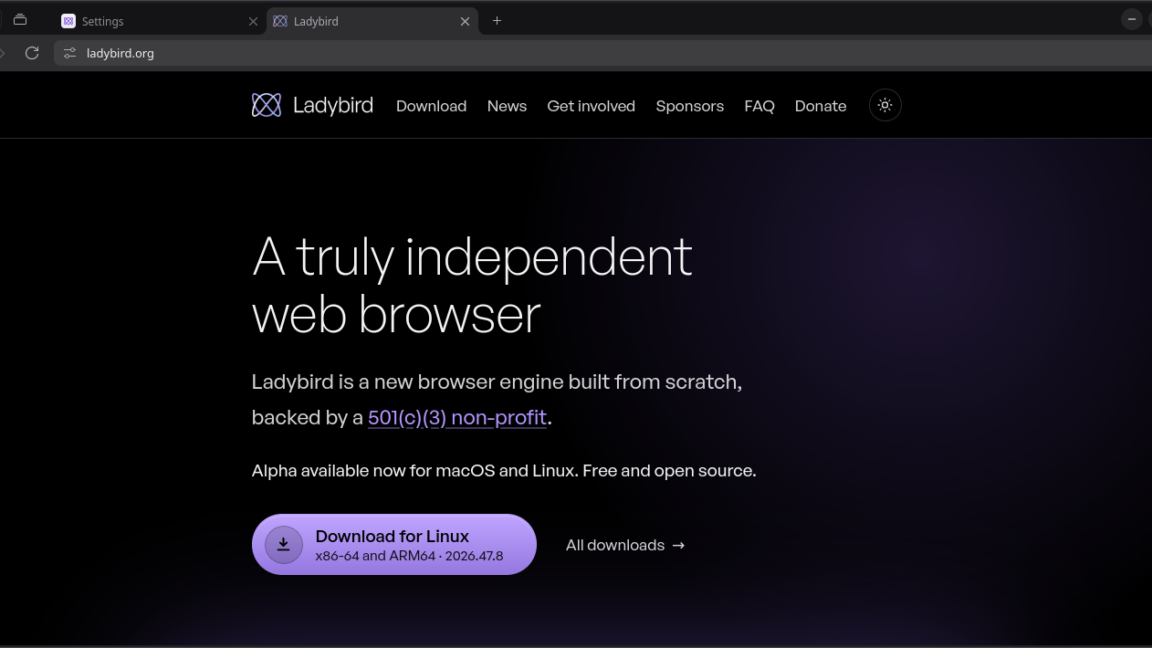
The Ladybird project represents a significant departure from this trend. By releasing its first downloadable alpha version for macOS and Linux on November 23, the project has transitioned from a niche experimental codebase for developers into a functional, accessible application for the broader computing community. Unlike almost every other browser on the market today, Ladybird is not a fork of existing codebases like Chromium or WebKit. It is a completely independent, from-scratch implementation of the modern web stack.
Building from the Ground Up
The technical challenge of building a browser engine in the current decade is immense. The web platform has evolved from simple documents into a massive, complex environment defined by thousands of pages of specifications. Most developers today avoid creating new engines, preferring to utilize mature frameworks. Ladybird, however, has focused its efforts on building proprietary components: a custom rendering engine and the LibJS JavaScript engine.
By avoiding the reliance on established engines, the project avoids inheriting the technical debt and design assumptions built into Blink or Gecko. This architectural purity allows the Ladybird team to implement web standards according to current specifications without being tethered to legacy behaviors that might have originated decades ago. The browser is currently modest in its feature set, prioritizing stability and standards compliance over the inclusion of secondary UI elements that often bloat modern browsers.
Testing Standards Against Reality
One of the most critical impacts of a new browser engine is the role it plays in “truth-testing” the web. Over the years, because the vast majority of the web is tested primarily in Chromium, many websites have inadvertently become reliant on Chromium-specific behaviors, quirks, or bugs rather than the official W3C web standards. When a site breaks in a new engine like Ladybird, it often highlights that the site developer relied on a proprietary implementation rather than the documented specification.
This dynamic creates a vital feedback loop. As Ladybird developers work to make websites function correctly, they inevitably uncover these non-standard dependencies. By documenting these issues and ensuring their engine adheres strictly to open specifications, the project serves as a pressure test for the entire ecosystem. It pushes the broader web toward true interoperability, forcing developers to write code that adheres to universal rules rather than proprietary shortcuts that only function correctly in one specific browser environment.
Organizational Independence and Sustainability
Beyond the technical architecture, the Ladybird project has taken a unique approach to its governance. Organized under the Ladybird Browser Initiative, a 501(c)(3) nonprofit, the project explicitly rejects the common business model that drives the majority of current browser development. Many browsers survive on search engine partnerships, data harvesting, or deep integration with larger corporate ecosystems that have a vested interest in specific web architectures.
Ladybird operates on a donation-based model. By refusing sponsored search deals and maintaining independence from major tech corporations, the project aims to keep its roadmap focused on user utility and standard adherence rather than revenue generation or data capture. This financial structure is intended to ensure that the project remains responsive to its community rather than to external corporate interests. While the sustainability of this model remains a long-term question, it provides a rare example of a browser developed solely for the purpose of existing as a functional, independent tool.
Current Capabilities and Future Outlook
For users transitioning to the alpha version, the experience is designed to be familiar yet fundamentally distinct. With the release of prebuilt binaries for Linux and macOS, the barrier to entry has significantly lowered. Users no longer need to navigate the complexities of compiling the source code locally, which was previously a requirement for testing the engine. Automatic updating ensures that as the team improves CSS support, HTML parsing, or JavaScript execution, those updates reach the user base seamlessly.
The project is still in its early stages, and users should expect gaps in functionality, particularly regarding complex web applications that lean heavily on features currently outside the scope of the alpha engine. However, the release marks a shift from a developer-focused prototype to a user-facing platform. By prioritizing the development of a clean, sovereign engine, the Ladybird initiative is attempting to secure the long-term health of the internet. It serves as a reminder that the web was intended to be an open platform, and that the continued existence of diverse implementations is the best defense against the stagnation of web technology. As the project grows, its success will not be measured by the number of users it pulls from the market leaders, but by its ability to force the web ecosystem to remain honest, open, and strictly adherent to its core standards.
Disclaimer: This content is auto-generated for informational purposes only.
Source: Read Original News