









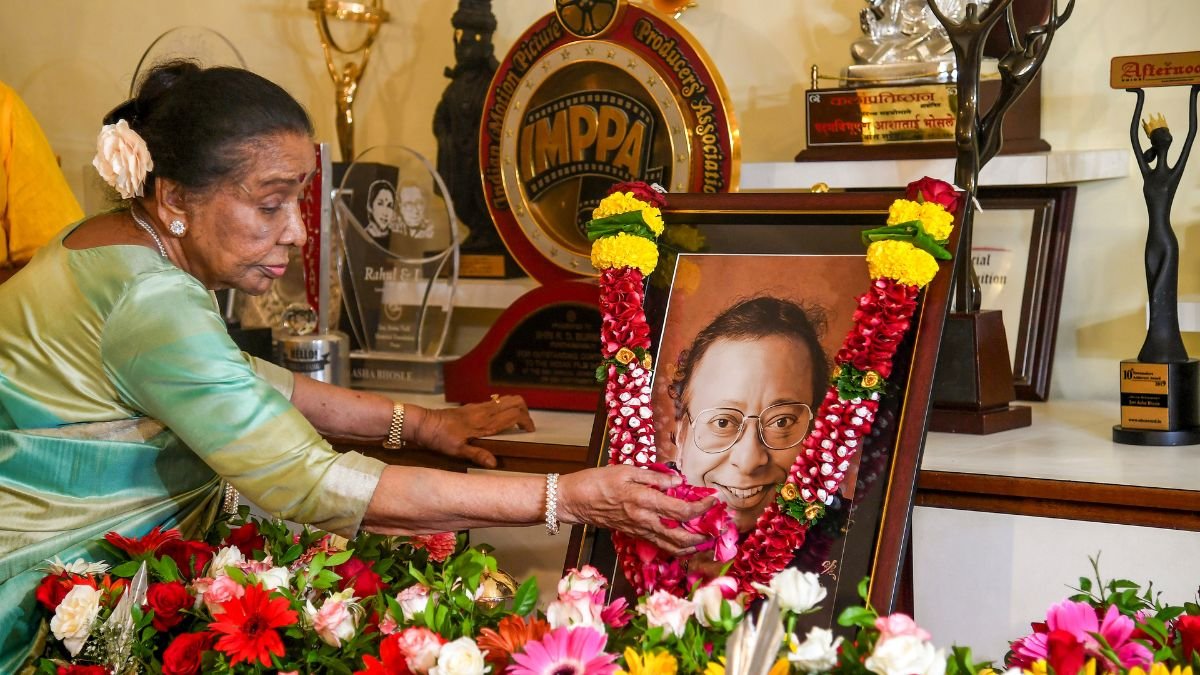
One of India’s most recognisable voices is no longer with us. Asha Bhosle has passed away at the age of 92, leaving behind an incredible legacy that would inspire generations of filmmakers for decades to come.
Bhosle passed away at the Breach Candy Hospital in Mumbai. With a career spanning seven decades, Asha Bhosle is no less than a phenomenon who always kept her audiences on their toes by reinventing herself every step of the way through multiple languages and genres.
A collaboration that revolutionised Indian film music
Of all the partnerships that Bhosle enjoyed throughout her life and career, one of the most important was that with Rahul Dev Burman, better known as Pancham Da. From the seductive appeal of “Piya Tu Ab To Aaja” to the revolutionary attitude of “Dum Maro Dum,” their compositions smashed the mould and set a new standard for playback music.
Burman recognised her potential and saw something in her voice that many others missed. He encouraged her to try genres that were not common at the time, including fusing elements from jazz and cabaret music into Indian melodies. Asha Bhosle adapted quickly to these demands.
Asha Bhosle and R.D. Burman: Beyond music, a deeply personal bond
Their relationship extended beyond the recording studio. Asha Bhosle and R.D. Burman got married in 1980, after years of working closely together. In 2025, Asha Bhosle sat down for a conversation on the ‘Couple of Things’ podcast with RJ Anmol and Amrita Rao.
During her conversation, she shared some interesting anecdotes on the show about her late husband and music director, R.D. Burman. In her words: “He didn’t even know that he was such a big music director. He made music, but he had no ego about it. People die for money, but if I gave him a diamond, he would say, ‘What is this? A stone? Instead, get a good song recorded.’ That record was more valuable to him than a diamond.”
Asha shared that she and R.D. Burman had a charming way of referring to each other with nicknames that reflected their affection. She noted that at first, she called her husband ‘Pancham’, his well-known industry nickname. Eventually, she sang a song called Babua, and he started using that term to refer to her. Over time, she had him shorten it to ‘Bab’. Yet, despite their loving nicknames, in front of others and colleagues, he would still call her by her actual name. Reflecting on their shared moments, she remarked: “In the studio, when a music director is around, it feels easier. But now that he’s gone, emotions take over on stage. My throat tightens, and my voice quavers. Memories rush back, those evenings, those letters, those…”
Even during the later years of Burman’s career, when his professional graph saw a decline, Asha Bhosle remained a constant support.
Voice that changes the Indian music industry
The uniqueness of Asha Bhosle was defined by her unwillingness to limit herself to one particular genre. This is evident from the fact that she would experiment with different genres, including classical, fun-filled film songs, ghazals, and pop.
This flexibility allowed her to maintain relevance through all the generations that followed. Not many singers have been able to maintain their versatility for so long.
Irreplaceable loss
The demise of Asha Bhosle marks the end of an era in Indian music. Her songs will always find takers as they keep coming back through various mediums and are relived by future generations. Moreover, the unique chemistry shared between her and R. D. Burman can still be found in a lot of them.
Because some voices fade with time. Others become part of memory itself.
Also read: Asha Bhosle, legendary singer, dies at 92; funeral to be held tomorrow