







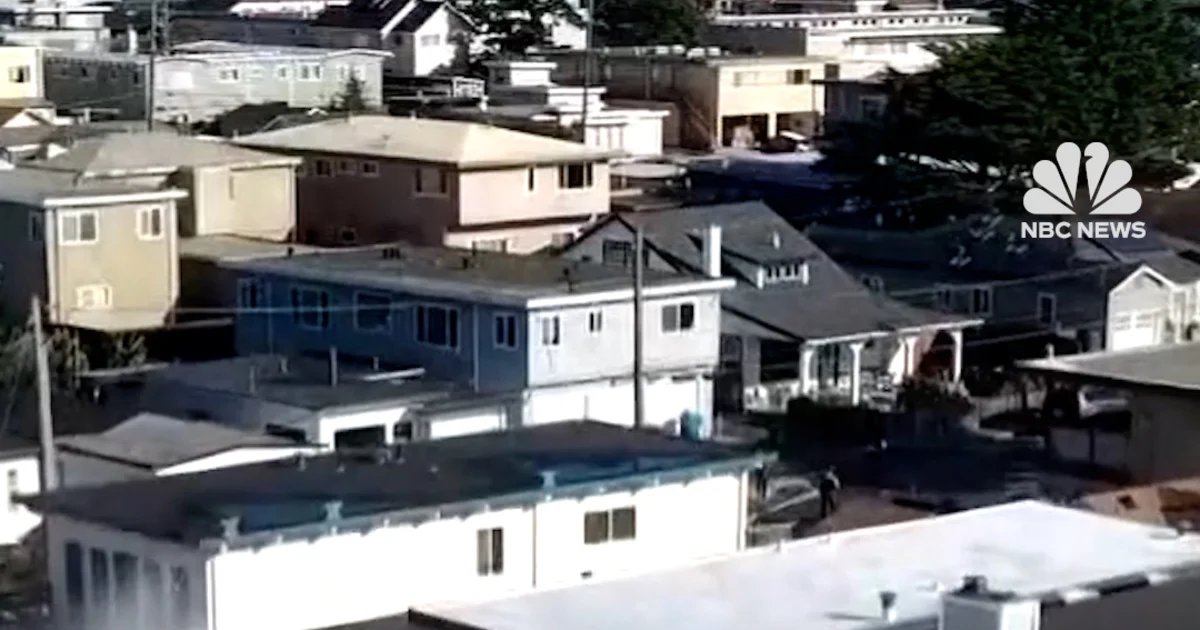
Coastal communities from Washington to Southern California are reeling today as a “king tide” event of historic proportions slammed the West Coast, triggering widespread flooding, forcing evacuations, and overwhelming municipal drainage systems. Meteorologists are calling the surge the most significant tidal anomaly in decades, driven by a rare alignment of celestial positions coupled with intense offshore swell.
The surge, which peaked early Wednesday morning, sent seawater rushing into low-lying neighborhoods, parking lots, and major coastal thoroughfares. In San Francisco’s Embarcadero district, onlookers watched as waves breached sea walls, flooding iconic piers and pushing salt water into the basements of historic waterfront buildings. Further north, in the Puget Sound region, authorities issued emergency flood warnings as seawater reached levels not seen since the massive storm surges of the 1980s.
“We prepared for a high tide, but we did not prepare for this,” said Marcus Thorne, a coastal engineer working with the City of Los Angeles emergency response team. “The water levels are defying our current topographical models. It is not just the volume of the water; it is the sheer persistence of the surge. It’s behaving more like a prolonged storm event than a standard tidal cycle.”
In Southern California, the luxury enclaves of Malibu and the residential beach communities of Orange County faced the brunt of the damage. Dozens of homes built on pilings over the sand have sustained structural damage as relentless waves battered foundations. Several sections of the Pacific Coast Highway remain closed after debris and standing water rendered them impassable, creating a logistical nightmare for morning commuters.
State officials have mobilized the National Guard in several counties to assist with sandbagging efforts and to monitor critical infrastructure, including wastewater treatment plants that are currently at risk of contamination from the encroaching seawater. Meanwhile, public safety warnings remain in effect across the entire coast; officials are urging residents to stay off beaches and boardwalks, noting that the combination of high-velocity water and submerged debris poses a severe threat to life.
Climate experts point to a “perfect storm” of conditions: the gravitational pull of a perigean spring tide, which occurs when the moon is at its closest point to Earth, compounded by a sustained atmospheric river pushing sea levels higher than seasonal averages. Whileking tides are a predictable annual occurrence, scientists warn that this week’s flooding is a terrifying preview of a future defined by rising sea levels.
“What we are seeing today is what we expected to see in 2050,” said Dr. Elena Vance, a marine ecologist at the Scripps Institution of Oceanography. “The margin for error is shrinking. Infrastructure that was designed to protect these communities for a hundred years is now failing in a matter of hours.”
As the tide begins to recede, the daunting task of damage assessment begins. For thousands of West Coast residents, the receding water will reveal a landscape permanently altered by the sea.
Disclaimer: This content is auto-generated for informational purposes only.
Source: Read Original News