








The Resilience of Shadow Supply Chains in Global Tech
The recent revelation that advanced Nvidia Blackwell B300 artificial intelligence chips are being openly traded in Shenzhen’s electronics markets exposes a critical vulnerability in the global regulatory architecture of the semiconductor industry. Despite aggressive export controls imposed by the United States to prevent China from gaining a competitive edge in AI development, high-end hardware continues to permeate the Chinese market. This phenomenon underscores the limitations of geopolitical mandates when confronted with decentralized, highly motivated, and agile supply chain networks that operate outside conventional regulatory oversight.
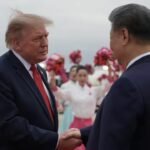
The ease with which these restricted components are available near high-level diplomatic venues serves as a stark reminder that physical export bans are not synonymous with market exclusion. The Shenzhen electronics hub, often referred to as the silicon valley of hardware, possesses an unparalleled capacity for sourcing and logistics. By leveraging transit nodes such as Hong Kong and secondary global intermediaries, these clandestine networks bypass traditional customs scrutiny. For global technology firms, this creates a complex scenario where official corporate compliance policies are routinely undermined by the sheer scale of the gray market. The economic disparity is equally telling: servers that retail for approximately $500,000 to $600,000 in the United States command prices as high as $3 million in Shenzhen. This massive premium reflects the high risk, logistical overhead, and the intense, desperate demand from Chinese state-affiliated research institutes and private enterprises striving to maintain parity in the global AI arms race.
The Mechanics of Illicit Semiconductor Procurement
The trade of these chips is not a disorganized or amateur operation; it is a sophisticated shadow market ecosystem. Vendors in Shenzhen utilize a well-established network that spans multiple international jurisdictions. These procurement channels rely on small-scale shell companies, front organizations, and individuals who move hardware in smaller batches to avoid triggering bulk shipment alerts. Furthermore, the reliance on warehouses situated in Hong Kong allows for the staging of equipment before it is introduced into the Chinese mainland.
The motivation for these intermediaries is purely transactional, as evidenced by trader testimonies acknowledging that they serve customers regardless of geopolitical status, including those from sanctioned nations like Russia and Iran. This market neutrality is the primary obstacle for enforcement agencies. When profit margins are driven to such extreme heights by scarcity, the incentive for criminal networks to circumvent international law becomes nearly insurmountable through traditional enforcement. The presence of not just server-grade chips like the Blackwell B300 but also lower-tier consumer and workstation-grade products like the RTX 5090 suggests that the supply pipeline is robust enough to cater to a diverse range of technological requirements, from training large language models to powering secondary specialized research tasks.
Implications for Global Geopolitics and Corporate Governance
The current situation with Nvidia and its supply chain challenges is compounded by the intense scrutiny of the company’s internal leadership. The intersection of corporate governance crises—such as the recent leadership instability—with high-stakes geopolitical tensions creates a volatile environment for investors and stakeholders. When a firm responsible for the engine of the global AI boom faces internal turmoil, its ability to effectively police its own distribution channels is inevitably compromised.
For the United States, this represents a significant policy failure. The reliance on export controls as the primary tool of containment assumes a degree of visibility and control over downstream distribution that simply does not exist in the fragmented reality of global hardware logistics. If Chinese research institutes and universities, many of which receive state funding, can continue to procure cutting-edge hardware through 2025 and 2026, the strategic intent behind the bans is effectively neutralized. This reality forces a re-evaluation of whether current trade policies are sufficient or if they are merely raising the cost of technology for China without actually preventing its acquisition.
Indian Market Perspectives and Strategic Vulnerabilities
For the Indian business and technology landscape, the saga of the illicit semiconductor trade offers several sobering lessons. India is aggressively seeking to position itself as a major semiconductor manufacturing and design hub through initiatives like the India Semiconductor Mission. The stability of the global supply chain is paramount to these aspirations. If the United States and other Western powers decide to tighten regulations further due to the leaks in the Chinese market, there is a risk of broad, sweeping restrictions that could inadvertently impact Indian firms that rely on global hardware imports for their domestic AI innovation.
Furthermore, India faces a unique challenge in navigating these tensions. As an emerging player in the global technology space, India must balance its strategic partnerships with the United States and its reliance on global supply chains that are deeply intertwined with the Chinese electronics ecosystem. The prevalence of gray-market activity in neighboring regions suggests that India must implement robust provenance and verification processes for all high-end computing components. As domestic startups and government research organizations scale their AI infrastructure, ensuring the authenticity and legality of these chips will be essential to maintaining international credibility and securing long-term access to next-generation technology.
The Futility of Analog Controls in a Digital Age
The broader takeaway from the Shenzhen electronics market scenario is the increasing difficulty of controlling digital-era assets through physical-era trade policies. Modern AI chips are small, high-value, and easily transportable, making them ideal targets for smuggling and gray-market distribution. The traditional methods of controlling heavy machinery or weapons systems are ill-suited for products that can be hidden in a standard shipping container or even a suitcase.
As technology becomes more modular and distributed, the ability of any single nation to enforce an effective monopoly on hardware access is diminishing. The market dynamics in Shenzhen prove that as long as the economic incentive exists, suppliers will find ways to bridge the gap between restricted supply and high demand. Future policy approaches may need to shift from attempting to block the hardware itself to implementing more rigorous software-level controls and cloud-based authentication. Without a transition to technological solutions that can render a chip useless if it deviates from its authorized destination, the physical export ban will likely remain a porous and ineffective barrier. The “Shenzhen paradox”—where the most advanced American innovations are openly sold in the shadow of diplomatic negotiations—stands as the definitive symbol of the limitations of modern trade protectionism. In an era of globalized hardware, the control of information and technology requires a level of oversight that current geopolitical frameworks are simply not equipped to provide.
Disclaimer: This content is auto-generated for informational purposes only.
Source: Read Original News