








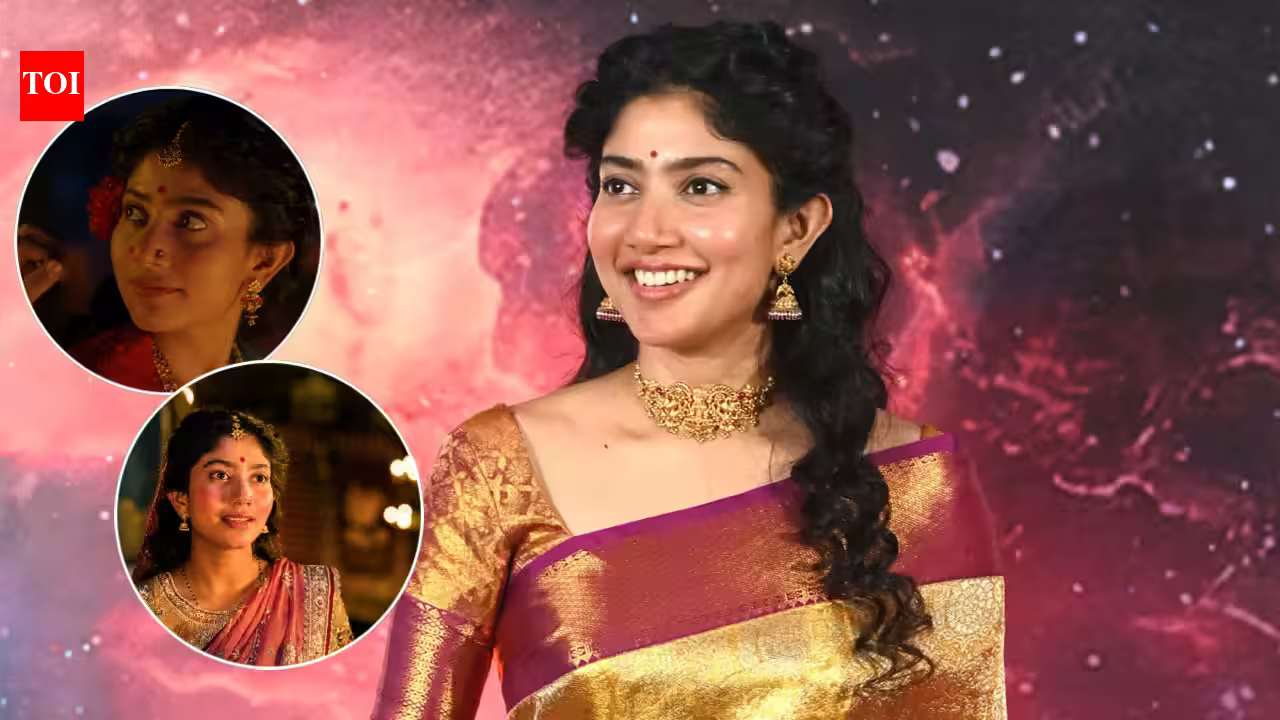
The casting of an icon is never a quiet affair, particularly when that icon is as deeply embedded in the cultural consciousness as Sita. For Sai Pallavi, the news that she would be stepping into the role for the upcoming Ramayana—a project of massive scale and even greater expectations—was met with a cacophony of online discourse. While some heralded her as the perfect choice, others fixated on the aesthetic expectations of a mythological figure. In a refreshing shift from the typical PR-polished responses, Pallavi recently addressed this scrutiny with the same raw, unfiltered composure that has defined her decade-long career.
Speaking at the “We the Women” event in a candid conversation with Barkha Dutt, Pallavi didn’t shy away from the chatter surrounding her appearance. Instead, she reframed the entire debate, shifting the focus from the audience’s gaze to the actor’s internal strength.
The Weight of Sita and the Art of Inner Stillness
Stepping into the sandals of such a revered figure, opposite powerhouses like Ranbir Kapoor and Yash, would be enough to rattle even the most seasoned veteran. Yet, when asked about the transformative nature of the role, Pallavi’s response was characteristically grounded. She noted that while she carries a piece of every character she plays in her heart, the true shift is deeply personal.
“My life has always been about moving from one movie to another,” she explained. “It does bring some sort of a change to you because you carry a bit of the role in your heart. I’ve had a few changes, but they all are very personal. I don’t think it is something that the world would understand or should even know.” By keeping the spiritual toll of the role private, she effectively sets a boundary—a recurring theme in her approach to stardom.
Reframing the Social Media Narrative
The digital age has turned casting into a public referendum, often centered on superficial markers of beauty. For Pallavi, the critiques regarding her “look” as Sita were not missed, but they were certainly not internalized.
“I’m not blind to social media things that are out there, like, ‘Sita ma, how pretty she should look,’ and all of that,” she admitted. Her philosophy on the matter is simple: “If it shakes your core, then I think the flaw lies there, and you need to get stronger.” For a generation of stars who measure their success by engagement metrics, Pallavi’s stance is radical. She maintains that if one’s sense of self is secure, the “noise” of the internet becomes nothing more than background static. It is a quiet call for resilience in an industry that often thrives on the insecurities of its leading ladies.
The Cost of Staying True to Substance
Pallavi’s rise was not an overnight fluke of luck; it was a grueling test of patience. The actor revealed that she spent four to five years turning down commercial offers that demanded nothing more than a glamorous face. In an industry that frequently treats actresses as replaceable “tools for glamour,” Pallavi chose to wait, often enduring long stretches of professional limbo.
“At that time, each day would feel painful,” she shared, reflecting on the temptation to give in to standard industry practices. “You don’t know whether roles written are good or everybody happens to be doing certain things which seem okay, so should I give in?” Ultimately, her decision was anchored by a single, haunting question: Will I be able to live with myself after that film is out? This uncompromising commitment to quality has clearly paid off, earning her roles that finally possess the substance she has been chasing since her debut.
Breaking the Mold of the Modern Star
Beyond her choice of roles, Pallavi’s operational style is equally unconventional. In an era where even mid-tier actors travel with an entourage of managers, PR teams, and stylists, she remains a solitary force. She operates without a manager, preferring to be the primary point of contact for directors and writers.
She views the traditional celebrity structure—the layers of middlemen and handlers—as an unnecessary wall. “When it comes to cinema, it is all about making it simple, being approachable to directors and actors,” she explained. By removing the artifice that typically surrounds a movie star, she remains accessible and, perhaps more importantly, human. This “do-it-yourself” approach to her career underscores her belief that art shouldn’t be an intimidating, bureaucratic process.
Redefining Beauty for a New Generation
Perhaps the most significant aspect of Pallavi’s career is her persistent, quiet defiance of standard beauty norms. Whether it’s her signature no-makeup look or her refusal to alter her features to fit the “perfect” cinematic mold, she has become a symbol for a more authentic representation of women.
During the session, she touched upon the disparity between how men and women are allowed to occupy space on screen. “The male actors are usually seen in different sizes, ages, and surviving, and when you look at women, they always seem to be perfect,” she noted. She admitted that if she had seen more actors who were comfortable in their own skin while she was growing up, she might have felt less conscious of her own perceived “flaws.” By choosing to be herself—and by accepting the mantle of Sita without changing her fundamental identity—Pallavi is doing more than just acting. She is actively expanding the definition of who can be a hero, and more importantly, how a woman should carry herself in the harsh light of the public eye.
As Ramayana makes its mark on history, Sai Pallavi stands as a testament to the idea that true strength doesn’t come from external validation—it comes from the quiet, firm resolve to remain exactly who you are, no matter how loud the world gets.
Disclaimer: This content is auto-generated for informational purposes only.
Source: Read Original News