






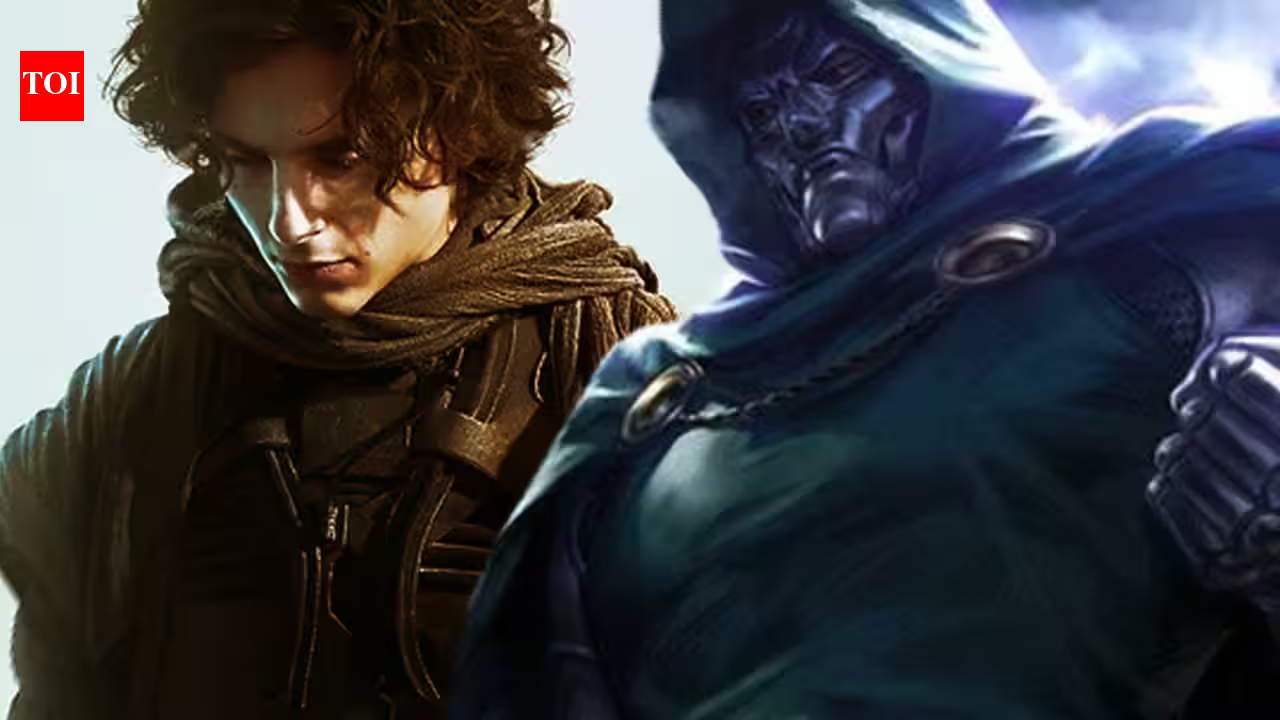
In the high-stakes gladiator arena of modern Hollywood, few filmmakers have earned the right to stand tall quite like Denis Villeneuve. With the sweeping, tectonic success of his Dune duology, the French-Canadian auteur has proven that big-budget spectacle doesn’t have to sacrifice intellectual rigor. Yet, even as he prepares to close out his sci-fi magnum opus with Dune: Part Three, the director is facing an adversary that arguably possesses more raw, cultural force than a fleet of Harkonnen warships: the unstoppable momentum of the Marvel Cinematic Universe.
As the industry gears up for December 18, the internet has already christened the showdown “Dunesday.” It is a clash of titans that pits the grit and grandeur of Arrakis against the colossal machinery of the Avengers. For Villeneuve, it’s a collision he would have preferred to avoid, and he hasn’t been shy about voicing his frustration.
The Perfect Storm: A Release Date Nightmare
To understand Villeneuve’s irritation, one must look at the turbulent history of his Dune journey. The first installment dropped in the shadow of a global pandemic, forcing a hybrid release strategy that was far from ideal. The second chapter, a critical and commercial darling, was then kneecapped by the paralyzing Hollywood labor strikes of 2023, forcing it into a winter release window that shifted its momentum.
When the time came to plan for the final chapter, Villeneuve was looking for a break. He wanted—and arguably deserved—a clean, traditional rollout. He thought he’d finally cleared the atmospheric debris of global shutdowns and industry halts. Instead, Disney and Marvel planted their flag on the exact same weekend with Avengers: Doomsday. “I’m no fool,” Villeneuve admitted in a candid interview with Time. “Those movies are a mammoth.”
David vs. Goliath or Two Sides of the Same Coin?
The “Dunesday” moniker is a clear riff on the 2023 “Barbenheimer” phenomenon, where the contrasting vibes of Barbie and Oppenheimer fueled a collective cultural obsession that lifted both films. However, Villeneuve is rightfully skeptical that this dynamic can be perfectly replicated. While the internet loves a good “counter-programming” narrative, the reality of competing against a Marvel tentpole—especially one heavily marketed as an Avengers event—is a mathematical headache for any filmmaker.
Villeneuve’s characterization of his own film as a “sexy little animal” compared to the “T. rex” of the Avengers franchise is a refreshing bit of humility from a director who has essentially redefined the modern space opera. He isn’t trying to out-punch Marvel; he’s trying to carve out his own space in a market that seems increasingly unwilling to share. His disappointment is rooted in the practical reality of IMAX screens and theater allocations, which become a zero-sum game when two major epics demand the same premium exhibition formats.
The Stakes for ‘Dune: Part Three’
Despite the looming shadow of the Avengers, there is little doubt that Dune: Part Three will be a cultural touchstone. Adapting the dense, psychedelic narrative of Frank Herbert’s Dune Messiah, the film represents a massive narrative pivot. By jumping two decades into the future, Villeneuve is moving away from the “hero’s journey” structure of the first two films and into the darker, more tragic territory of power, religious zealotry, and the hollow nature of victory.
The emotional stakes are centered firmly on the fractured bond between Paul Atreides and Chani. With Zendaya’s Chani positioned as the moral anchor—or perhaps the moral foil—to Paul’s terrifying rise, the film promises an emotional intimacy that is rarely found in blockbusters of this scale. The return of fan-favorite characters like Jason Momoa’s Duncan Idaho (now appearing in the complex form of the Ghola) and the tantalizing debut of Robert Pattinson as the enigmatic Scytale add layers of intrigue that the Avengers franchise simply cannot replicate.
Can Both “Mammoths” Survive?
Can the box office sustain two massive hits in one weekend? Historically, the answer is usually no, but the post-pandemic era has proven that audiences are hungry for “event cinema.” If Dune: Part Three delivers on the promise of its predecessors, it will likely capture the segment of the audience that craves visual poetry and slow-burn world-building, while Avengers: Doomsday will dominate the broader, action-heavy demographic.
Villeneuve is choosing to lean into the spirit of the event rather than be crushed by the pressure. “I stand proud because I think the film delivers,” he noted, signaling that his focus remains squarely on the screen, not the ledger. He is betting on the quality of his work to endure, even if he has to fight a T. rex for the audience’s attention.
For the cinephiles of the world, “Dunesday” is a fascinating test case. Will the industry continue to crowd the calendar until only the loudest voices survive, or is there still room for a “sexy little animal” to bite back? Come December 18, we will see if the Spice can truly flow alongside the Multiverse. One thing is certain: regardless of the final box office tallies, the clash has already ensured that the winter of 2026 will be the most talked-about season in recent film history. Villeneuve may have wanted a quiet release, but he has inadvertently created a showdown that defines the very tension of current Hollywood: the struggle between the brand-name behemoth and the visionary auteur.
Disclaimer: This content is auto-generated for informational purposes only.
Source: Read Original News