





Lavrov Hails ‘Privileged Strategic Partnership’ with India Amid Global Power Shift
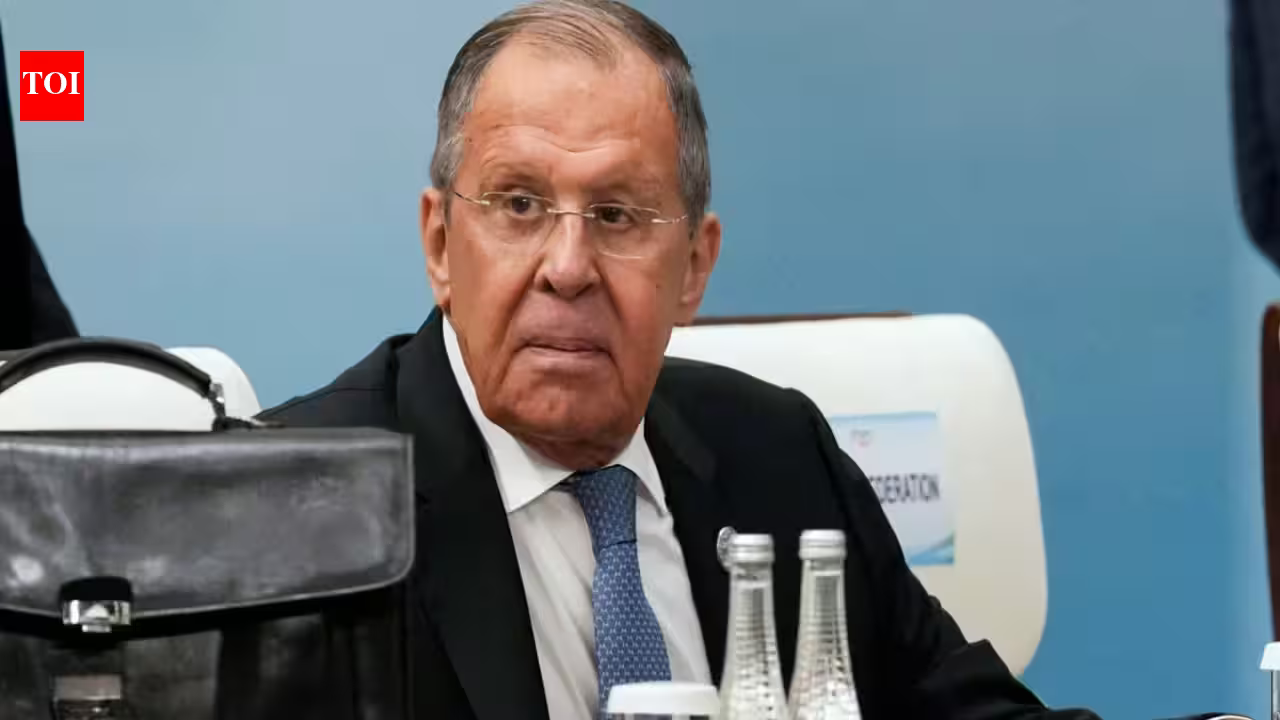
Russian Foreign Minister Sergey Lavrov has reaffirmed the strength of Moscow’s bilateral ties with New Delhi, categorizing the relationship as a “privileged strategic partnership.” Addressing participants at the Alexander Gorchakov Public Diplomacy Fund’s ‘Dialogue for the Future’ programme in Moscow this Thursday, Lavrov underscored that despite the intensifying isolation from Western powers, Russia remains anchored by robust alliances across Asia and the Global South.
Lavrov’s comments come at a time of significant geopolitical reorientation. As the Kremlin maneuvers through the fallout of the Ukraine conflict and shifting diplomatic alliances, the Foreign Minister highlighted India, China, and Iran as key pillars of Russia’s foreign policy framework. He emphasized that Moscow’s ability to foster deep, bilateral cooperation remains unaffected by the deterioration of its relations with the “collective West.”
Navigating Multipolarity and Strategic Alliances
During his address, Lavrov articulated a vision for a multipolar world order, arguing that the era of Western dominance—which he claimed has persisted for roughly 500 years—is inevitably coming to an end.
“It is obvious to everyone that the issue concerns the tectonic shifts that are underway on the international stage,” Lavrov noted. He asserted that new centers of economic and political influence are rising, and while some Western nations may attempt to obstruct this transition, the shift toward a multipolar framework is a historical inevitability.
Beyond his focus on India, the Russian diplomat touted the efficacy of the Russia-China partnership and highlighted the formalization of an “especially advanced” strategic treaty with Iran, signed in early 2025. He further pointed to Russia’s active role in global groupings such as BRICS, the Shanghai Cooperation Organisation (SCO), and the Eurasian Economic Union as evidence that Moscow has no shortage of partners to drive its international agenda.
India’s Diplomatic Balancing Act
While Lavrov emphasized the ideological closeness of the Russia-India partnership, New Delhi continues to maintain a nuanced, independent stance on the ongoing conflict in Eastern Europe. India has consistently advocated for a return to dialogue and diplomacy to resolve the hostilities between Russia and Ukraine.
External Affairs Minister S. Jaishankar recently outlined India’s active diplomatic engagement on the sidelines of the G20 foreign ministers’ meeting in Atlanta. New Delhi has been working as a bridge-builder, focusing on critical humanitarian and economic issues emerging from the war. These efforts include protecting civilian shipping corridors, ensuring the safety of seafarers, and restoring grain exports through the Black Sea, which have seen a sharp decline since the escalation of the conflict.
Jaishankar has previously acknowledged the complexity of these discussions, particularly regarding energy infrastructure protection—a sensitive topic given the varying interpretations of what constitutes legitimate targets during the war.
As the global landscape continues to evolve, Lavrov’s remarks signal Russia’s determination to solidify its ties with non-Western powers. For India, the challenge remains to maintain its “privileged” relationship with Moscow while simultaneously navigating its growing responsibilities as a key player in global peace-building efforts and its essential partnerships with Western democracies.
Disclaimer: This content is auto-generated for informational purposes only.
Source: Read Original News