








India’s Silver Imports Surge as Festive Demand Rebounds
India’s appetite for silver has made a dramatic return, with import figures for October nearly tripling compared to the previous month. After navigating restrictive government import policies since mid-May, the latest data suggests that local demand was merely deferred rather than permanently lost. As the nation entered its peak festive season, the surge in buying signals a renewed confidence among Indian investors and consumers in the precious metal.
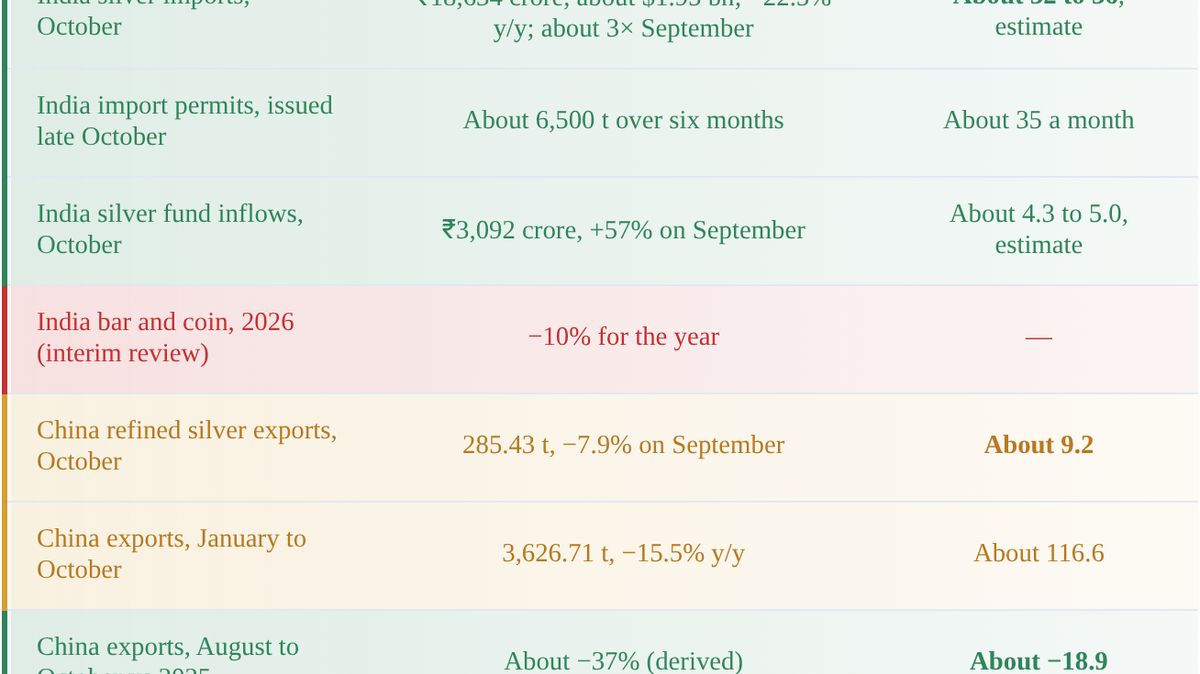
According to data from the Ministry of Commerce, India imported silver valued at ₹18,634 crore in October. When adjusted for the month’s average price, this translates to an estimated influx of 32 to 36 million ounces (Moz) of the metal. This volume aligns closely with the monthly import quotas recently established by the government, which permit approximately 35 Moz per month over a six-month period. Beyond physical imports, domestic interest has surged in financial instruments; inflows into silver exchange-traded funds (ETFs) climbed 57% in October, representing a significant shift in how Indian investors are choosing to gain exposure to the white metal.
China’s Export Shift Impacts Global Markets
While India was busy scaling up its intake, China—a major player in the global silver supply chain—moved in the opposite direction. Exports of refined silver from China dipped in October to approximately 9.2 Moz, continuing a broader trend of declining exports that began earlier this year.
Analysts note that this contraction is driven by commercial pragmatism rather than heavy-handed government intervention. Domestic demand within China has remained robust, incentivizing local smelters to supply the internal market where they can command a premium. Exporting silver via Hong Kong has proven less profitable than domestic sales, particularly when measured against current London market prices. Consequently, China’s reduction in outbound shipments is effectively a reflection of strong internal consumption rather than an intentional geopolitical strategy to restrict supply.
The Outlook: Is a Market Squeeze Imminent?
For investors, the dual narrative of rising Indian imports and slowing Chinese exports has sparked speculation about a looming global supply squeeze. However, market experts caution against drawing hasty conclusions. The interaction between these two nations is complex; some of the silver flowing into India may well have originated from Chinese markets, meaning the figures likely overlap.
Furthermore, the overall market remains influenced heavily by macroeconomic factors beyond trade flows. Silver prices have recently faced pressure from the Federal Reserve’s interest rate policy, with the metal’s performance tracking closer to inflation data and monetary decisions than to physical trade balances. While the industry anticipates a structural shortfall of approximately 35 Moz for the year, global ETF liquidations are expected to release enough supply to bridge this gap.
Ultimately, the October trade data proves that Indian demand remains resilient despite regulatory hurdles. Whether this represents a sustained recovery or a one-time “catch-up” period following the easing of import rules will become clearer when the November trade reports are released in mid-December. For now, the verdict remains cautiously neutral, with the silver market continuing to navigate the tension between steady physical demand and global interest rate headwinds.
Disclaimer: This content is auto-generated for informational purposes only.
Source: Read Original News