






The Kalpasar Project: Gujarat’s Massive Gamble to Tame the Sea
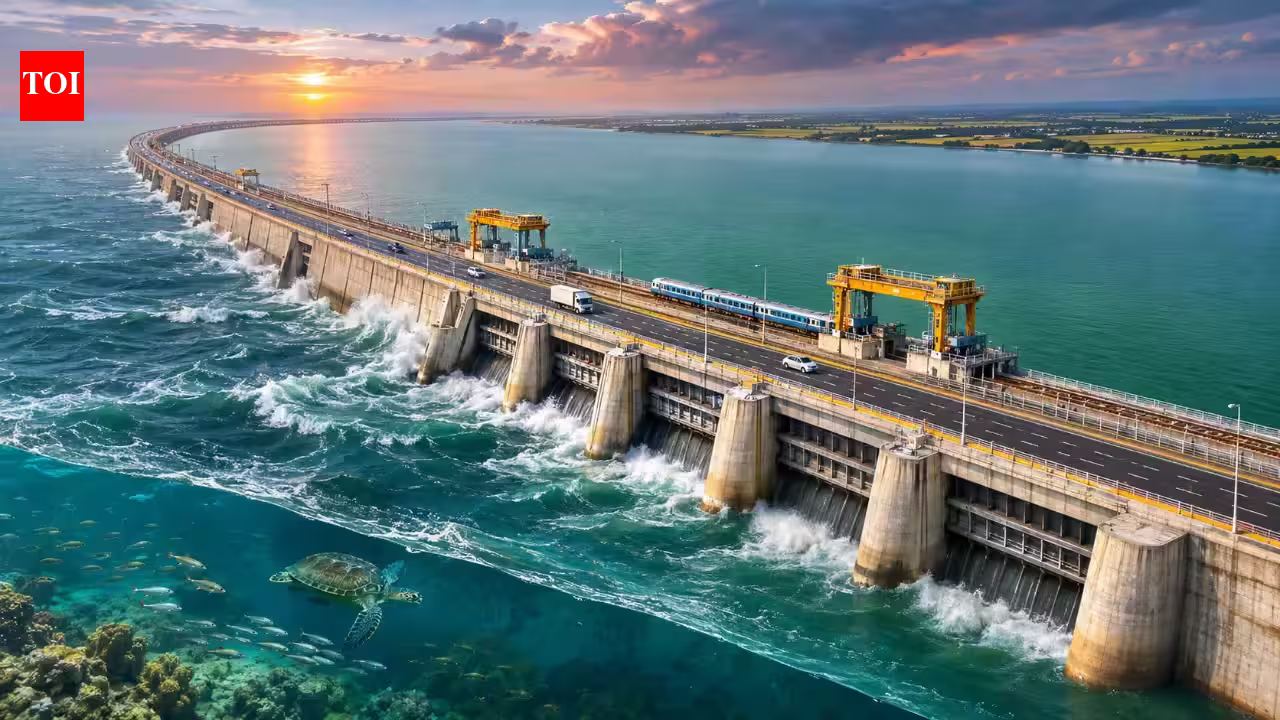
In an audacious feat of engineering that seeks to reshape the geography of western India, the Gujarat government is moving forward with the Kalpasar project—a monumental plan to construct a 60.13-km-long barrier across the Gulf of Khambhat. This massive infrastructure venture aims to transform a vast, turbulent tidal stretch of the Arabian Sea into a 1,600-square-kilometre freshwater reservoir, providing a critical lifeline to the parched Saurashtra region.
An Engineering Colossus
The Kalpasar project is far more than a standard dam. It is a multi-purpose barrier designed to trap the runoff from the Sabarmati, Mahi, and Dhadhar rivers, bolstered by water diverted from the Narmada. Beyond its primary role as a reservoir, the structure is intended to serve as a high-speed transit corridor, potentially connecting the Saurashtra peninsula directly to mainland Gujarat. By creating this massive enclosure, the government hopes to slash travel distances for trade and commerce while simultaneously generating nearly 2,470 MW of hybrid renewable energy from solar and wind installations perched atop reclaimed land.
The project recently gained significant momentum through a strategic partnership with the Netherlands. Drawing on Dutch expertise in coastal defense and hydraulic modeling, Indian officials are working to overcome the immense challenge of sealing the Gulf against tidal forces while ensuring the trapped seawater is successfully replaced with fresh river water.
Promises vs. Pragmatic Concerns
The central promise of Kalpasar is to solve the perennial water scarcity facing farmers in Saurashtra. By creating a reliable source of irrigation, the government intends to reduce the region’s heavy reliance on groundwater and complex, long-distance water-transfer systems.
However, the project is not without its vocal critics. Environmentalists like Soumya Dutta, co-convenor of the South Asian People’s Action on Climate Crisis (SAPACC), have voiced deep concerns regarding the actual beneficiaries of this massive expenditure. Pointing to the legacy of the Sardar Sarovar project, skeptics argue that such large-scale interventions often prioritize industrial water requirements over the needs of the agricultural communities they claim to serve. Furthermore, there is a persistent fear that if the dam blocks natural freshwater outflows, it could trigger severe saline intrusion into the groundwater of surrounding coastal districts, effectively poisoning the very fields the project aims to help.
Ecological Risks and the Price of Progress
The environmental implications of “taming” the Gulf of Khambhat remain a subject of intense debate. The gulf is a complex, dynamic ecosystem where powerful tides currently regulate sediment flow and sustain diverse marine life. Critics warn that installing a permanent barrier could irreversibly fragment this habitat, disrupting fish migration patterns and endangering the health of mangroves and tidal mudflats.
Furthermore, there is the risk of pollution. Because the enclosed reservoir would trap water from several industrial and urban corridors, there is a significant danger that pollutants could concentrate within the reservoir, transforming a freshwater asset into a stagnant, toxic basin. Environmental advocates suggest that instead of pursuing a single, high-cost megaproject, the state would be better served by investing in decentralized, community-managed water storage solutions that are less damaging to the region’s ecological integrity.
As the state pushes to finalize the Detailed Project Report (DPR) for this Rs 1.33 lakh crore initiative, the project remains at a crossroads. While the dream of a lush, water-secure Saurashtra is compelling, the success of the Kalpasar project will ultimately hinge on its ability to withstand not just the physical force of the ocean, but the rigorous scrutiny of environmental sustainability and economic viability.
Disclaimer: This content is auto-generated for informational purposes only.
Source: Read Original News