









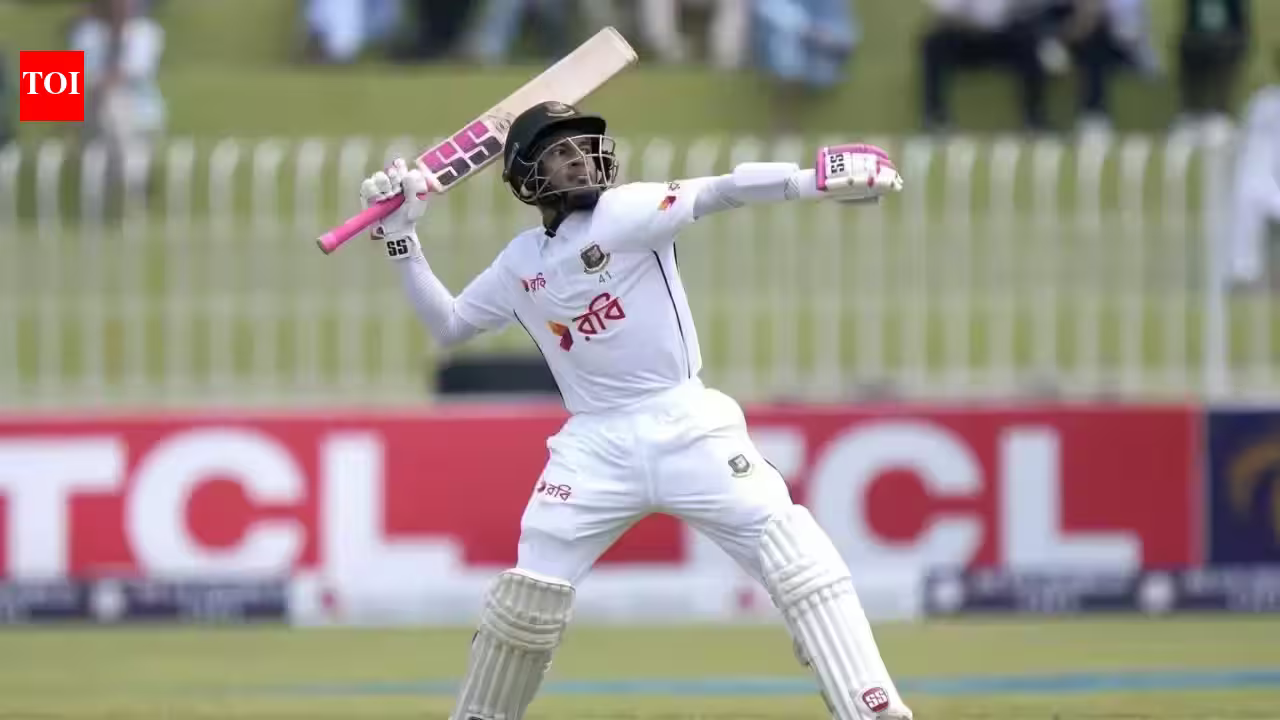
MIRPUR — An era in Bangladesh cricket is drawing to a graceful close. Mushfiqur Rahim, the heartbeat of the national side’s Test lineup for two decades, has confirmed that he will step away from the longest format of the game following the opening Test against England in February. The announcement, delivered on behalf of the veteran by former captain Tamim Iqbal, marks the final chapter for a player whose grit, longevity, and record-breaking statistics have come to define the modern history of the sport in the nation.
The 39-year-old, who has already transitioned away from the white-ball formats, leaves behind a legacy that is statistically peerless in his home country. With 108 Test caps to his name, Rahim stands as the most-capped Bangladeshi player in history, a testament to his durability in a physically demanding format that frequently wears down batters and keepers alike.
The Final Bow in Mirpur
The decision to retire following the first Test against England at the Sher-e-Bangla National Cricket Stadium in Mirpur is a poignant homecoming of sorts. It is a venue where Rahim has produced countless match-winning knocks and where the home crowd has witnessed his most determined stands.
Tamim Iqbal, speaking to the press on Saturday, revealed the nature of the conversation that preceded the announcement. “Mushfiq called me several days ago and informed me of his decision,” Iqbal stated. “I encouraged him to address the media himself, but he entrusted me with the duty of making the news public. It is a moment of mixed emotions. He has been a great, great servant of Bangladesh cricket, and his impact on our dressing room culture cannot be overstated.”
The upcoming two-Test series against England, a critical part of the ICC World Test Championship 2025-27 cycle, now takes on an added layer of significance. For the fans, the Mirpur Test will serve as a celebration of a career that began on the hallowed turf of Lord’s back in 2005.
A Career Defined by Firsts
To look at Mushfiqur Rahim’s career statistics is to look at the progression of Bangladesh cricket itself. Debuting as a teenager, he grew from a raw prospect into the anchor of the batting order. His resume is studded with historic benchmarks that set the standard for every player who followed in his footsteps.
In 2013, he became the first Bangladeshi batter to record a Test double century, a feat that shattered a long-standing psychological barrier for the team. He would go on to register two more double centuries, demonstrating a hunger for big runs that few in the game possess. His ability to build innings under extreme pressure became his calling card, particularly in his successful stints as captain, where he famously led Bangladesh to maiden Test victories against cricketing powerhouses England and Australia.
His milestone-laden journey continued well into his later years. In November 2025, he joined an elite fraternity of cricketers when he became the first Bangladeshi to play 100 Test matches. That occasion was made all the more special by a century against Ireland, placing him in the select group of legends who have scored a hundred in their 100th Test match. Earlier this month, against the West Indies, Rahim further cemented his status as the nation’s greatest Test batter by becoming the first to cross the 7,000-run threshold, concluding his career with 7,062 runs and 14 centuries to his name.
The End of an Era
Beyond the raw data of 7,000-plus runs and 108 matches, Rahim’s contribution lies in his reliability. Whether behind the stumps or standing firm against the world’s elite pace attacks, he was the player the team leaned on when the situation demanded grit. He navigated the team through its formative years in the Test arena and stood as a central figure as Bangladesh clawed its way into the international competitive landscape.
As the cricketing world prepares for the England series in February, the focus will undoubtedly shift toward honoring the man who stood as the backbone of the Bangladesh middle order. While the team will eventually move on to find his successor, the void left by Mushfiqur Rahim will be profound. For a player who entered the international scene as a 17-year-old in 2005, his departure signifies more than just a personnel change—it marks the conclusion of the most influential career in Bangladesh cricket history.
For now, the focus is singular: one last performance on his home turf in Mirpur, a final opportunity for the fans to applaud a player who gave everything to the crest on his chest.
Disclaimer: This content is auto-generated for informational purposes only.
Source: Read Original News