







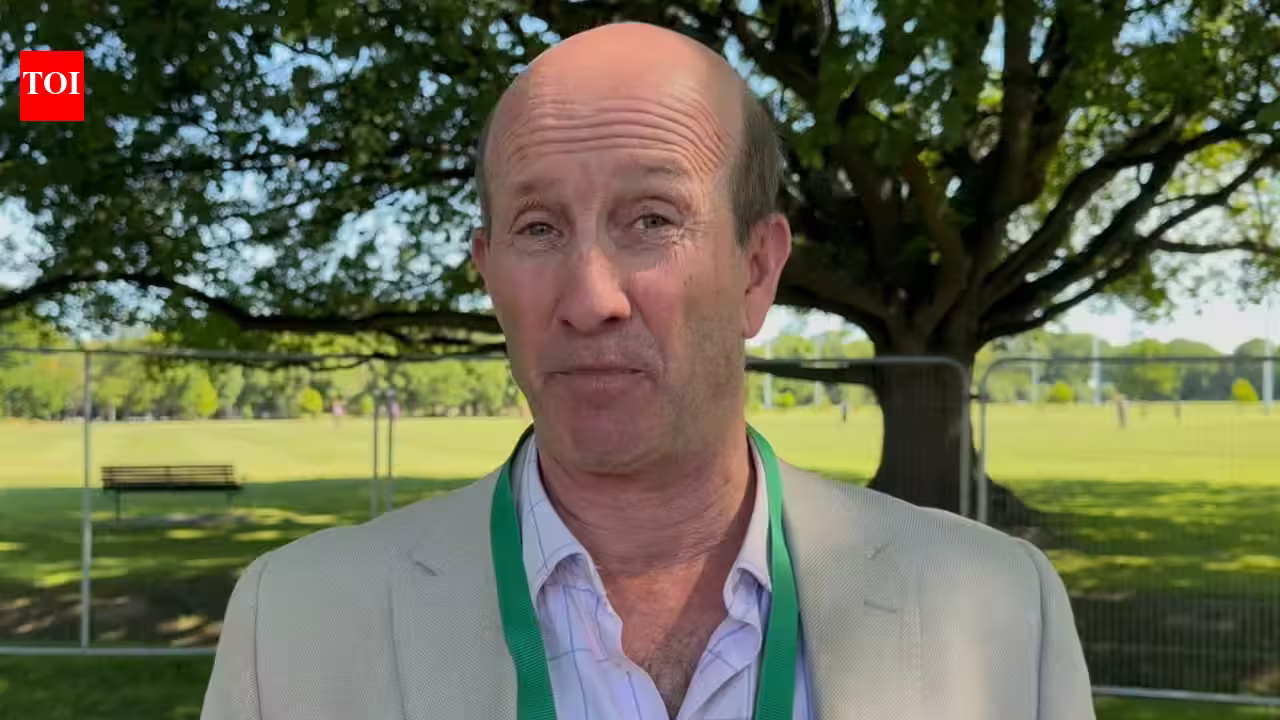
Christchurch remains a city steeped in cricket history, and there are few better guides to navigate the evolving landscape of the sport than former New Zealand all-rounder Chris Harris. With 250 ODI appearances under his belt, the 57-year-old veteran has transitioned from a stalwart of the Black Caps to a multifaceted figure who remains deeply embedded in the game through commentary, umpiring, and his own relentless personal energy.
On the sidelines of the recent India-New Zealand Test match, Harris offered a candid assessment of a sport that is currently undergoing a radical transformation. While he remains a “hyperactive” student of the game, Harris’s perspective is grounded in the wisdom of a man who spent his career hunting big wickets and steadying middle-order collapses.
The “Impossible” Task of Modern Bowling
Reflecting on the aggressive nature of the modern batter, Harris—a bowler who thrived on guile and tactical placement—expressed a mix of sympathy and awe for today’s attack. “It’s not very kind to the bowlers,” Harris admitted. “When the modern batsman gets in, you’ve got to feel for the bowlers. It’s so hard to stop those guys.”
Harris points to a combination of smaller boundaries and unprecedented aggression as the primary catalysts for the current run-fest. He noted that even with the best tactical plans, the sheer intent displayed by top-order batters often renders traditional bowling plans obsolete. “There don’t appear to be boundaries anywhere in the world that are big enough to stop them on their day,” he added.
The Changing Breed: Where are the All-Rounders?
One of the more poignant observations from the former international is the apparent decline of the traditional, “bits-and-pieces” all-rounder—a role that Harris himself mastered with distinction. In the current climate, he believes the game has shifted toward high-level specialization.
“The modern game is about hitting the ball, particularly in the white-ball format,” Harris explained. “You have your five specialist batsmen and your specialists bowlers, and you’ve got some bowlers who are good hitters. That is perhaps why we aren’t seeing as many genuine all-rounders.”
For Harris, a “genuine” all-rounder is defined by merit: the ability to walk into a national squad as a specialist in either discipline. He cites names like Ben Stokes and Andrew Flintoff as the gold standard, noting that such players provide a luxury that today’s team builders struggle to replicate.
Financial Freedom and the T20 Shift
Perhaps the most significant change in cricket’s history is the democratization of wealth through domestic T20 leagues. Harris, who played in an era where international selection was the only pathway to a professional living, acknowledges that the current financial landscape has fundamentally altered player psychology.
“In my day, if you wanted to make a proper living out of cricket, you needed to play international cricket,” he noted. “Now, people don’t necessarily have to. You can be super aggressive, score at a strike rate of 200, and make a great living just by playing T20 cricket in the IPL or CPL.”
Harris suggests that this freedom is a driving force behind the “aggressive” style of play that defines the modern era. Players no longer need to grind through long-form techniques to secure their futures; they can instead offer a niche, high-impact skillset to the global T20 market. When asked if he would have thrived in an IPL auction setting, the ever-humble Harris laughed, noting that his specific brand of batting, bowling, and high-intensity fielding would have certainly found a place in the modern tactical playbook.
The Longevity of the ODI Format
Despite the noise surrounding the saturation of T20 cricket, Harris remains steadfast in his support for the 50-over game. While critics have repeatedly sounded the death knell for ODIs, the former Kiwi star insists that the format possesses a unique magic that its shorter cousin cannot replicate.
“We get asked this question every year, but those World Cups are so special,” Harris said. “The last couple of editions have been incredible. When the World Cup comes around, the intensity and the spectacle prove that ODIs will be here for a long time.”
Mentorship and the Future of Coaching
As he looks toward his own future, Harris is open to stepping into a mentorship role, specifically within white-ball setups. He believes that coaching is shifting away from purely technical instruction toward “one-percenters”—mental health support, psychological conditioning, and lateral thinking.
“You’ve always got to keep pushing the boundaries,” Harris remarked. “Everyone at the top is trying to do absolutely everything they can to be their best. Sometimes you’ve got to think outside the box.”
Whether he is calling a game from the commentary box or pondering a tactical shift on the field, Chris Harris remains a vital voice in New Zealand cricket. His journey from a gritty 1990s all-rounder to a modern observer provides a rare bridge between the history of the game and the chaotic, high-stakes future that lies ahead. As the sport continues to chase the “one-percenters” of performance, voices like his—level-headed, observant, and deeply passionate—remain the standard against which progress is measured.
Disclaimer: This content is auto-generated for informational purposes only.
Source: Read Original News