




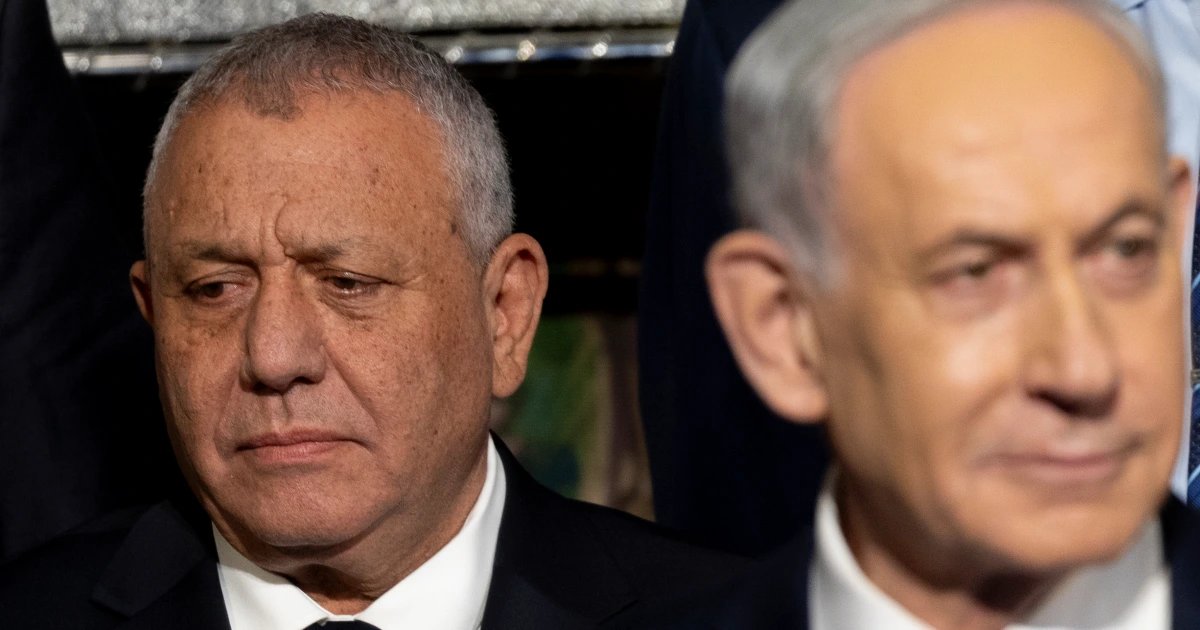
TEL AVIV — In a stunning reversal that could redraw the map of Israeli politics, caretaker Prime Minister Benjamin Netanyahu and opposition leader Gadi Eisenkot held high-stakes talks on Sunday, exploring the possibility of a national unity government. The two-hour meeting, held at the IDF defense headquarters in Tel Aviv, marks a dramatic pivot following the legislative deadlock that emerged from last month’s national elections.
The potential breakthrough centers on a radical proposal from Netanyahu, who suggested a rotating premiership arrangement in which Eisenkot would serve as prime minister first. The offer represents a significant concession for the veteran leader, who has spent his career fighting to maintain his grip on power.
“My responsibility as a leader obligates me to put everything aside,” Netanyahu wrote on social media, emphasizing that such an agreement would “ensure Israel’s security and future.”
Eisenkot, a former Israel Defense Forces chief who centered his recent campaign on ousting Netanyahu, responded with guarded pragmatism. He invited the Likud leader to “genuine and accelerated negotiations,” noting that he would assess the seriousness of the proposal over the next 24 hours. The urgency is palpable; Eisenkot currently holds the mandate from President Isaac Herzog to form a government, but he faces a looming December 6 deadline to finalize a coalition or risk triggering a fifth round of national elections in just a few years.
The push for unity comes as both men find themselves unable to secure a 61-seat majority in the Knesset. Efforts to form a broad, anti-Netanyahu alliance have been hampered by the political reality of a deeply fractured legislature and the emergence of Arab-led parties as potential kingmakers. While these parties hold 19 seats, many prospective coalition partners remain uneasy about relying on them, pushing figures like former Prime Minister Naftali Bennett to publicly urge Eisenkot to favor a pact with Netanyahu over the ideological compromise required to work with non-Zionist factions.
“We will not be dependent on non-Zionist fringe parties,” Bennett stated on social media. “Now the burden of proof is on Netanyahu to show that this is a genuine intention, not lip service.”
Political analysts suggest that while Eisenkot campaigned on a promise to hold Netanyahu accountable for security lapses—specifically regarding the October 7, 2023, attacks—a coalition with his rival may be more palatable to his base than an alliance with Arab parties.
“The hesitation toward working with the Arab parties shows where Israeli public opinion is,” said H.A. Hellyer, a senior fellow at the Royal United Services Institute.
While the two men share common ground on several issues—including opposition to a Palestinian state and a commitment to ending Hamas’s rule in Gaza—deep policy rifts remain. Eisenkot has pushed for a more aggressive crackdown on Jewish extremists in the West Bank and remains committed to an independent inquiry into the military’s failures under Netanyahu. As the clock ticks toward the December deadline, the coming hours will determine whether these longtime rivals can overcome their mutual antipathy to stabilize a fractured nation.
Disclaimer: This content is auto-generated for informational purposes only.
Source: Read Original News