







The Dynamics of the Rupee: A Rapid Reversal of Fortune
The trajectory of the Indian rupee over the past year serves as a stark reminder of the volatility inherent in global financial markets. As recently as May 2026, market sentiment was gripped by the prospect of the rupee breaching the psychological barrier of 100 against the US dollar. This bearish outlook was driven by a confluence of adverse factors, including the repercussions of the US-Iran conflict, which sent global crude oil prices soaring, and a period of significant foreign institutional investor (FII) outflows following uncertainties surrounding international trade tariffs.
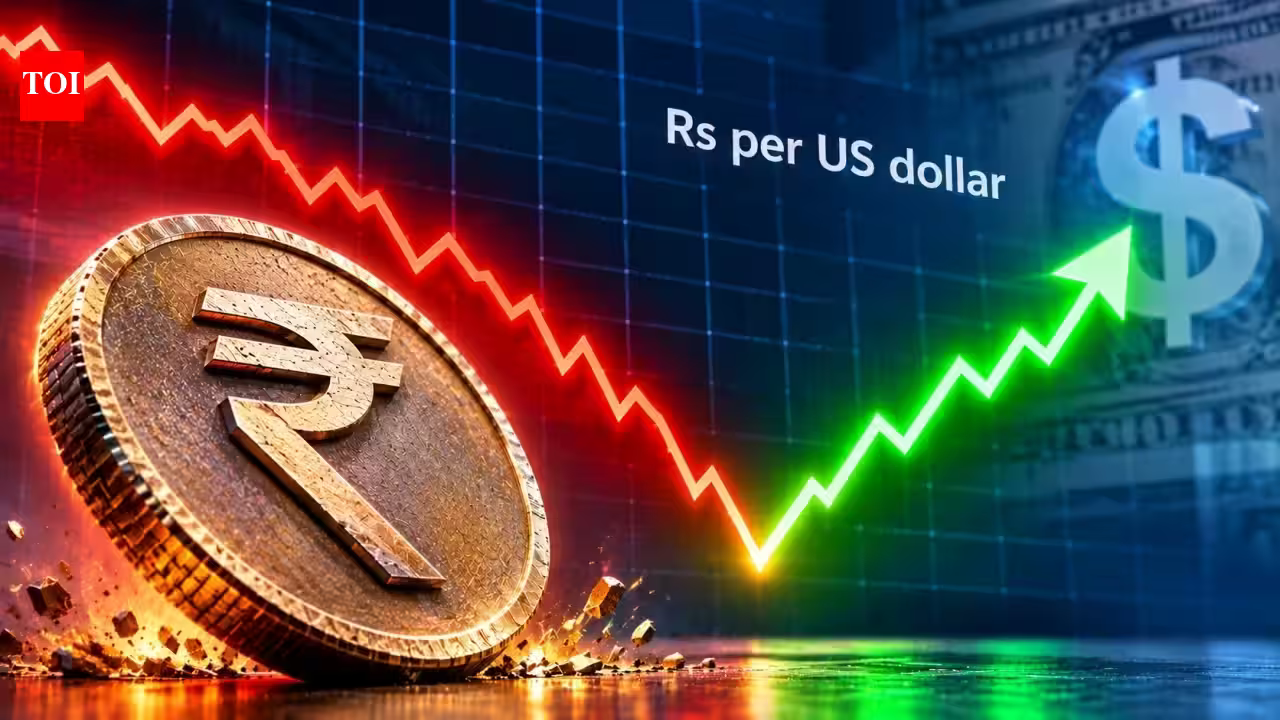
However, the latter half of the year has witnessed a dramatic shift. The rupee has not only clawed back its losses but has emerged as one of Asia’s top-performing currencies in November 2026. After hitting an all-time low near 97, the currency has strengthened significantly, closing recently at 92.9. This rapid turnaround has prompted a shift in the policy discourse. Chief Economic Advisor V. Anantha Nageswaran has suggested that the primary challenge for the Indian economy in the coming year may not be the rupee’s weakness, but rather the management of its newfound strength.
Economic Drivers Behind the Appreciation
The sudden appreciation of the rupee is rooted in a fundamental change in macroeconomic conditions. The most significant relief for the Indian economy has been the cooling of global crude oil prices. As a net importer of oil, India is highly sensitive to energy prices; a drop in crude prices directly improves the trade deficit and reduces the demand for US dollars, thereby providing structural support to the domestic currency.
Concurrently, a reassessment of global AI-related stocks led to a cooling in that sector, which redirected capital flows back toward emerging markets. India has been a primary beneficiary of this rotation, recording unprecedented foreign investor inflows. This liquidity surge, coupled with anticipatory market positioning ahead of the upcoming Budget—specifically regarding potential relief on long-term capital gains taxes—has buoyed the equity markets. The Sensex’s impressive recovery in November, erasing losses incurred during the peak of the regional geopolitical conflicts, mirrors this renewed investor confidence. The Reserve Bank of India’s (RBI) robust accumulation of foreign exchange reserves, now exceeding $780 billion, has provided a powerful buffer that allows the central bank to navigate these fluctuations with greater tactical flexibility.
The Double-Edged Sword: Export Competitiveness vs. Inflation
While a stronger rupee is often viewed as a sign of economic health, it presents a complex challenge for various stakeholders. For an export-oriented economy currently targeting the $1 trillion mark in total exports, rapid currency appreciation can act as a significant headwind. Sectors such as IT services, textiles, pharmaceuticals, and gems and jewellery—which rely heavily on global competitiveness—face a compression in profit margins when the rupee strengthens, as their revenue realisations in local currency decline.
Conversely, the benefit of an appreciating currency is the immediate relief it provides in the form of contained imported inflation. By lowering the cost of imported raw materials, capital goods, and energy, a stronger rupee enhances domestic purchasing power. Industries dependent on imported machinery, such as electronics, telecommunications, and renewable energy, stand to gain substantially from these lower costs. Furthermore, the RBI has noted that a 5 percent appreciation in the rupee can potentially lower inflation by approximately 40 basis points, provided the pass-through to consumers is efficient. This disinflationary effect is crucial for sustaining long-term consumer demand and supporting the broader investment cycle within the country.
Policy Outlook and the Role of the Central Bank
The debate among economists regarding the rupee’s future path remains nuanced. Projections for the next twelve months vary, with estimates for the USD/INR exchange rate ranging broadly between 87 and 96. Most experts agree that the RBI should avoid targeting a specific exchange rate. Instead, the central bank’s role remains focused on ensuring that currency movements are orderly and do not deviate significantly from India’s macroeconomic fundamentals.
Experts argue that the RBI should calibrate its interventions to address excessive volatility rather than defending artificial levels. If the appreciation is grounded in improved economic performance, such as a narrowing trade deficit or higher manufacturing output, the central bank is expected to allow the market to find its equilibrium. There is also a strategic advantage to the current situation: a phase of rupee strength allows the RBI to rebuild its net foreign exchange reserve cushion, specifically by reducing its outstanding short dollar forward book. This enhances the country’s resilience against future exogenous shocks.
Strategic Considerations for the Fiscal Year Ahead
As India heads into FY28, the distinction between a gradual, fundamental-driven appreciation and a sharp, inflow-driven surge remains critical. While the former is a hallmark of a maturing economy, the latter can introduce market instability and complicate the competitive positioning of labour-intensive export sectors. The government and the central bank are likely to prioritize stability, ensuring that industry and the external sector can adjust to the shifting currency landscape without suffering structural damage.
In summary, the transition from a period of defensive currency management to one of managing strength reflects India’s improved external position. For policymakers, the objective is to leverage the lower cost of imports to boost domestic production and investment while keeping a watchful eye on export competitiveness. As long as the rupee tracks its Real Effective Exchange Rate (REER) and avoids becoming excessively overvalued, the current trend could be a catalyst for sustained economic stability. The path forward involves balancing the benefits of lower inflation and improved purchasing power against the need to protect the vital export engines that drive employment and growth in the Indian economy.
Disclaimer: This content is auto-generated for informational purposes only.
Source: Read Original News