






The Shadow of the Gerrymander: India’s Delimitation Dilemma
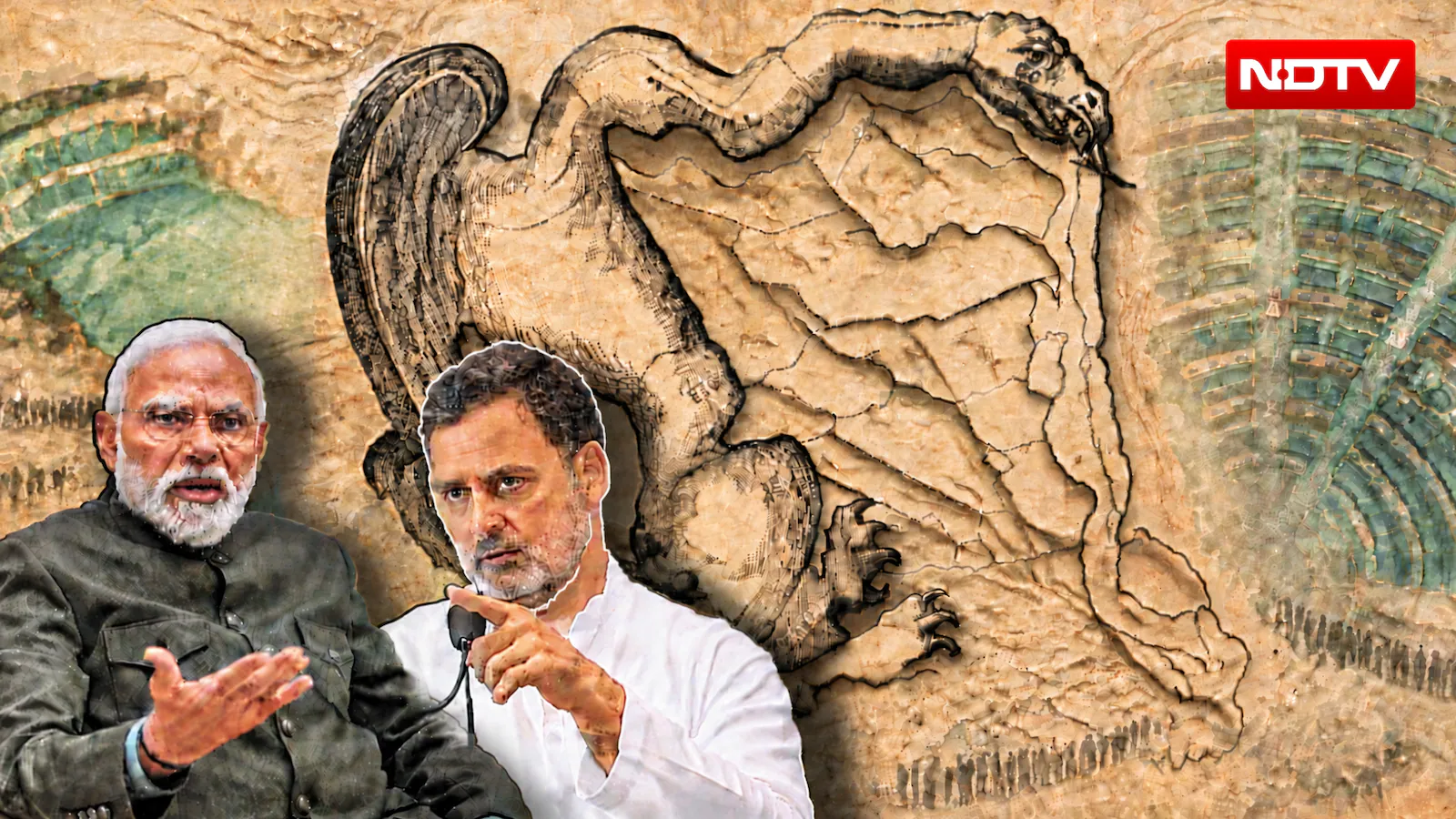
In 1812, a bizarrely contorted electoral district in Massachusetts, shaped like a mythical lizard, birthed the term “gerrymander”—a fusion of “salamander” and Governor Elbridge Gerry. More than two centuries later, this historic political maneuver has become the focal point of a heated parliamentary battle in India. As the Narendra Modi government prepares to reshape the nation’s electoral map by 2026, the Opposition fears that the exercise is designed not to enhance representation, but to pre-determine electoral outcomes.
The core of the upcoming delimitation revolves around a significant expansion of the Lok Sabha. While the government proposes a 50 per cent increase in seats across all states—thereby maintaining existing ratios and avoiding a direct shift of power from South to North—the real contention lies in the redrawing of individual constituency boundaries.
A Legacy of Freezes and Shifts
For over 50 years, the size of the Lok Sabha remained static, anchored by the 1971 Census. Successive governments, starting with Indira Gandhi’s administration and followed by the Vajpayee-led NDA, imposed freezes to prevent penalizing states that had successfully managed population growth.
When the current government initially sought to lift this freeze, it faced fierce pushback over the potential loss of political weight for southern states. After months of negotiation, the government introduced a revised bill that codifies a 50 per cent increase, frozen until 2051. This compromise secured the support of regional powerhouses like the DMK, yet it left a gaping question regarding the criteria for defining the new geographical boundaries.
The Fear of Manufactured Majorities
Leader of the Opposition Rahul Gandhi has emerged as the primary critic, warning that the government intends to utilize the delimitation process to manipulate voter demographics. By shifting specific pockets of voters from one constituency to another, the government could effectively dilute the electoral strength of its opponents.
Critics point to recent exercises in Assam and Jammu and Kashmir as blueprints for this strategy. In Assam, changes to constituency boundaries appeared to consolidate votes in a manner favorable to the ruling party, while in J&K, the delimitation process was perceived to disproportionately favor the Jammu region over the Kashmir Valley. The government, conversely, maintains that these adjustments are necessary to improve administrative efficiency and ensure the effective implementation of the 33 per cent women’s reservation quota.
The “As Far As Practicable” Clause
The legal framework for the 2026 exercise mandates that constituencies remain “geographically compact” and respect administrative boundaries. However, the inclusion of the phrase “as far as practicable” has drawn sharp criticism from the Congress party. They argue this provides the Election Commission with the legal flexibility to ignore natural geographic logic in favor of political calculations.
With the Lok Sabha poised to expand to as many as 850 seats, the sheer scale of the operation is unprecedented. The Opposition contends that with such a massive restructuring, the ruling establishment has the opportunity to effectively “fix” the political map for decades to come.
As the debate intensifies, the fundamental question remains: will the 2026 delimitation be a neutral administrative update, or will it be remembered as the moment when “gerrymandering” became a permanent fixture of India’s democratic landscape? For the Opposition, this is not merely a debate over numbers, but a critical struggle for the future of representative democracy.
Disclaimer: This content is auto-generated for informational purposes only.
Source: Read Original News