








A global remote-sensing investigation published on 27 November 2026 has provided the first high-resolution map of the direct physical competition between utility-scale solar infrastructure and agricultural production. The study, appearing in Communications Earth & Environment and led by researchers from Zhejiang University and Aalto University, reveals that 27 percent of the world’s non-residential solar capacity is currently sited on productive cropland, signaling a mounting challenge for policymakers tasked with balancing decarbonization with global food security.
The research utilized a unified global inventory of photovoltaic facilities exceeding 10 kilowatts, cross-referencing these footprints with 30-meter resolution satellite data. As of the 2018 empirical baseline, the team identified approximately 1,372 square kilometers of active cropland occupied by solar arrays. This footprint is responsible for an annual loss of roughly 1.2 petacalories (Pcal) of staple crop production—a caloric deficit sufficient to meet the annual grain requirements of approximately 3.3 million people.
The displacement is not geographically or agronomically random. Utility-scale developers prioritize flat, unobstructed terrain with high solar irradiance—characteristics that align precisely with the world’s most fertile temperate grain belts. Consequently, wheat and maize have emerged as the most vulnerable crops. Without strategic shifts in land-use policy, the study projects that these losses could escalate to between 15 and 26 Pcal by 2050, representing a 12-fold to 22-fold increase in lost food production over the next two and a half decades.
Regional dynamics play a significant role in this encroachment. In East and South Asia, particularly in China, the demand for clean energy has frequently forced authorities to navigate the tension between energy development and strict “agricultural red lines” designed to protect food-producing soil. In North America, the focus is on the U.S. Midwest and California’s Central Valley, where utility-scale arrays have sparked local zoning conflicts regarding soil compaction and the erosion of agricultural economies. Europe, facing more limited per-capita arable land, has increasingly favored policies that steer renewable development toward brownfields and artificial surfaces to avoid competing with essential food production.
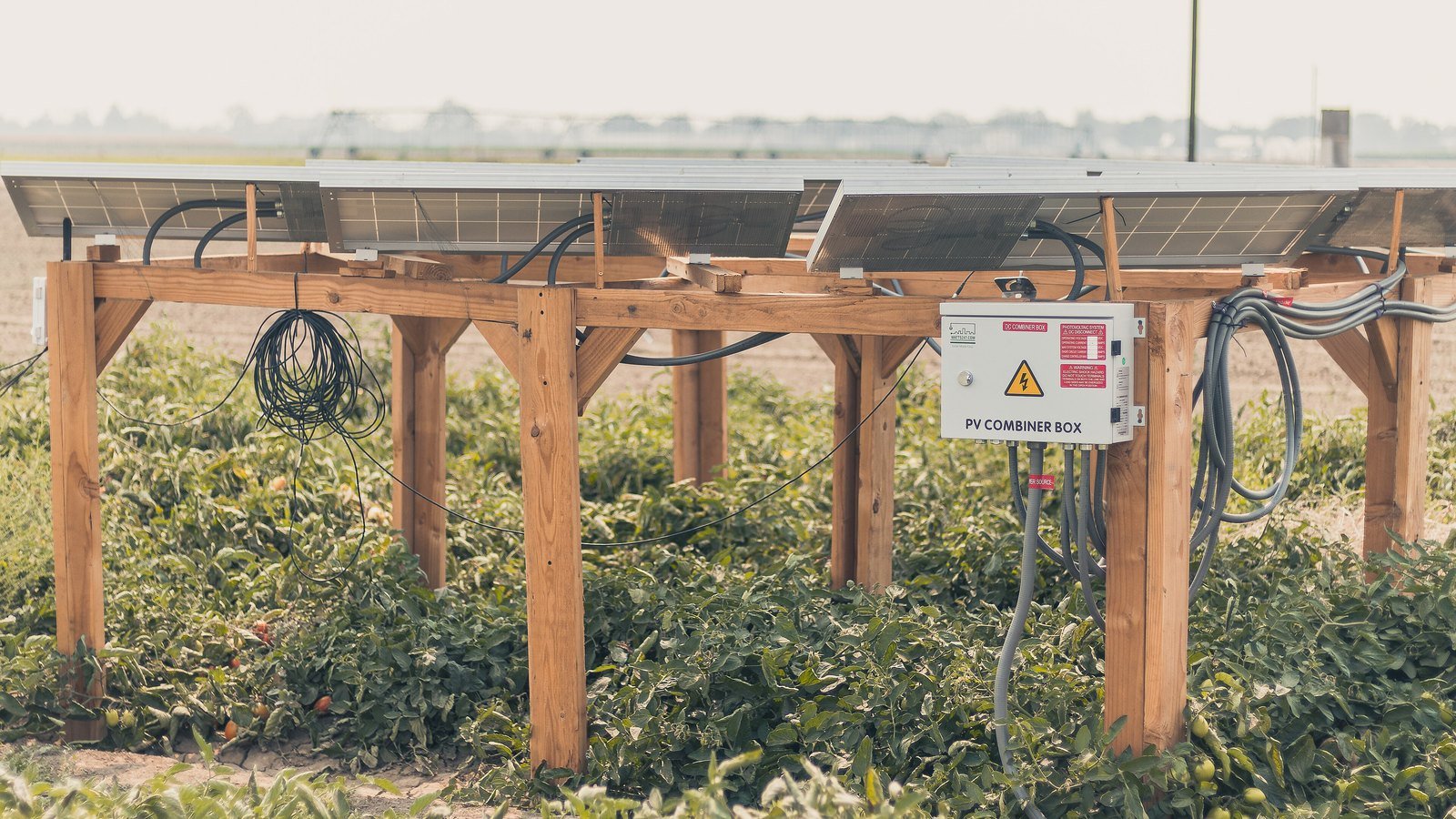
To mitigate these impacts, researchers are advocating for the widespread adoption of “agrivoltaics”—the co-location of solar arrays with active agriculture. By utilizing elevated, tracking mounting systems, developers can maintain over 80 percent of baseline crop yields by providing shade that protects crops from extreme heat and reduces water evaporation. The study estimates that a broad transition to these dual-use systems could prevent approximately 66 percent of the projected future caloric losses.
The findings carry significant weight for universities, land-grant institutions, and research offices worldwide. As these institutions manage vast tracts of land and host both renewable energy infrastructure and agronomic research, they are uniquely positioned to serve as living laboratories for dual-use technology. The authors suggest that institutional research offices must foster deeper collaboration between electrical engineering, agronomy, and environmental science departments to meet the dual challenges of climate mitigation and food stability.
As international bodies move toward standardizing agrivoltaic practices—such as the adoption of DIN SPEC 91434 and emerging International Electrotechnical Commission guidelines—the focus is shifting toward “smart siting.” By utilizing high-cadence satellite constellations to monitor land-use conversion in real time, regulators hope to enforce stricter mandates that protect prime farmland. Ultimately, the research suggests that clean energy and food security are not mutually exclusive, provided that national planning frameworks shift from a model of land displacement to one of integrated, multi-objective land stewardship.
Disclaimer: This content is auto-generated for informational purposes only.
Source: Read Original News