








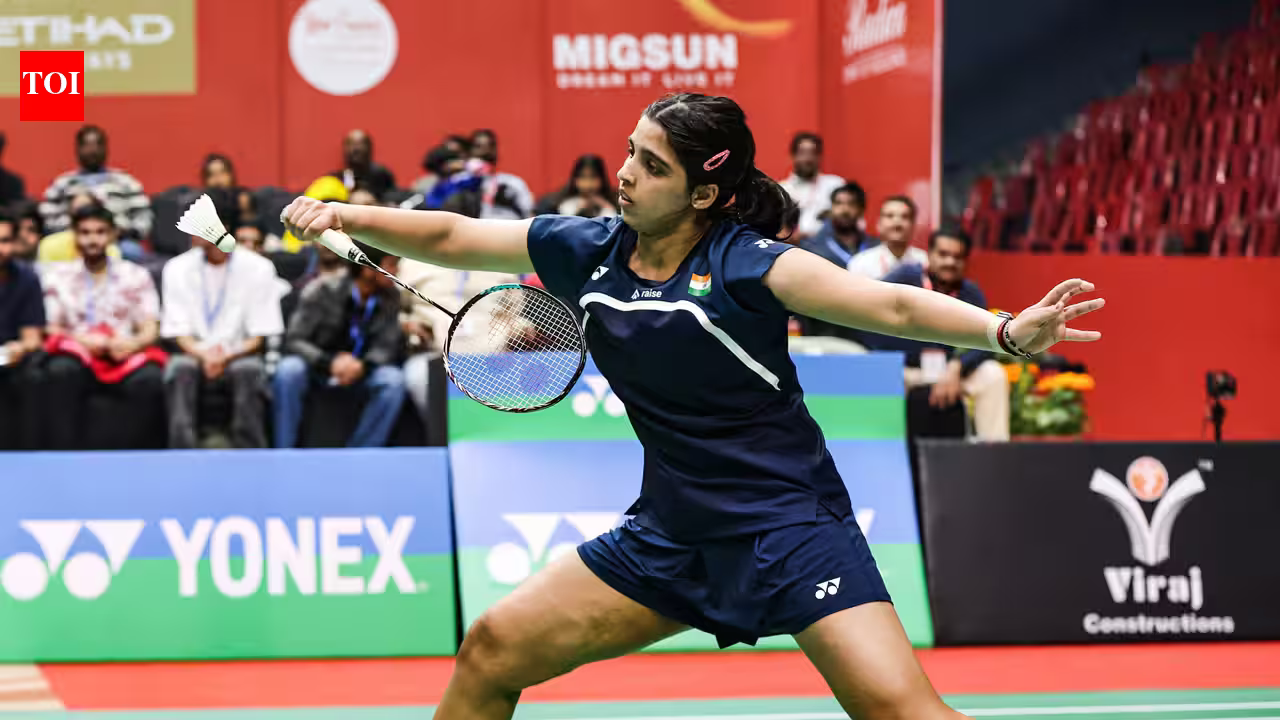
NEW DELHI: The landscape of Indian badminton is undergoing a tectonic shift, and at the epicenter of this transformation is 17-year-old sensation Tanvi Sharma. While the curtains closed on the Syed Modi International 2026 with a bittersweet taste for the home contingent, the tournament will be remembered for the arrival of a new prodigy on the global stage. Despite falling just short of the title in Lucknow, Sharma has officially etched her name into the history books, becoming the youngest Indian player to break into the BWF World Rankings top 20 since the legendary PV Sindhu achieved the feat over a decade ago.
### A Historic Milestone in the Making
At 17 years and 11 months, Sharma’s climb into the elite top 20 bracket marks a significant milestone for Indian women’s singles. Not since September 2012, when a young PV Sindhu breached the top 20 at age 17 and two months, has the country witnessed such a rapid ascent by a teenage talent.
This breakthrough is not an isolated incident but the culmination of a breakout season that has seen the youngster evolve from a promising prospect into a legitimate threat to the world’s best. Her trophy run at the Taipei Open Super 300 earlier this year served as a warning to the circuit, while a gritty quarter-final appearance at the Denmark Open Super 750 proved that she possesses the temperament to compete at the highest level of the sport. As she ascends the rankings, she joins fellow 18-year-old standout Unnati Hooda—who also breached the top 20 earlier this year—to signal a new era of depth for Indian badminton.
### The Final Showdown: A Lesson in Resilience
The Syed Modi International final saw Sharma square off against Thailand’s fourth seed, Supanida Katethong. The teenager displayed the confidence of a seasoned veteran in the opening game, dismantling her opponent’s defense with a blistering display of attacking badminton. Winning the first game 21-11, Sharma looked poised to claim her second Super 300 title of the season.
However, the world No. 26 Katethong proved why she is a formidable opponent. Adapting her tactical approach, the Thai shuttler methodically dismantled Sharma’s rhythm in the second game, turning a 6-9 deficit into a dominant 21-12 victory. The momentum shift was palpable, forcing a decider that tested the physical and mental endurance of both players.
The final game remained a knife-edge battle, knotted at 14-14. In the high-pressure cauldron of the final, it was Katethong who found an extra gear, closing out the match 11-21, 21-12, 21-15. While the loss was undoubtedly stinging, the tournament served as an essential crucible for Sharma, who had already displayed immense grit by navigating a grueling semi-final victory over compatriot Unnati Hooda to reach the final round.
### Bittersweet Ending for Doubles Hopefuls
The disappointment in the singles final was compounded by a heart-wrenching loss in the women’s doubles category, where India’s gold-standard pair, Treesa Jolly and Gayatri Gopichand, saw their quest for a third consecutive Syed Modi title evaporate in the final moments.
The top-seeded Indian duo initially seemed in control, demonstrating the composure that has made them fan favorites. Trailing 16-20 in the opening game, Jolly and Gopichand produced a sensational comeback, staving off four game points to steal the opener 24-22. However, their Indonesian adversaries, Isyana Syahira Meida and Rinjani Kwinnara Nastine, refused to bow out. After dropping the second game 21-12, the Indian pair seemed to have one hand on the trophy in the decider, carving out a commanding 19-14 lead.
In a stunning final-act collapse, the Indian pair faltered, allowing the 19-year-old Indonesian duo to win seven of the next eight points. The match slipped away 22-24, 21-12, 21-19, marking a rare and painful defeat for the defending champions on home soil.
### The Silver Lining
Despite the two runner-up finishes, the narrative of the 2026 Syed Modi International remains anchored by the rise of the next generation. For Tanvi Sharma, the runner-up trophy is merely a placeholder for the bigger honors that likely await her. As she prepares to enter the top 20, the pressure will undoubtedly mount, but her trajectory suggests she is more than capable of handling the scrutiny.
For Indian badminton, the message from Lucknow is clear: the baton is being passed. While the veterans continue to battle, the arrival of teenagers like Sharma and Hooda into the world’s elite rankings provides a cushion for the future. As the circuit moves on to the next leg of the tour, the focus will remain on whether these young stars can bridge the gap between “promising talent” and “consistent title contender.” Based on her performance this week, Tanvi Sharma has already taken the most difficult step in that journey.
Disclaimer: This content is auto-generated for informational purposes only.
Source: Read Original News