









The Unforeseen Failure of a Living Room Staple
It was 4PM on Black Friday. The plans were set: two plates of Thanksgiving leftovers, a comfortable spot on the couch, and a long-awaited college football rivalry game. However, the display in the living room failed to respond. Troubleshooting a television during a major holiday weekend is an exercise in frustration, particularly when the hardware relies on proprietary external components.
The device in question was a Samsung Frame TV, a product chosen for its ability to disguise itself as artwork and its clever use of a One Connect box. This separate unit houses all cable inputs, leaving only a single, thin wire running to the screen. After hours of attempted restarts and diagnostics, it became clear the One Connect box had suffered a fatal hardware failure. Replacement parts for this specific model were no longer available, and finding compatible second-hand units proved to be a dead end. Faced with a blank screen during a peak entertainment weekend, the search for a successor began in earnest.
Navigating the Modern Television Landscape
Selecting a new display under pressure is rarely ideal, yet the timing of the failure coincided with significant seasonal discounts. The initial research focused on balancing aesthetic requirements with technical performance. The goal was to find a solution that minimized visible cables, avoided the pitfalls of the previous operating system, and maintained the “art mode” functionality that had become a fixture of the living room decor.
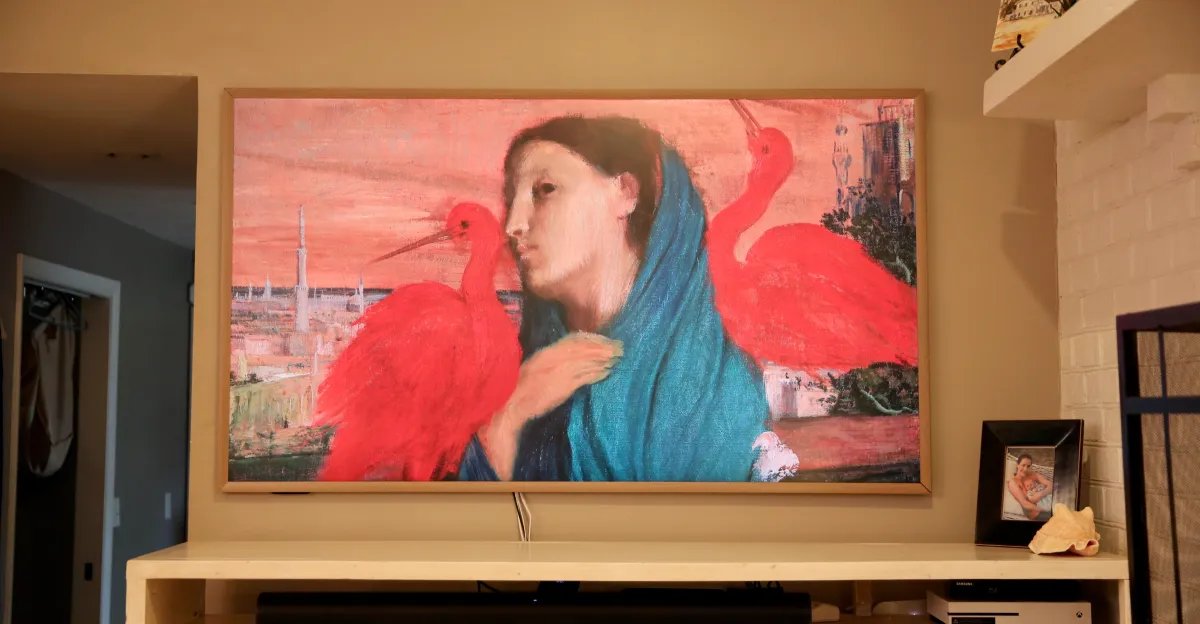
The options were narrowed down to three primary contenders: a newer 75-inch Samsung Frame, the Hisense CanvasTV, and the 77-inch LG B6E OLED. While the LG offered superior contrast and professional-grade color accuracy, it lacked an integrated art mode and required a more complex mounting solution. Conversely, the Samsung Frame remained a familiar choice, but the latest iteration lacked the external box design that had made the previous unit so convenient for cable management. The Hisense CanvasTV emerged as the logical middle ground, offering a large, anti-glare display, a competitive price point, and a simplified approach to wall-mounting artwork.
The Technical Trade-offs of Aesthetic Design
When opting for lifestyle-focused televisions, users often accept specific technical trade-offs. The Hisense CanvasTV is an edge-lit QLED display, which lacks the deep blacks and precise brightness control found in high-end OLED or Mini-LED panels. However, its 144Hz refresh rate provides an advantage for gaming compared to the older model it replaced.
The decision to move away from the Samsung ecosystem was driven by more than just hardware reliability; the user experience regarding software and ongoing subscription fees played a significant role. The Hisense model integrates with Google TV, offering a more flexible software environment. Furthermore, the inclusion of a matte finish on the screen significantly reduces reflections, a common issue in open-plan rooms with high ambient light. While the LG OLED would have technically outperformed both the Samsung and Hisense models in raw image fidelity, the physical constraints of the living space and the desire for a seamless, flush-mounted wall setup made the Hisense the most practical choice.
Installation Challenges and Cable Management
Transitioning to the new hardware highlighted a common issue in modern home theater setups: cable management. Unlike the original setup, which utilized the external One Connect box, the new unit required routing cables directly to the television’s rear. This meant sourcing longer HDMI cables to connect existing peripherals, such as the soundbar and streaming device, through the wall-mounted conduits.
While the installation required extra effort, including the addition of a paintable cord cover, the finished result maintains the minimalist appearance originally desired. The inclusion of a teak bezel further enhances the display, making the transition to the new, larger screen feel like a deliberate decor upgrade rather than a forced replacement.
Evaluating the Long-term Value
After twenty-four hours of operation, the choice remains effective. The increased screen size and the addition of Dolby Vision support provide a noticeable improvement during sports broadcasts and high-definition content consumption. By shifting to a model that does not require an ongoing subscription to access a gallery of art, the total cost of ownership is lower than the previous device.
Though the absence of an external connection hub is a minor inconvenience for future hardware swaps, the performance gains and the resolution of the initial technical crisis have proven the decision sound. The transition has turned a stressful Black Friday incident into a successful upgrade, ensuring that the living room remains both a functional space for entertainment and a curated part of the home’s interior design. With the new display calibrated and operational, the focus can shift back from troubleshooting hardware to enjoying the remaining rivalry weekend coverage.
Disclaimer: This content is auto-generated for informational purposes only.
Source: Read Original News