


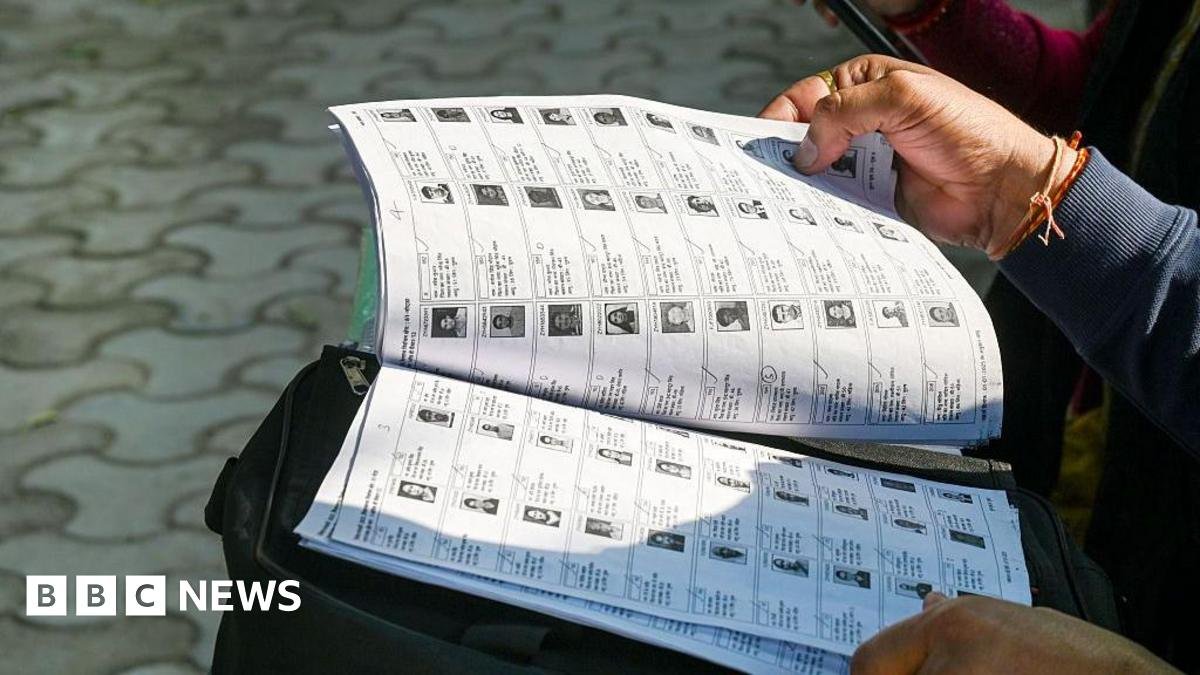
The deletion of such a large number of names has sharpened concerns over errors, exclusion risks and the criteria used to determine “valid” voters.
“There is no example of an election happening in India with voters’ rights remaining suspended,” said political scientist Sibaji Pratim Basu.
He says leaving out 2.7 million voters is such an “absurd proposition”.
“This is a shame for democracy,” he added.
But federal minister Sukanta Majumdar, a BJP leader from the state, says the revision exercise was necessary in the national interest.
“The constitution says only Indian citizens can choose prime ministers and chief ministers. Therefore, purging non-citizens was important,” he told the BBC.
Asked about elections taking place while the status of 2.7 million voters remains unresolved, Majumdar blamed the state government, alleging it had “slowed the process” by taking the matter to the Supreme Court. He also dismissed allegations that the poll panel was favouring the BJP.
The impact of the overall revision has been uneven, with sharp cuts in some urban pockets in the state.
In the state capital, Kolkata city, nearly 29.6% of voters were struck off the rolls in the north and 27.5% in the south – among the highest rates in the state.
Paschim Bardhaman district saw the second-highest drop, with the electorate shrinking 16.9%. About 80% of those deleted are Hindus, many from Hindi-speaking communities with roots in northern India.
Border districts with Bangladesh – North 24-Parganas, Nadia, Murshidabad, Malda, Uttar Dinajpur and Cooch Behar – also saw heavy deletions.
North 24-Parganas alone lost 1.26 million voters (15%), with most deletions mirroring its Hindu-majority profile.
Murshidabad, India’s most Muslim-populous district, saw 749,000 names (13%) struck off, broadly reflecting its demographics.
These border districts have become the epicentre of the controversy, where most exclusions occurred in the final phase – under the “logical discrepancy” category.
Muslims bore the brunt in districts like Murshidabad and Malda, while Dalit Hindus – especially from the Bangladeshi migrant Matua community – were hardest hit in North 24-Parganas and Nadia.
In the central Indian state of Madhya Pradesh, too, large numbers were flagged under “logical discrepancy”. But with no elections due until 2028, voters there have more time to resolve their status.
The issue has since eclipsed almost every other campaign theme.
At her election rallies, Banerjee said she would move the Supreme Court of India again.
“How can the elections start without solving the cases of 2.7 million voters?” she asked.
On Friday, the court said they would hear the case on 13 April, offering a narrow and uncertain window for relief.