









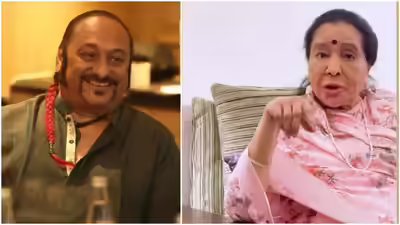
As tributes continue to pour in for the legendary Asha Bhosle, music composer, singer and producer Leslee Lewis offered a deeply personal remembrance; one that went beyond music and into the realm of family, instinct, and enduring artistic spirit. Having collaborated with Asha Bhosle on iconic projects like Rahul and I (Personal Memories) (1996), a reimagining of classics by RD Burman, and the chart-topping Jaanam Samjha Karo (1997), Lewis reflected on a creative partnership that left a lasting imprint on Indian pop music. “A PART OF MUSIC ITSELF HAS GONE QUIET” Speaking about the loss, Lewis captured the collective grief felt across the industry. “Today, it feels like a part of music itself has gone quiet. Asha Bhosle ji was not just a voice, she was a universe of expression,” he said. Highlighting her unmatched versatility, he added, “There was a fearlessness in the way she approached music, a freedom that allowed her to move across genres and emotions with unmatched ease, yet remain completely, unmistakably herself.” For Lewis, like for millions of listeners, her music was deeply intertwined with life’s moments. “Her songs lived with us. They played in our happiest moments, and they stayed with us in our silences,” he said. A VOICE THAT MADE SONGS ETERNAL Reflecting on her artistry, Lewis emphasized her rare ability to transform music into something timeless. “As a composer, I have always believed that very few singers can transform a song into something eternal. Asha ji did that every single time,” he said. He also spoke of her relentless evolution as an artist. “She never stood still. She kept evolving, experimenting, surprising us. From the most playful to the most profound, she embraced every shade of music with grace and confidence.” “I’VE ALWAYS CALLED HER AAI” Beyond the professional bond, Lewis shared a deeply personal connection with the singer. “I’ve always called her Aai. I still do. Aai is, and will always be there for me,” he said, revealing the familial affection that defined their relationship. He noted a unique coincidence that strengthened that bond: “Her birthday falls on the same day as my mother’s and Mother Mary’s, so that bond has always felt personal.” What stood out most to him was her undying passion. “What defines her is her energy. She never loses that hunger for music. Even in her 60s and 70s, she responds to new ideas like someone just starting out.” INSTINCT, GENEROSITY, AND OWNERSHIP Lewis highlighted her intuitive brilliance in the studio. “She listens, understands the core, and then adds just enough to elevate without taking over,” he said. Recalling their work on Jaanam Samjha Karo, he added, “It works because she owns it completely. She doesn’t just sing, she becomes the song.” He also remembered a moment that reflected her generosity. “I remember the Channel V awards. She wins, calls me on stage, and says the song wouldn’t have happened without me. That generosity is rare.” AN ERA ENDS, A LEGACY LIVES ON For Lewis, Asha Bhosle’s passing marks more than the loss of an individual—it signals the end of an era. “Today, we don’t just mourn a legend, we feel the loss of an era that shaped Indian music in ways words cannot fully capture,” he said. Yet, even in grief, he emphasized the permanence of her legacy. “But her voice will never really leave us. It will continue to echo, to inspire, to remind us of what true artistry sounds like.” Summing up the sentiment, Lewis added, “Legends like Asha ji don’t fade away… they become the very soul of music.”