


Resilience through data: stories from the ground
At the heart of the session were discussions where citizen science researchers and practitioners from various conflict zones shared their experiences.
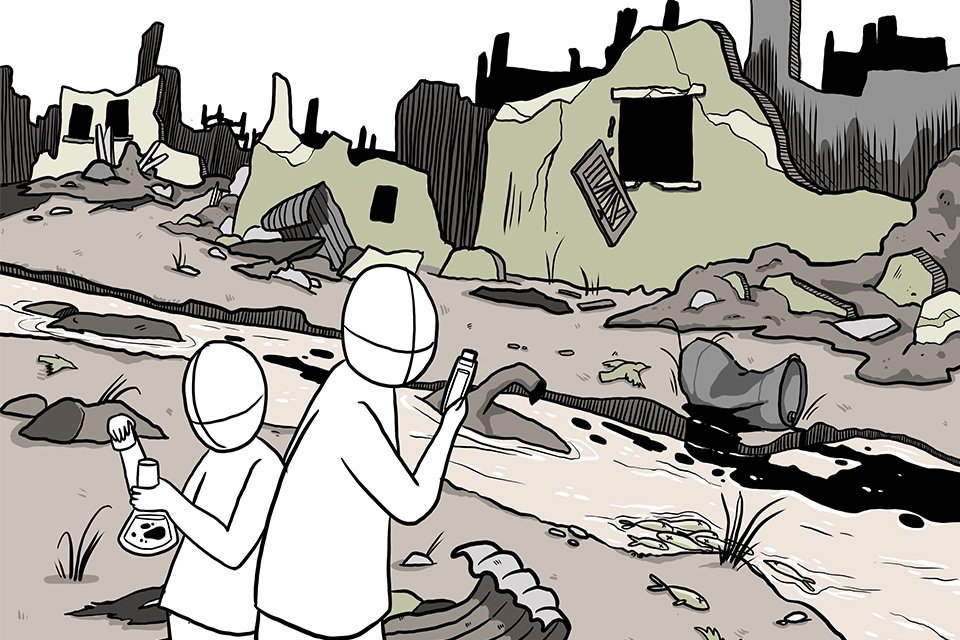
Domiziana Ferrari set the scene by exploring how citizen science can help to address the environmental data gap associated with armed conflicts, and where frameworks that combine community observations, low-cost sensors, and satellite imagery can collect environmental data, even where traditional monitoring has broken down.
Korina Defteraiou, from Web2Learn discussed research on Ukraine undertaken as part of the Gromada Project and which had documented the extent to which digital technologies were supporting participatory research during the ongoing war. The dialogue moved quickly from the potential of technology to the harsh realities of the field.
Harvard University’s Ahmed Siddig shared the challenges of monitoring Khartoum’s urban trees — a vital resource for climate mitigation. They described the ‘security-data paradox’: while the team wanted to use standardised platforms, security professionals warned that sending GPS locations could be misinterpreted as intelligence work by opposing military factions. Consequently, the project pivoted to a ‘low-profile’ WhatsApp networking model, trading standardisation for the safety of its participants.
Mazin Qumsiyeh from the Palestinian Museum of Natural History spoke passionately in support of environmental sovereignty and education under systems of oppression, and of the importance of building participation in communities. Caroline Michellier of the Royal Museum for Central Africa explained how she had used participatory methods for disaster risk reduction in the DRC, throughout periods of varying insecurity. Recently the renewed onset of conflict had led to an 80% drop in data collection due to hardware theft, lost bandwidth, and restricted field access.
Karam Robeil, an Environmental Policy Researcher from Iraq , expanded on the challenges of working in post-conflict settings. His work to develop community led water quality testing in Iraq had to navigate suspicion and reluctance from local authorities, underlining the difficulties in establishing research in contexts with weak governance and influential vested interests.
One poignant question that arose during the session was why look at trees when people are being killed? Ahmed’s response was clear: environmental assets like urban trees are essential post-conflict resources for health, microclimate regulation, and psychological recovery. Citizen science, in this light, is not a luxury; it is a form of community-building and a way to reclaim agency in a situation where people are often treated as passive victims.