






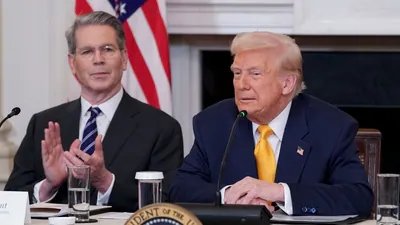
In a reversal of its earlier position, the administration of US President Donald Trump renewed a sanctions waiver that allows countries to continue purchasing Russian oil and petroleum products transported by sea, extending the relief for about another month. India have been among major beneficiaries of these waivers.

The US treasury department posted the updated license late Friday local time, permitting transactions involving Russian oil loaded onto vessels from that day through May 16. Track US-Iran war live updates.
The move comes just two days after Trump’s treasury secretary Scott Bessent had publicly indicated there were no plans to extend such waivers.
“We will not be renewing the general license on Russian oil and we will not be renewing the general license on Iranian oil. That was oil that was on the water prior to March 11. So all that has been used,” said Bessent at a press conference.
Fresh licence replaces expired waiver
The new authorization replaces a previous 30-day waiver that lapsed on April 11. While it allows continued purchases under specific conditions, it explicitly excludes transactions involving Iran, Cuba and North Korea.
The decision to renew the waiver, however, has drawn criticism from lawmakers across party lines in America, who argue that such exemptions risk aiding the economies of both Iran and Russia at a time when they are engaged in separate conflicts with Washington and its allies.
A sanctions, Brett Erickson, expert at consulting firm Obsidian Risk Advisors, indicated that further waivers may follow. “The conflict has done lasting damage to global energy markets, and the tools available to stabilize them are nearly exhausted,” Erickson told news agency Reuters.
Earlier, Russian presidential envoy Kirill Dmitriev had said the initial waiver could release around 100 million barrels of Russian crude into the market — roughly equivalent to nearly a day’s global output.
While the temporary relief could increase oil supply, it has done little to ease price pressures. Markets remain volatile amid Iran’s partial closure of the Strait of Hormuz, a critical route that previously handled about 20% of global oil and gas flows.