






Chennai1 day agoAuthor: Vaibhav Palnitkar
“If you have the courage, then shoot.”
A boy protesting against Hindi said this to a Central Forces jawan. The jawan shot him in the leg. People nearby rushed him to hospital. He was bandaged and treated, but returned to the street, limping. Soon after, he was shot again and died.
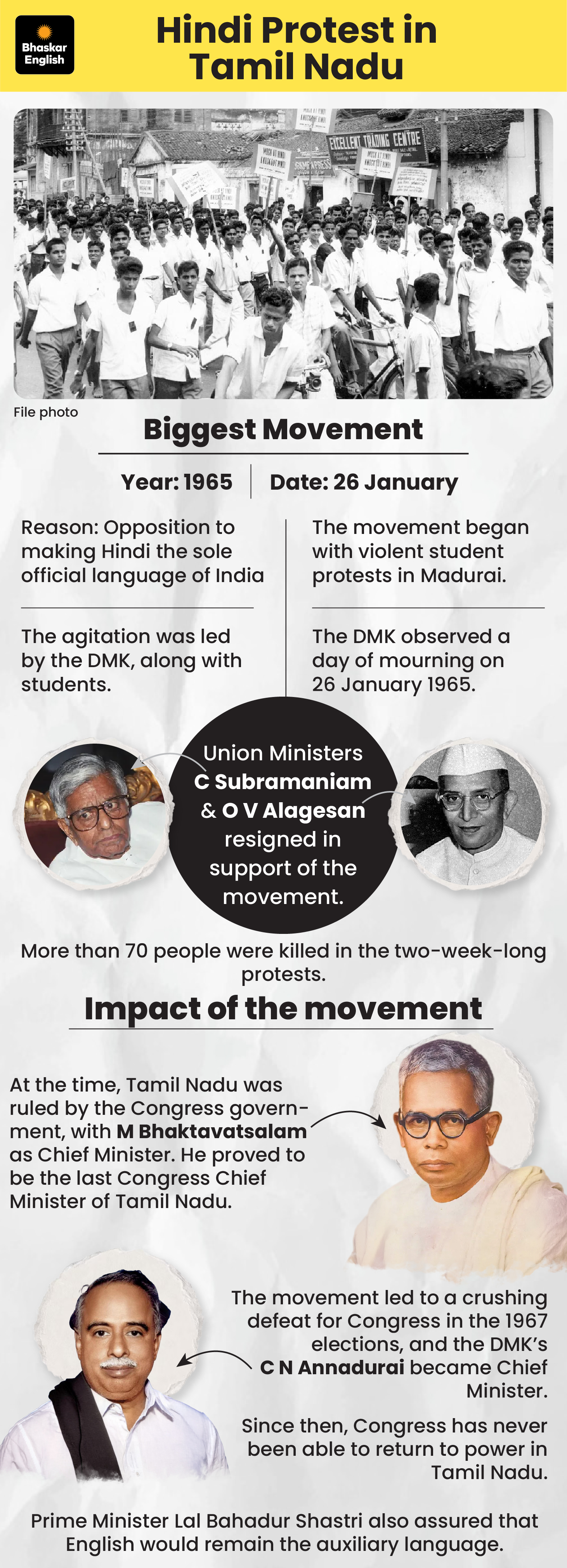
In Tamil Nadu, the boy is remembered as an “undead protester” — a living symbol of resistance. In 1965, people took to the streets from Madurai to Chennai to protest against the Official Language Act. Prime Minister Lal Bahadur Shastri deployed Central Forces. Around 70 people were killed in police firing. Three protesters self-immolated. The agitation is known as the anti-Hindi protests, and the Pollachi killings are often cited as one of its most violent episodes. After this, the Congress lost its footing in Tamil Nadu, and the Dravida Munnetra Kazhagam (DMK) rose to prominence.
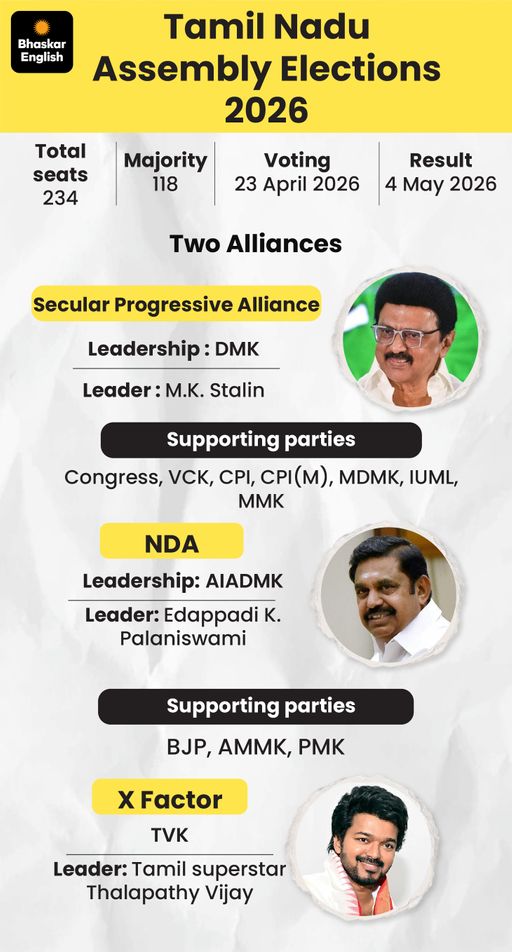
Voting for the Tamil Nadu Assembly elections is scheduled for 23 April. During campaigning, a reporter asked Chief Minister M. K. Stalin, “The Central Government will implement the three-language policy in CBSE schools, making Hindi compulsory…” Stalin replied immediately, “As long as the DMK exists, we will not allow this in Tamil Nadu.”
So, is opposition to Hindi still alive in Tamil Nadu? Here’s a closer look.
Hindi on Central property, absent from state buildings
Among India’s 28 states, Tamil Nadu is the only one that has not implemented the three-language formula. The contrast is visible as soon as you step out of Chennai Central Railway Station. The building displays boards in three languages — Tamil, Hindi and English. In large Hindi letters, it reads: “Puratchi Thalaivar Dr MGR Central Railway Station.”
About half a kilometre away stands the Chennai Corporation building. Here, Hindi is absent from the signage, with only Tamil and English displayed.
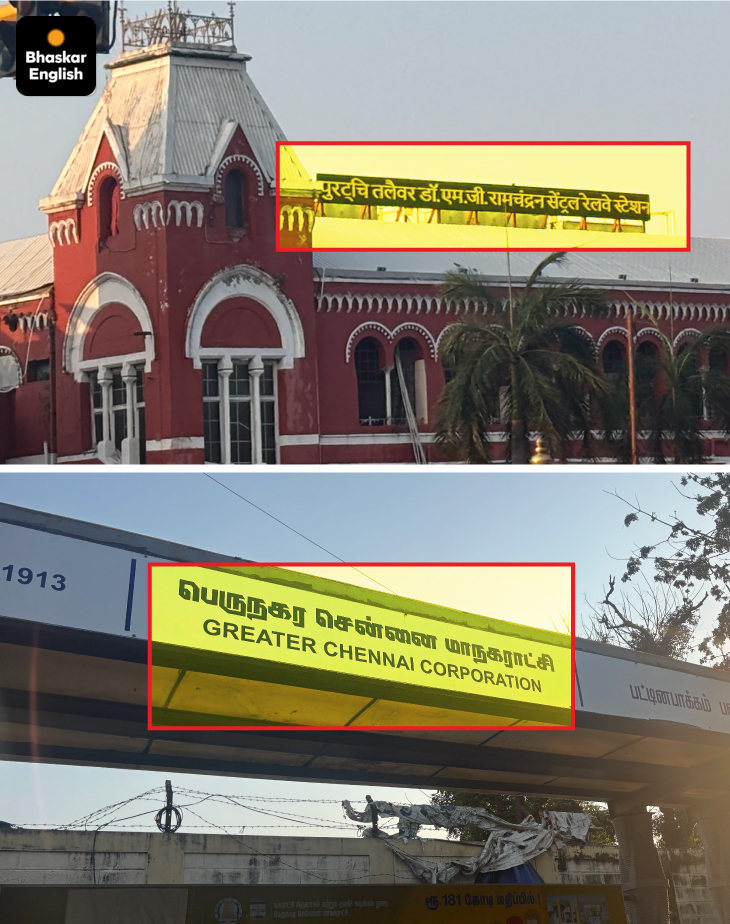
Two symbols of linguistic division in Tamil Nadu, the railway station name is written in Hindi, but the state government building’s name is in English and Tamil.
I have reported from most non-Hindi-speaking states in India. People generally understand at least some Hindi. But in Tamil Nadu, you hardly hear Hindi on the streets. From auto drivers to shopkeepers, English is often the only way to communicate.
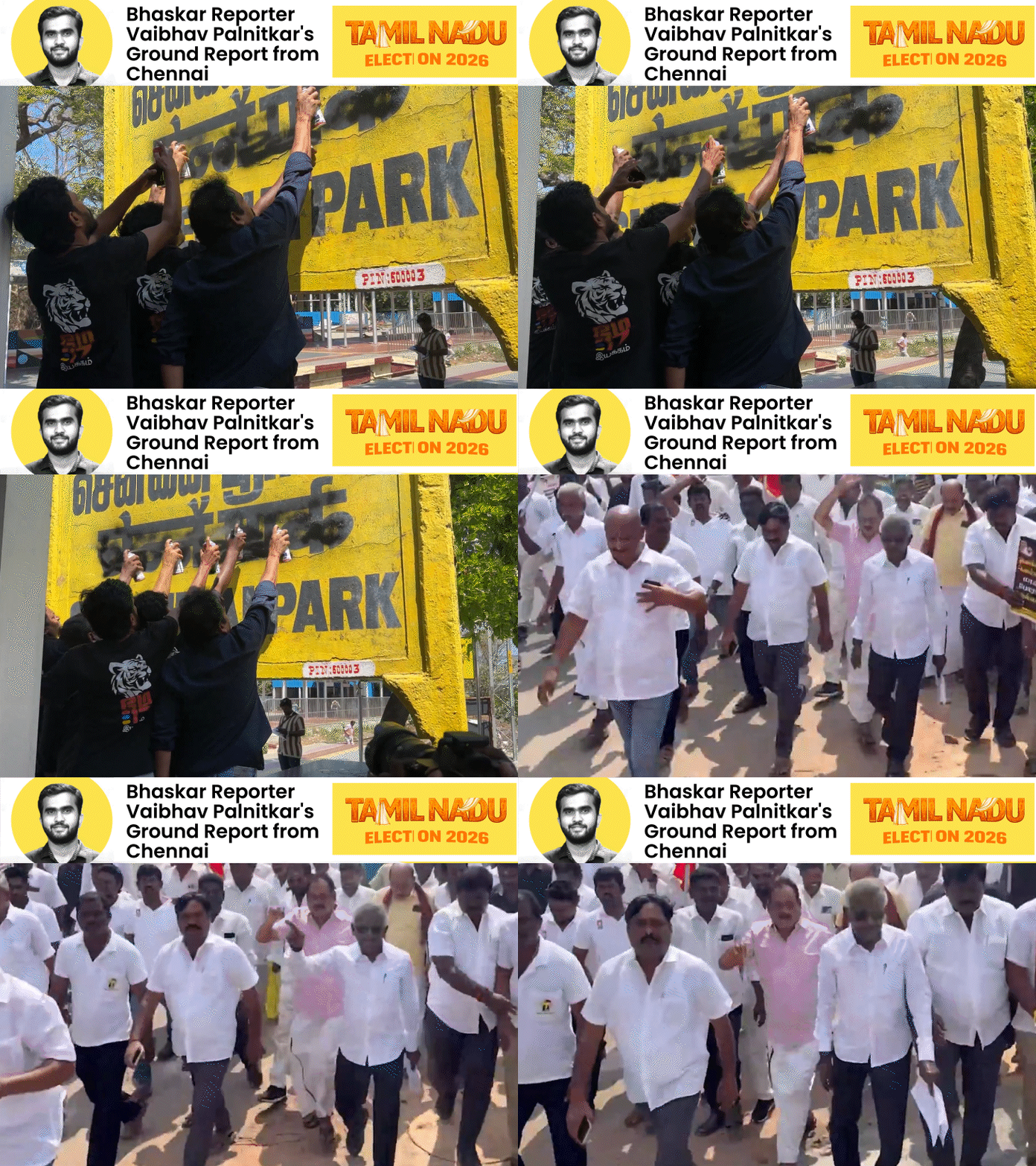
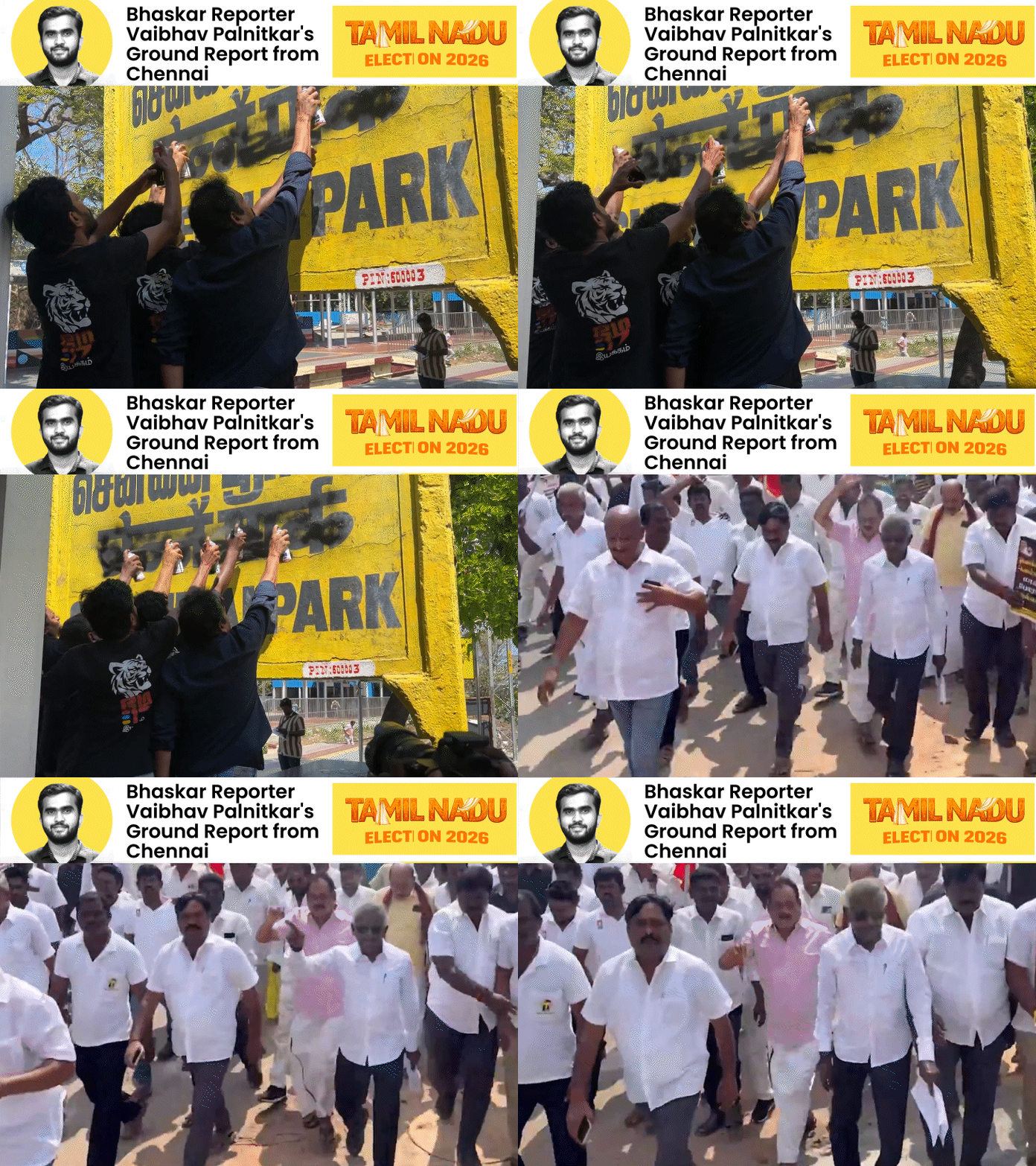
Directly opposite Chennai Central Railway Station is another station, Chennai Park railway station. As this is Central Government property, the signboards are displayed in three languages. However, the Hindi text on these boards has been smeared with black paint. Ahead of Prime Minister Narendra Modi’s visit to Tamil Nadu on 11 March, black paint was sprayed over the Hindi lettering. Slogans were raised — “Tamil Vazhga, Hindi Ozhiga”, meaning “Long live Tamil, down with Hindi.”
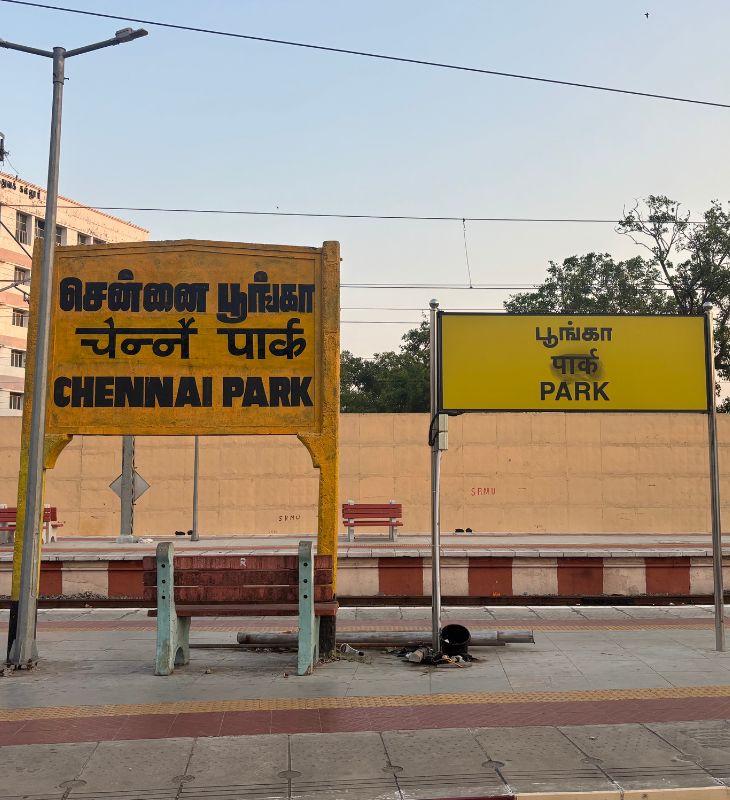
The black spray on the Hindi name of Chennai Park Railway Station has been cleaned off, but its marks still remain.
Political parties do not openly take part in aggressive protests or the blackening of signboards over language issues. Instead, they often rely on smaller proxy organisations. In the Chennai Park incident, the group “May 17 Movement” was said to be involved. Ostensibly, it works on issues concerning Sri Lankan Tamils, but in such cases, organisations like these are often used as a front.
The Dravida Munnetra Kazhagam (DMK) does not publicly endorse such actions. However, its workers are believed to play a role behind the scenes.
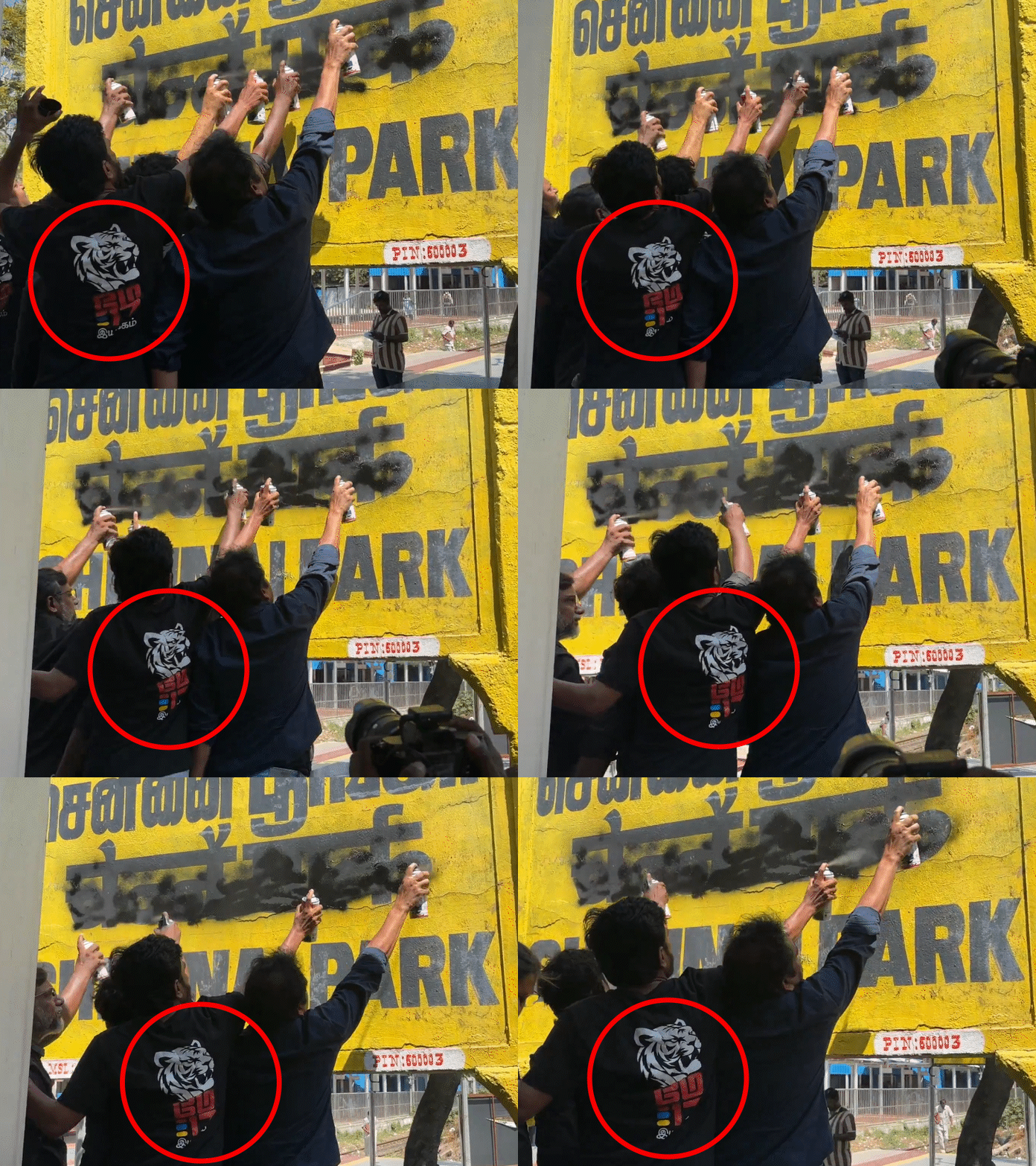
The T-shirts of people protesting at Chennai Park Railway Station had May-17 written on them. May-17 is a Tamil nationalist organisation. On 17 May 2009, the Tamil organisation LTTE was defeated in the Sri Lankan civil war. The organisation is named after this date.
‘Hindi is a burden’: A century-old resistance in Tamil Nadu
We spoke to a DMK worker involved in such protests, active in the party’s language wing. He requested anonymity. “Suresh” (name changed) said, “People of Tamil Nadu are deeply emotional about their language. We do not like any language being imposed over Tamil. We will not tolerate the imposition of Hindi at any cost.”
But how do people communicate outside the state? He replied, “We can connect with the world through English. Hindi is a burden. We are being forced to carry it.”
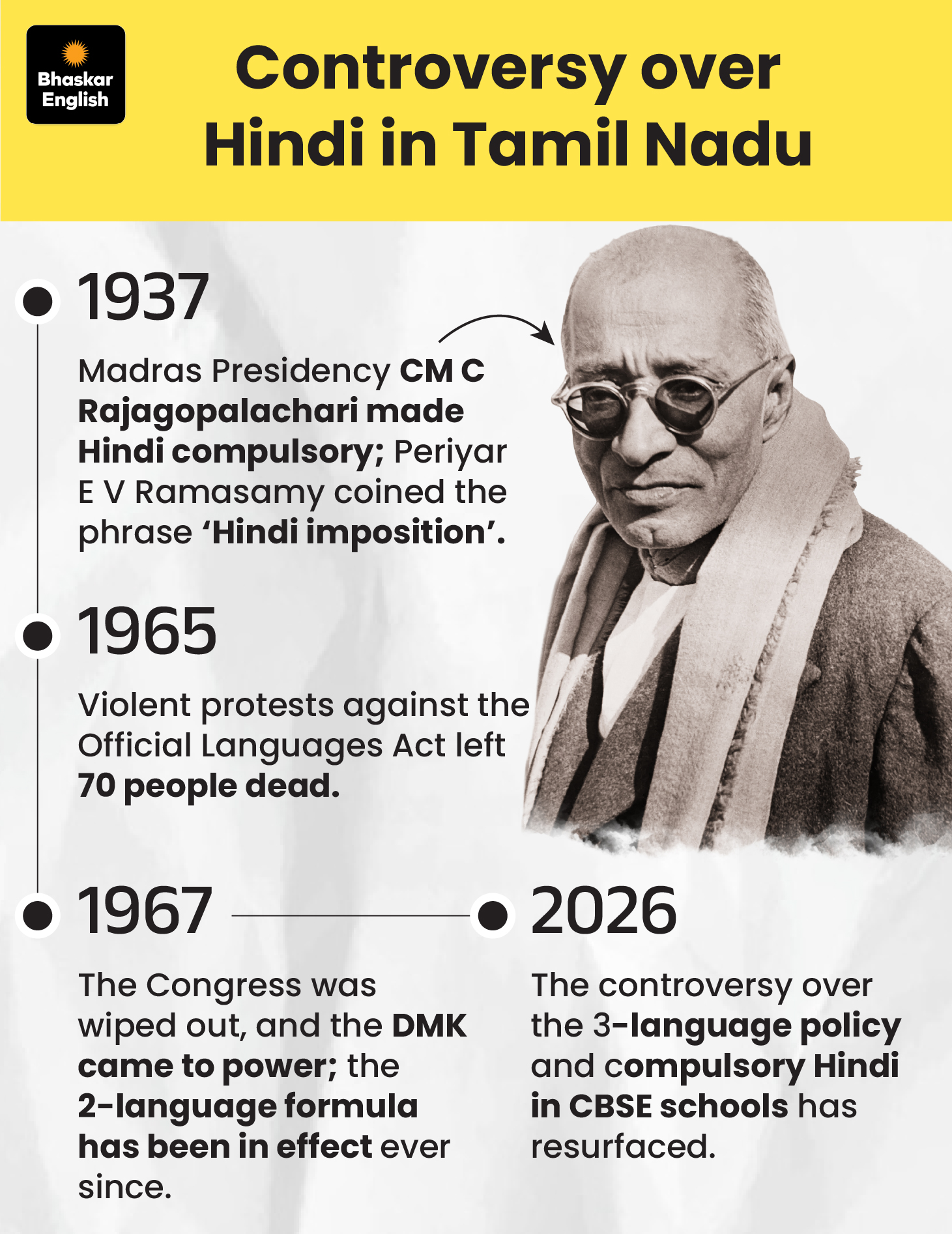
Opposition to Hindi in Tamil Nadu goes back nearly 90 years. In 1937, C. Rajagopalachari made Hindi compulsory in schools in the Madras Presidency, triggering protests. Periyar E. V. Ramasamy of the Justice Party popularised the slogan of “Hindi imposition”. The movement peaked again in 1965 during protests against the Official Language Act. Since then, Hindi has remained optional in the state.
Across political lines, resistance remains
Forty-year-old Vijayalakshmi, whom we met in Chennai, is originally from Tindivanam. She said, “Tamil is like a mother. It represents our self-respect.”
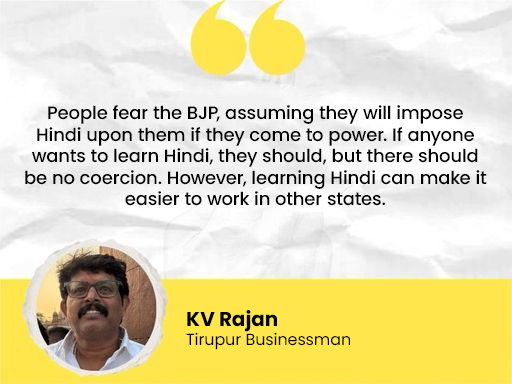
K.V. Rajan, 55, who runs a car accessories business in Tiruppur, about 500 km from Chennai, is not a supporter of the Dravida Munnetra Kazhagam. A follower of actor Vijay, he said, “If any party in Tamil Nadu supports imposing Hindi, people will not accept it.”
Seventy-six-year-old retired employee M. Muniyandi also opposes “mandatory Hindi”. “The Centre must drop the word ‘mandatory’. Speaking Hindi is not the only condition for being Indian,” he said.
Hindi learning continues, but interest is limited
It is not that people in Tamil Nadu do not learn Hindi. In 1918, Mahatma Gandhi founded the Dakshin Bharat Hindi Prachar Sabha to promote Hindi in South India. At its Chennai campus, we met Tanuja, who has lived in the city for eight years and is pursuing a B.Ed. She speaks Hindi hesitantly but is learning.
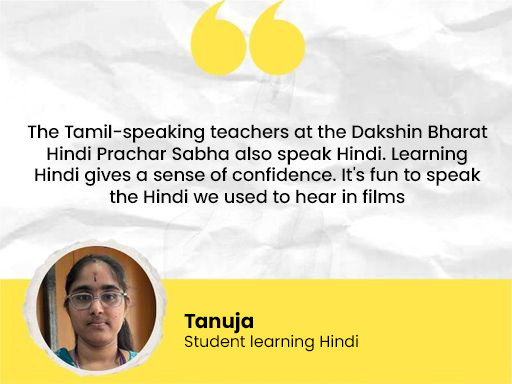
Professor Dr Manjunath from the Sabha said, “It would not be appropriate for me to comment on government policy. But I have observed that many people want to learn Hindi. It helps connect with the rest of the country.”
However, the Hindi department at University of Madras has just four students enrolled in its MA course. Department head Professor Annapurna said the younger generation prefers engineering and medical fields. “Few want to study languages. Not just Hindi—even Tamil is losing interest among students,” she noted.
‘You cannot make non-Hindi speakers second-class citizens’
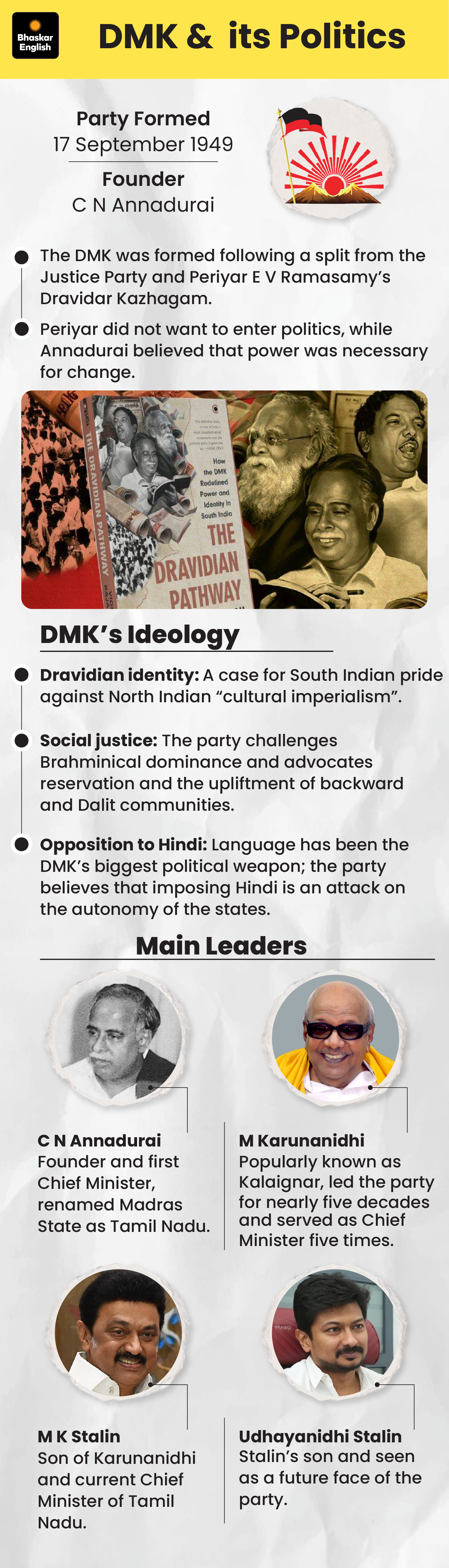
Speaking on the issue, DMK leader S.A.S. Hafizullah said, “Attempts to impose Hindi have been going on for decades. You cannot make those who do not speak Hindi second-class citizens. That is what the three-language policy risks doing.”
On aggressive protests and blackening of signboards, he added, “We support every democratic protest against the three-language formula. If someone breaks the law, the government will act.”
Religion, politics, and public sentiment
In 2023, Udhayanidhi Stalin sparked controversy with remarks on Sanatan Dharma, comparing it to diseases that should be eradicated. He later clarified he was opposing certain practices, not any religion.
Businessman K.V. Rajan disagreed with the statement. “This is politics. People here are not against any religion. We are Hindus, but we also visit Velankanni Church. People of all faiths come to our temples,” he said.
Kanakaraj, a businessman from Salem, added, “We follow Hinduism. No religion should be compared to diseases. This is not an election issue. People will vote based on the government’s work.”
Voting in Tamil Nadu is scheduled for 23 April.
……………………
Ground report from Marwari area in Chennai…
1.5 lakh North Indians, Marwari councillor in Karunanidhi’s seat: Chennai’s Rajasthanis speak Tamil, say they taught Hindi to Tamils
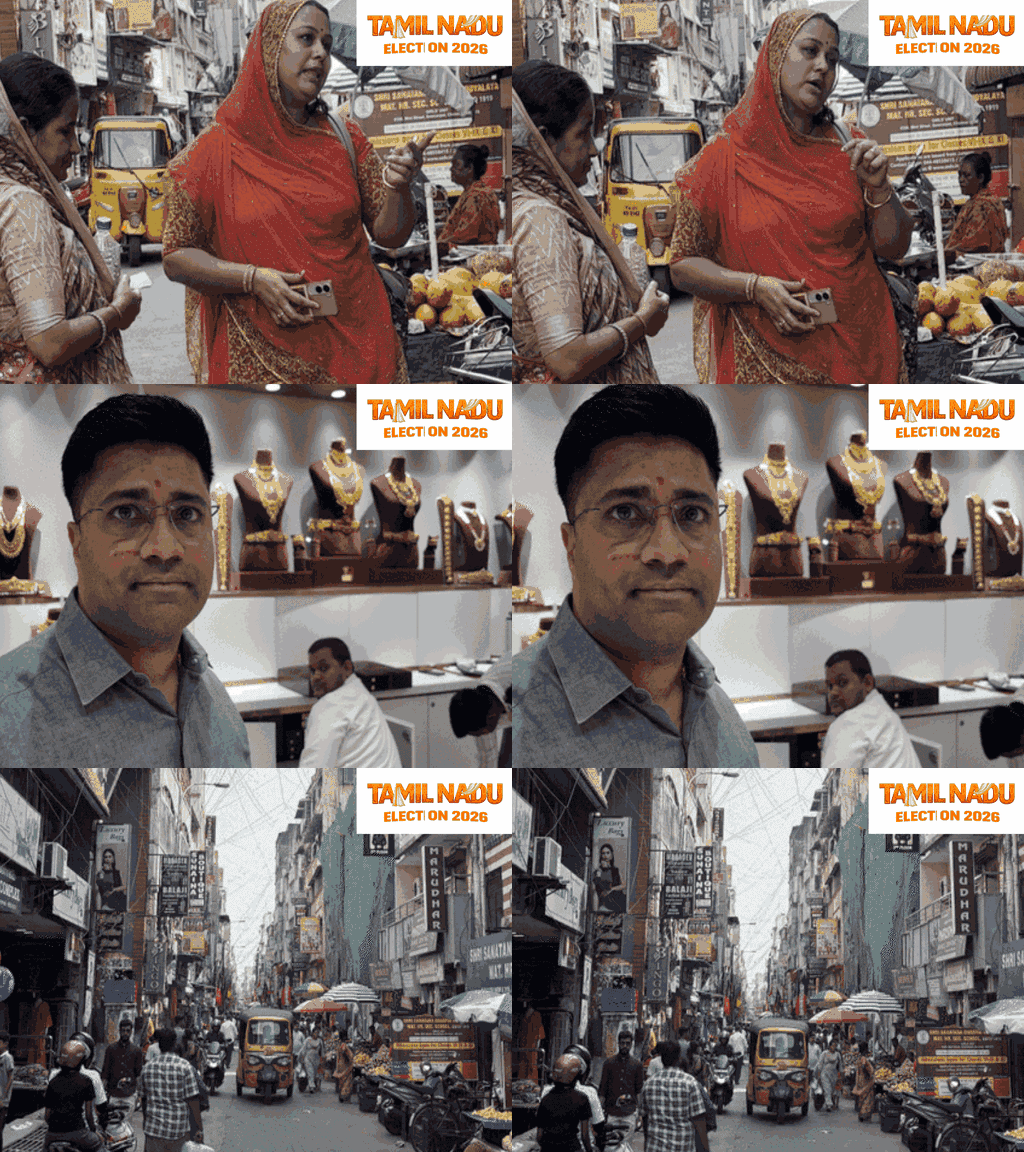
In Chennai, the capital of Tamil Nadu, there is a market on Mint Street – Saukar Peth. Around one and a half lakh people from Rajasthan, Madhya Pradesh, Gujarat, Haryana and Uttar Pradesh live here. The DMK, which does anti-Hindi politics, gave a ticket to a Marwari as councillor from here, and he won too. Nirmala Rajpurohit, who lives here, is from Rajasthan. She says, ‘We have taught Hindi and Marwari to the Tamils here. Even breakfast in our home is idli-sambar.’ Read the full news