






- Each year, the Goldman Environmental Prize honors grassroots activists from each of the six inhabited continental regions.
- The 2026 prize winners are Iroro Tanshi from Nigeria, Borim Kim from South Korea, Sarah Finch from the United Kingdom, Theonila Roka Matbob from Papua New Guinea, Alannah Acaq Hurley from the United States, and Yuvelis Morales Blanco from Colombia.
Six environmental activists from around the world will be awarded the Goldman Environmental Prize on April 20. Known as the “Green Nobel Prize,” the Goldman Prize honors activists from the six inhabited continental regions. In a historic first, all six winners are women.
This year’s winners fought to protect a rare bat in Nigeria by training community members to prevent wildfires; won a court ruling in South Korea forcing the government to set stronger climate targets; stopped an oil drilling project in the U.K. after a decade of legal battles; pressured a global mining giant to clean up a toxic abandoned mine in Papua New Guinea; blocked the largest proposed open-pit mine in North American history in Alaska; and helped prevent commercial fracking from taking hold in Colombia.
“While we continue to fight uphill to protect the environment and implement lifesaving climate policies — in the US and globally — it is clear that true leaders can be found all around us,” said John Goldman, vice president of the Goldman Environmental Foundation. “I am especially thrilled to honor our first-ever cohort of six women, as this is a powerful reflection of the absolutely central role that women play in the environmental community globally.”
The winners will be honored at a ceremony in San Francisco, in the U.S., on April 20, hosted by Telemundo anchor Vanessa Hauc, with musical guest Caminos Flamencos. The event will be livestreamed at 5:30 p.m. local time (00:30 a.m. UTC on April 21) on the Goldman Prize YouTube channel.
The Goldman Environmental Prize was established in 1989 by Richard and Rhoda Goldman. Prize winners are selected by an international jury from confidential nominations submitted by a worldwide network of environmental organizations and individuals.
Here are the winners of the 2026 Goldman Environmental Prize:
Iroro Tanshi — Nigeria (Africa)

The short-tailed roundleaf bat (Hipposideros curtus) had not been documented anywhere in the world for five years when conservation ecologist Iroro Tanshi rediscovered a small colony roosting in Nigeria’s Afi Mountain Wildlife Sanctuary in 2016. It was the first confirmed sighting in the country in 45 years. Two weeks later, a wildfire swept through the sanctuary and nearly destroyed it.
The encounter motivated Tanshi, now 41, the co-executive director of the Small Mammal Conservation Organization (SMACON). She spent years building a community-integrated wildfire prevention program drawing on techniques from U.S. Forest Service-affiliated programs and fire-risk modeling from the U.S. Southwest.
Working with 16 villages surrounding the 1,000-hectare (about 25,000-acre) sanctuary, she helped communities draft forest laws with financial penalties for illegal burning, and installed weather stations to generate daily fire-risk assessments. The program trained 50 forest guardians equipped with water backpacks, GPS devices and two-way radios. On high-danger days, town criers travel communities at daybreak, announcing no-burn alerts by gong.
Since early 2022, guardians have patrolled more than 2,400 farms and contained 74 fire outbreaks, preventing them from escalating into an unmanageable wildfires. The sanctuary, also home to critically endangered gorillas, chimpanzees and drill monkeys, has remained intact. The program has secured the crops and livelihoods of roughly 27,000 people in surrounding communities. Tanshi is now working to scale the model across Nigeria and into other countries.
Borim Kim — South Korea (Asia)

Borim Kim, 31, founded Youth 4 Climate Action (Y4CA) after a record-breaking 2018 heat wave in Seoul led to the death of a woman around her mother’s age from heat illness inside her own home. Kim concluded that climate risk was not something individuals could simply avoid through better choices; instead, it fell heaviest on those with the fewest resources to protect themselves.
Y4CA began with strikes and legislative letter campaigns, before Kim shifted to a legal strategy. In March 2020, she organized 19 youth plaintiffs to file the first youth-led climate constitutional complaint in Asia. Additional suits followed from civil society groups and, later, from infants represented by their caregivers in what became known as the “Baby Climate Litigation.” Y4CA also submitted a “People’s Participation Brief” compiling testimonies from more than 5,200 individuals.
In August 2024, South Korea’s Constitutional Court ruled the government’s climate targets unconstitutional, ordering parliament to set legally binding emissions reduction targets for 2031-2049. A South Korean think tank estimated the decision could prevent between 1,600 and 2,100 million metric tons of CO₂ emissions. The ruling has since inspired youth-led climate lawsuits in Japan and Taiwan.\
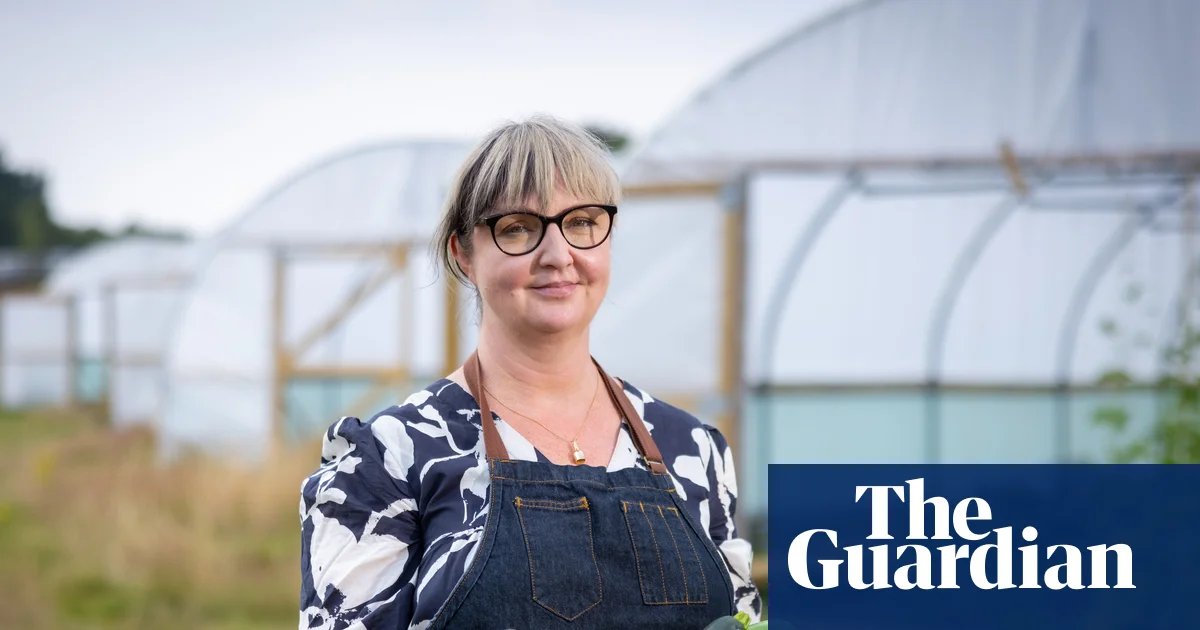
Sarah Finch — United Kingdom (Europe)

Sarah Finch, 62, stumbled into climate activism in 2010 when a local newspaper’s planning notices revealed a proposal to drill for oil at Horse Hill, a rural site in Surrey county, 10 kilometers (6 miles) from her home. She soon found it was one of dozens of planned oil and gas developments across the Weald, a heavily wooded region in southeastern England.
Finch co-founded the all-volunteer Weald Action Group (WAG), and when Surrey County Council approved a major Horse Hill expansion in 2019, she decided to challenge it in court. She argued that the project’s environmental review had accounted for emissions from drilling and construction but ignored the roughly 10.6 million metric tons of CO₂ that would result from actually burning the extracted oil. After two failed judicial review applications and a Court of Appeal loss in 2022, WAG pressed on to the U.K. Supreme Court, funded by legal charity Law for Change.
In June 2024, the court ruled 3-2 in WAG’s favor, finding that planning authorities must assess the full downstream climate impacts of any fossil fuel extraction project before granting a permit. The Horse Hill site ceased production in November 2024. The ripple effects were swift: within months, the U.K. government pulled its support for two major North Sea oil developments, a planned coal mine lost its permit, and the government announced a ban on new coal mine licenses. By year’s end, the “Finch ruling” had contributed to the delay or cancellation of projects with combined emissions approaching 400 million metric tons of CO₂.
Theonila Roka Matbob — Papua New Guinea (Islands & Island Nations)

Theonila Roka Matbob, 35, grew up in the shadow of the Panguna copper and gold mine on Bougainville Island, one of the world’s largest open-pit operations during its years of activity. The mine operated from 1972 to 1989 under a subsidiary of Anglo-Australian mining giant Rio Tinto. During that time, it dumped an estimated 150,000 metric tons of mining waste per day into nearby rivers, while local communities received just 1.4% of revenues.
When residents rose up against the environmental destruction, a brutal civil war followed that left up to 20,000 people dead. Matbob’s father was among those killed, and she spent six years of her childhood in a refugee camp. Rio Tinto abandoned the site in 1989, and in 2016 divested its shares while renouncing responsibility for cleanup. Decades later, the Jaba and Kawerong river systems remain contaminated, with generations of downstream communities reporting skin diseases, respiratory infections and pregnancy complications.
In 2020, Matbob became lead complainant in a human rights complaint by 156 community members against Rio Tinto, filed with Australia’s National Contact Point for Responsible Business Conduct. That same year she won a seat in the Bougainville legislature.
The complaint led Rio Tinto to fund an independent impact assessment, completed in 2024. In November 2024, the company signed a memorandum of understanding with the Bougainville government formally acknowledging the mine’s harms and committing to remediation, including expanded access to clean water and an early-warning system for geotechnical hazards such as earthquakes and landslides. It’s the first token of accountability the community has seen in 35 years.
Alannah Acaq Hurley — United States (North America)

Alannah Acaq Hurley, 40, grew up in Saguyaq (Clark’s Point) on the shores of Alaska’s Bristol Bay, where her grandmother passed down Indigenous Yup’ik teachings rooted in the land and water. The bay and its watershed support the world’s largest run of sockeye salmon (Oncorhynchus nerka), with some 50 million fish spawning there each year, sustaining Indigenous cultures, ecosystems, and a $2.2 billion commercial fishing industry.
Since 2001, the ecosystem has been threatened by the proposed Pebble Mine, a copper and gold megaproject at the watershed’s headwaters that would have featured a pit 4 km (2.5 mi) wide, 160 km (100 mi) of new roads, and the world’s largest earthen dam for waste storage. Scientists projected destruction of nearly 160 km of salmon streams and 850 hectares (2,100 acres) of wetlands.
Hurley first organized against the mine as a college student before tribal leaders selected her in 2013 as executive director of the United Tribes of Bristol Bay (UTBB), representing 15 federally recognized tribal nations. Her coalition-building was deliberately nonpartisan, uniting Indigenous groups, commercial fishing associations and national environmental organizations.
UTBB’s campaign generated more than a million public comments to the Environmental Protection Agency. Hurley testified before Congress in 2019. In November 2020, the Army Corps of Engineers denied the mine’s water permit. UTBB pressed further, and in January 2023 the EPA exercised its veto authority, only the 14th time in its history, to permanently block the project. Hurley and UTBB are now working to codify those protections into law.
Yuvelis Morales Blanco — Colombia (South & Central America)

Yuvelis Morales Blanco, 24, grew up in the Afro-Colombian community of Puerto Wilches on the banks of the Magdalena River, in a fishing family that depended on the river’s health for survival. She watched her father’s catch decline year by year as oil spills from Ecopetrol’s nearby infrastructure fouled the water. In 2018, a blowout at the company’s Lizama oil field sent crude into two Magdalena tributaries, forcing nearly 100 families to relocate and killing thousands of fish and other animals.
When signs promoting fracking began appearing along her college commute, Morales Blanco joined the Alianza Colombia Libre de Fracking and co-founded Aguawil, a youth organization that went door to door in Puerto Wilches to explain the risks Ecopetrol’s proposed Kalé and Platero pilot fracking projects posed to the river. The campaign grew, culminating in a major street protest in December 2020. Her testimony at a public hearing in January 2021 was widely circulated. It also made her a target: Armed men appeared at her home in early 2022, forcing her to seek asylum in France.
Her high-profile exile helped elevate fracking as an issue in Colombia’s 2022 presidential elections. The eventual winner, Gustavo Petro, announced no fracking projects would proceed under his administration, and Ecopetrol suspended its contracts in September 2022. In August 2024, Colombia’s Constitutional Court ruled the projects had violated the Afro-Colombian community’s right to free, prior and informed consent. Since then, no fracking projects have advanced anywhere in Colombia.
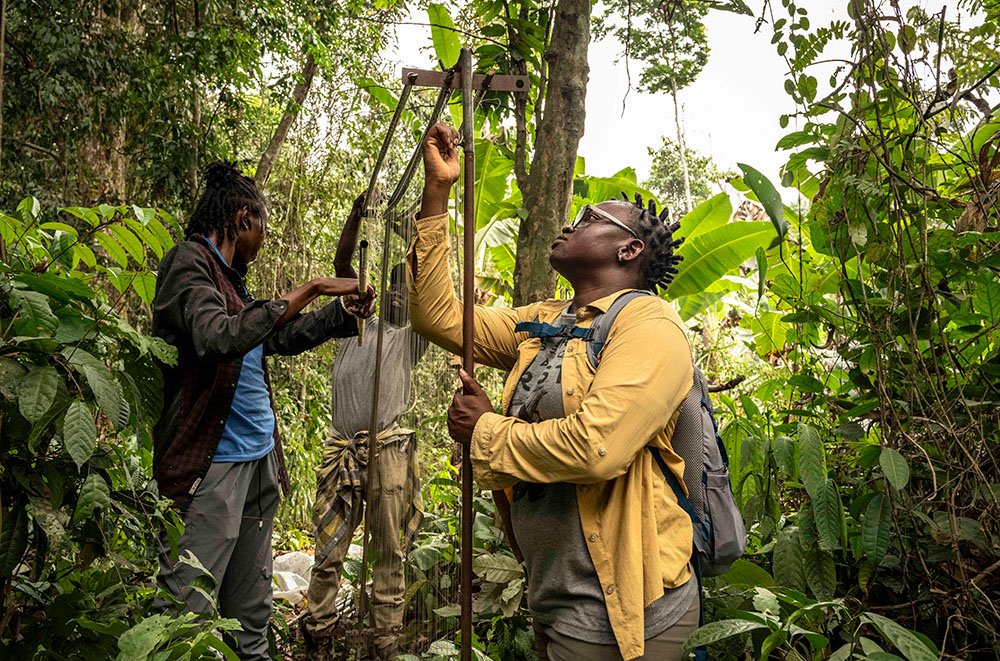
Banner image: 2026 winner of the Goldman Environmental Prize. Image courtesy of Goldman Environmental Prize.