









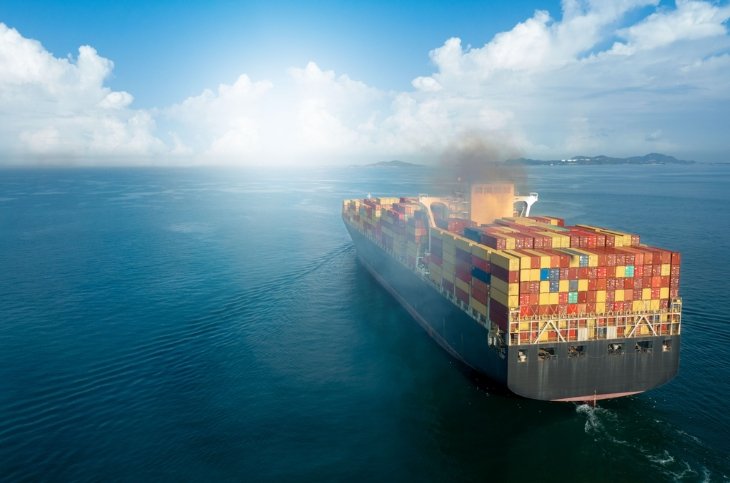
The transition to clean energy in the global shipping sector is no longer optional – and is long overdue. Approving the shipping sector-wide Net Zero Framework is essential this year, writes Demetres Karavellas, WWF-Greece CEO.
As governments gather next week in London at the International Maritime Organization (IMO), two powerful signals are converging: the accelerating climate crisis and the energy crisis. Together, they send a clear message to governments and energy-intensive industries: continued fossil fuel dependence deepens climate risks while increasing exposure to economic and geopolitical shocks. The transition to clean energy is long overdue, and it is now more urgent than ever.
Few sectors illustrate this urgency more clearly than international shipping. Responsible for roughly 3% of global greenhouse gas emissions and regulated globally through the IMO, shipping faces mounting pressure to define a credible pathway to climate neutrality. The proposed IMO Net Zero Framework (NZF), designed to steer the sector toward net-zero emissions by 2050, represents the most realistic mechanism currently available.
The NZF is the product of years of negotiation and compromise between governments and has had substantial input from industry. It aims to achieve climate goals in a cost-effective and equitable way through two essential elements: a global fuel standard that steadily lowers emissions intensity, and a carbon pricing mechanism that supports compliance and generates revenues to back the transition to zero-emission fuels and assist countries facing the costs of change.
The risks of delay and the danger of dilution
In the hierarchy of potential threats facing the NZF, the greatest threat might not be total rejection, but dilution to the point where the framework loses its meaning, or a ratification process that could take years and generate additional uncertainty.
Many industry concerns focus not on the framework itself, but on the detailed guidelines that will govern implementation. That distinction matters. At the IMO, frameworks are routinely agreed first, with technical guidelines finalized during the implementation phase. This process has been used successfully before. Weakening the framework because technical details remain under development risks undermining the very mechanism designed to resolve them. Equally concerning is the growing disengagement of some industry actors from the technical discussions shaping these guidelines based on their opposition to the overall framework.
Delay carries broader risks. Without a global framework, it is quite possible that a patchwork of regional regulations will develop instead. Fragmented regulation increases compliance costs, distorts competition, and undermines the predictability that global trade requires. A strong global framework prevents fragmentation.
The false promise of LNG
One of the most concerning developments in the current debate is the push to expand the use of Liquefied Natural Gas (LNG) as a ‘transitional’ fuel. This position is being promoted by certain governments and segments of the shipping industry and being framed by some as pragmatic. But it risks locking the sector into fossil fuel dependence. Investing heavily in LNG infrastructure today ties capital to assets designed to operate for decades – precisely when climate science demands steep emission reductions. Methane leakage across LNG’s lifecycle further weakens LNG’s climate suitability as a fuel, while tightening greenhouse gas (GHG) regulations increase the likelihood that LNG-dependent assets will face declining value.
What seems to be overlooked by NZF critics with vested interests in LNG is that the NZF does not prohibit LNG in the short term. Under the current proposal, LNG remains a viable compliance pathway into the early 2030s. The intense political effort and pressure from specific companies to secure additional concessions therefore raises questions about whose interests are truly being served and at what long-term cost for the sector and climate.
For shipowners and investors alike, the risk is clear: delaying the transition today increases the likelihood of stranded assets tomorrow.
Europe’s responsibility and the cost of disunity
Europe has long positioned itself as a leader in climate action. But leadership demands unity. If individual member states pursue narrow exemptions or align with short-term fossil fuel industry interests, Europe risks weakening its negotiating power at the very moment when strong collective action is required. Countries that b ranks from agreed European positions undermine not only climate credibility but also legal commitments under the European Union’s ‘duty’.
Clearly, the responsibility also extends beyond governments. Industry leaders must also step up. Companies that continue to invest heavily in fossil-dependent pathways risk being caught in a faster, more disruptive transition later, when regulatory pressure intensifies and markets shift quickly. Those who act early, by contrast, will help shape the next generation of fuels, supply chains, and maritime technologies.
The NZF offers a pathway to a much-needed transition. Weakening it risks replacing predictability with instability. The message to governments and industry must be clear: hold the line, resist dilution, and move forward with the Net-Zero Framework, as approved last April.
Demetres Karavellas is CEO at WWF-Greece