








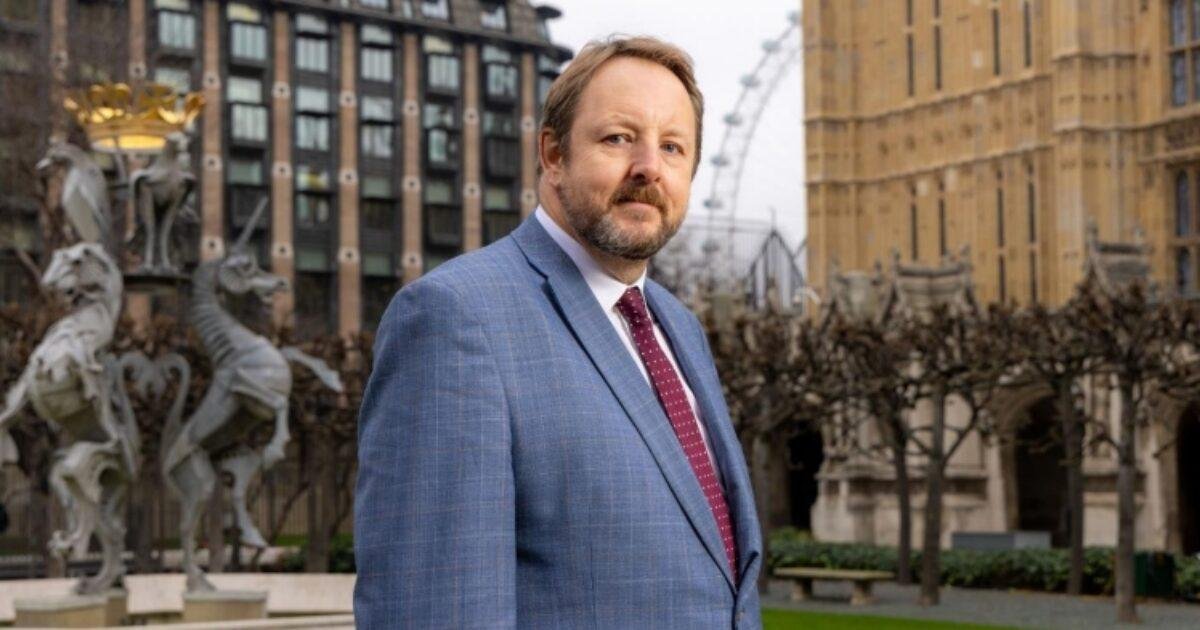
Today Toby Perkins MP, Chair of the Environmental Audit Committee, launched the Committee’s new report on ‘Addressing the risks from Perfluoroalkyl and Polyfluoroalkyl Substances (PFAS)’.
The Committee urges the Government to phase out forever chemicals in consumer products like frying pans and school uniforms. And to ensure that those who have polluted the environment with PFAS have to pay to clean it up.
The report received widespread coverage in BBC, the Times, Guardian, ITVX and Channel 5 News.
You can watch Toby’s full statement to the House below and read the full report here: https://committees.parliament.uk/committee/62/environmental-audit-committee/news/213259/phase-out-forever-chemicals-in-cookware-and-school-uniforms-mps-urge-in-warning-on-pfas-pollution/.
Transcript of Toby’s statement:
I am very pleased to present the Environmental Audit Committee’s report on Addressing the risks from Perfluoroalkyl and Polyfluoroalkyl Substances (PFAS), also known as forever chemicals.
This inquiry was launched last year, when the acronym PFAS might have been familiar to just a few experts.
One year on, there has been an ITV and ENDS Report documentary about PFAS, the first ever Government PFAS Action Plan, and much more public awareness and scrutiny on PFAS pollution.
For the benefit of those watching who are unaware, I will briefly outline the PFAS issue, before turning to the substance of our report.
PFAS are a class of more than 10,000 synthetic chemicals, which are used in a huge variety of applications for their water resistance – from non-stick frying pans to making school uniforms more water resistant and from firefighting foams to cosmetics.
However, it is this same quality – their resistance to breaking down – which means they accumulate in the environment and in the human body over time. It is for this reason that they are known as ‘forever chemicals.’
PFAS are now widely detected in UK rivers, soils, wildlife, and in the blood of most people. And a growing body of evidence links high PFAS exposure to serious health and environmental risks, including certain cancers, immunity suppression, and fertility and developmental impacts.
Addressing PFAS pollution is therefore essential to protecting public health, preventing long-term environmental harm, and reducing future remediation costs.
The UK Government, acknowledging the growing issue of PFAS, published in February a PFAS Action Plan, the first of its kind and a very welcome step. The Committee is grateful to DEFRA and to Minister Hardy for engaging proactively with us, allowing us the opportunity to examine the Government’s plan as part of our inquiry.
The Committee’s inquiry found that the UK faces a growing legacy of PFAS pollution, alongside continued emissions.
The Government’s plan whilst a welcome starting point is short on the decisive action needed to prevent the harmful build-up of these chemicals in the environment. The plan focuses disproportionately on monitoring rather than prevention and remediation. It also suggests voluntary action and industry self-regulation, which in our view are insufficient to reduce PFAS emissions.
In the Committee’s view, tackling the scale of contamination requires a combined approach: firstly, preventing ongoing PFAS emissions at the source, secondly, managing continued PFAS emissions, and thirdly, addressing remediation and disposal of PFAS.
This must be supported by sustained research, funding, monitoring and public transparency. The longer action is delayed in addressing the risks of PFAS, the greater the health, economic and environmental burdens will become.
I will briefly highlight some of the Committee’s recommendations to Government in these three areas
Right now, PFAS are still being manufactured, put into consumer products, and released into the environment. The Committee made several recommendations to prevent PFAS pollution at the source.
The Committee is calling for restrictions on PFAS in non-essential consumer products, including food packaging, cookware, cosmetics, and coatings on school uniforms. Where the use of PFAS is considered ‘essential’ to protect the health, safety and functioning of society, exemptions could be granted.
In phasing out PFAS, the regulatory system must shift from a substance‑by‑substance approach to group‑based regulation to prevent the replacement of banned PFAS with structurally similar and potentially harmful alternatives. Without this broad, group-based restriction on PFAS, the Government risks a ‘whack-a-mole approach’ where new substances emerge faster than they can be evaluated.
In the EU more decisive action has been taken and chemicals are banned as a group with firms having to seek a derogation from the law if the compound is either vital or irreplaceable.
Lack of the same kind of decisive action actually brings risks to our trade and economy – having unnecessary regulatory divergence from the EU create trade barriers within the UK and between the UK and which impacts UK manufacturing competitiveness.
To research this issue the committee not only visited Angus Fire and met directors of the firm, campaigners and villagers from Bentham in North Yorkshire, but also visited Lyon and the French parliament to learn about the regulatory actions there and where the campaign and public opinion is there too.
The committee also argue that clear limits on the acceptable level of PFAS must be set, to enable enforcement and remediation.
The Government rightly mandated the guidelines for the level of PFAS allowed in drinking water. We now need statutory limits of PFAS in food and in soils. And monitoring and enforcement by the Environment Agency to match.
Protecting public health also requires long-term investment in biomonitoring and epidemiological research. The Committee recommended enhanced health screening for people with potentially high PFAS exposure.
Whilst monitoring and research is vital, it must not be used to delay action.
Finally, there is an important set of questions around existing PFAS contamination: how to clean it up? And who should pay for it?
Where the Government was not clear, the Committee was: based on the polluter pays principle, those who released PFAS into the environment should be expected to pay for it to be remediated.
We of course, recognise in some cases government and Manufacturing industry will need to work together to ensure that costs associated with the clean up of the past don’t endanger the future of these companies. We also recognise that in some cases the companies who polluted in the past may no longer exist and that will fall on government but we want to see government starting from the perspective that the polluter should pay and the taxpayer should not foot the bill.
The Committee recommended that the Government should explore the implications of an emissions levy for PFAS on the UK REACH candidate list, to deter ongoing environmental contamination and hold polluters responsible.
In cases where the PFAS contamination is not attributable, central Government must provide dedicated funding for local authorities to clean it up and provide clear guidance on remediation and destruction methodologies.
The Committee’s investigation of PFAS pollution was complex and at times technical – but our conclusions are not. Forever chemicals are still being emitted, they are building up in our bodies and in the environment, and we know they are harmful. Waiting will only make the problem worse. Now is the time to act.
In conclusion, I wish to place on record several thanks. To all the Members of the Committee for their contributions and thoughtful engagement with this inquiry. To the community members, regulators, and industry in Bentham who took the time to meet with the Committee to discuss this sensitive and important topic with great transparency and candour. And finally, to the staff of the Environmental Audit Committee, in particular Dr Misha Patel, Dr William Brittain, and Jonathan Wright, for their work and expertise in coordinating the inquiry, visits, and the report.