








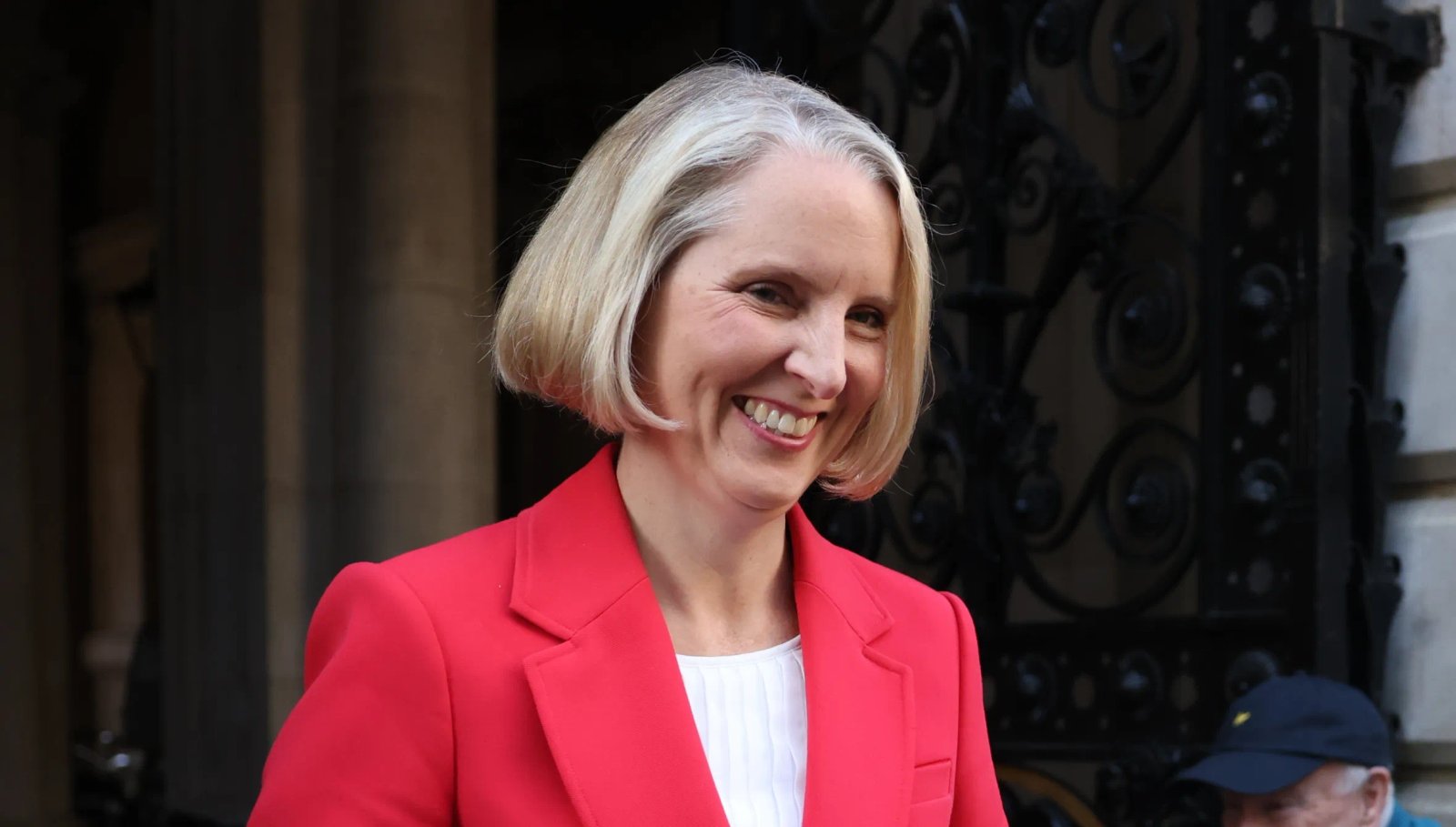
The environment secretary has privately opposed rewilding projects including the return of the lynx, despite publicly courting potential Green voters with promises to reintroduce species.
The revelation has led campaigners to accuse Emma Reynolds of “greenwashing”.
Her team have boasted of plans to restore lost species to stop Labour losing wildlife-lovers’ votes to Zack Polanski’s buoyant party in May’s local elections.

Reynolds recently pledged £1 million to help bring back the golden eagle to England. “We will continue collaborating with partners to expand responsible species reintroductions,” she said.
However officials who presented her with an ambitious plan to reintroduce ecologically significant species such as lynx, bison and elk received a negative response, according to sources.
A subsequent transparency request by The Times showed Reynolds had raised “concerns” about the recommendations, put to her after she took office last September. Her predecessor, Steve Reed, had indicated he was open to the idea.
The government refused to disclose the specific concerns she raised with the environment department and regulators. It argued that doing so would prejudice a legal challenge brought by a charity that wants to release lynx in Kielder Forest, Northumberland.
Paul O’Donoghue of the Lynx UK Trust, who is expecting his judicial review to be heard by the High Court in June, said ministers shouldn’t hide behind this.
“The conduct of the government is appalling and duplicitous,” he said. “Emma Reynolds has spoken positively about species reintroductions; however, this is all blatant greenwashing to court green voters.
“The very sad reality is that the government is actively blocking lynx reintroduction and are refusing to grant or even review reintroduction licences for anyone, now or in the future.”
The Times understands that Reynolds has made no final decision either way on the lynx, the Eurasian goshawk, a large, almost buzzard-sized bird of prey, and large herbivores such as bison. She has sought further advice from officials, potentially leaving the door open to their reintroduction at a later point.
The Lynx UK Trust has been working with the government for eight years on its proposals to return lynx, which are believed to have been extinct in Britain for about 1,300 years.

Rewilding proponents see the lynx as the best bet for returning a significant carnivore to Britain. Wolves, which are found across mainland Europe from Spain to Germany, are seen by many ecologists as too controversial.
Two other groups, one in Northumberland and another in Scotland, also want to restore lynx to tackle biodiversity declines and climate change. Eurasian lynx are about the size of a labrador and much bigger than Scottish wildcats. The elusive species’s home is woodlands.
Conservationists hope they could curb the impact of excessive numbers of deer, which damage forests by nibbling young trees. Lynx can prey on smaller deer, and research has found even the smell of them in a forest is enough to make deer spend less time browsing saplings.
Bison have been released in a fenced area near Canterbury, with the beasts, which weigh up to 1,000 kg, opening up the canopy in ways that are expected to boost the diversity of birds and plants. They are not yet in the wild.
O’Donoghue said it was “very strange” that Reynolds was giving £1 million for golden eagles when they have already been sighted in Northumberland, but no support for lynx. “You really couldn’t make this stuff up. It is like ‘Carry on Conservation’ and Emma Reynolds is the lead actress,” he said.
It is unclear why the minister is opposed to the reintroduction of lynx. However, after the government’s fall-out with farmers over the imposition of inheritance tax, she has moved in recent months to repair relations with the sector. The National Farmers’ Union, which has raised concerns over the management of much less contentious species such as beavers, is broadly opposed to the return of lynx, which can kill sheep.
The Times has appealed against the government’s decision to redact Reynolds’s view on reintroducing the species.
A Defra spokesperson said: “This government is committed to protecting and restoring our most threatened native wildlife, with any advice on policy always carefully scrutinised to ensure any potential negative consequences from species reintroductions are managed.
“We are investing £60 million over the next three years into the Species Recovery Programme, marking the largest ever government investment in directly supporting threatened species. We’re also returning iconic species like beavers and golden eagles to England once more.”