







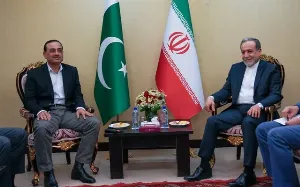
Pakistani Deputy Prime Minister Ishaq Dar and Iranian Foreign Minister Abbas Araghchi discuss the US-Iran ceasefire amid diplomatic tensions.
Ishaq Dar, Deputy Prime Minister of Pakistan, engaged in a conversation with Iranian Foreign Minister Abbas Araghchi on Friday to discuss various regional developments and the ongoing US-Iran ceasefire. This dialogue has sparked optimism for a second round of peace negotiations. According to a statement from Pakistan’s Foreign Office, this interaction underscored the necessity for continued dialogue to resolve pressing issues and foster regional peace and stability.
Araghchi acknowledged Pakistan’s proactive and constructive role in facilitating discussions related to the US-Iran engagement. Both officials agreed to maintain close contact during this critical period. Additionally, Iranian media reported that Araghchi also reached out to Pakistan’s Chief of Army Staff, Field Marshal Asim Munir.
In the days leading up to this conversation, Pakistan has intensified its diplomatic efforts to negotiate a meeting between the United States and Iran for a follow-up round of talks. Meanwhile, the capital city of Islamabad continues to face traffic restrictions as local authorities prepare for the potential arrival of high-level officials from both the US and Iran. These peace talks have been stalled due to unresolved differences on essential issues.
On Sunday, authorities in Islamabad and the nearby city of Rawalpindi imposed traffic restrictions in key areas associated with VIP movement in anticipation of the peace discussions. More than 10,000 security personnel have been deployed to ensure public safety. The district administrations are yet to determine when to enable access to areas surrounding the Nur Khan Airbase and to restore essential transportation services.
For the last five days, various streets, linking roads, marketplaces, and banks around the old airport have remained shut, impacting daily life for residents in surrounding areas, including Shah Faisal Colony and Fazal Town. Public transport services between Rawalpindi and Islamabad, including the Metro Bus Service, have been suspended, and goods transport has come to a standstill since April 19, causing considerable inconvenience.
Despite continued efforts by Pakistani authorities to mediate dialogue, uncertainty looms over when the peace talks will commence. Schools and colleges remain open; however, universities have shifted to conducting online classes to accommodate the ongoing disruptions.
This situation arises in the wake of an initial round of US-Iran discussions, which took place on April 11 and 12 but failed to yield any significant outcomes. Subsequent diplomatic activities have intensified, as Pakistani officials aim to alleviate tensions and reschedule further discussions between the conflicting nations.
On Wednesday, US President Donald Trump acknowledged that a second round of talks could occur as soon as Friday, although there remains no official confirmation regarding the Iranian delegation’s attendance. Iranian Foreign Ministry spokesperson Esmaeil Baqaei reiterated that Tehran has yet to decide on its participation in this newly proposed round of negotiations.
Earlier, Trump extended the ceasefire with Iran indefinitely, allowing more time for Iran to develop a consolidated proposal to end the ongoing conflict that escalated following US-Israeli strikes beginning on February 28. The international community watches closely, hoping for a resolution to the tensions in the region.