










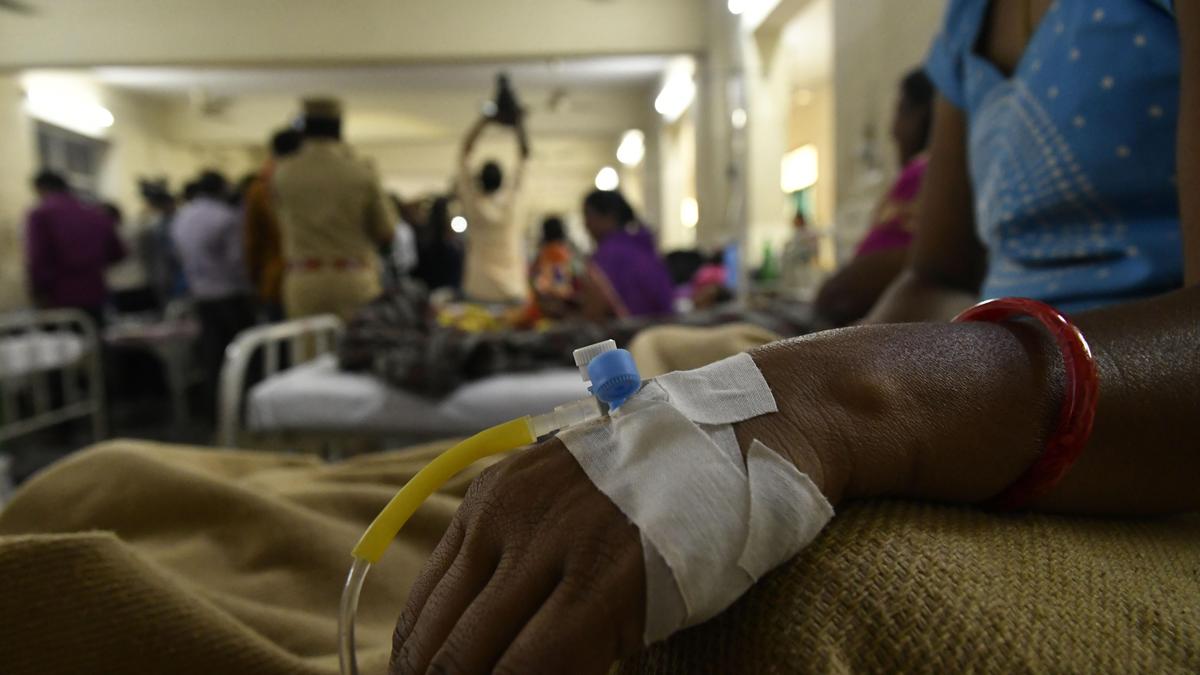
As India continues to grapple with a high burden of typhoid, experts call for sustained efforts across clinical care, public health systems and community awareness will be necessary to contain antimicrobial resistance and ensure effective treatment remains available |Image used for representational purpose only
| Photo Credit: RAMAKRISHNA G
Typhoid fever is a bacterial infection caused by Salmonella typhi and spread through contaminated food and water. This continues to pose a significant public health challenge in India. Once routinely treated with standard antibiotics, typhoid is now becoming harder to manage as antimicrobial resistance (AMR) reduces the effectiveness of commonly used drugs.
A recent study titled ‘Burden of typhoid fever and antimicrobial resistance in India’ (2023),published in The Lancet points to a high burden of the disease in the country, along with the growing presence of multidrug-resistant (MDR) and extensively drug-resistant (XDR) strains.
Published – April 26, 2026 08:08 am IST