








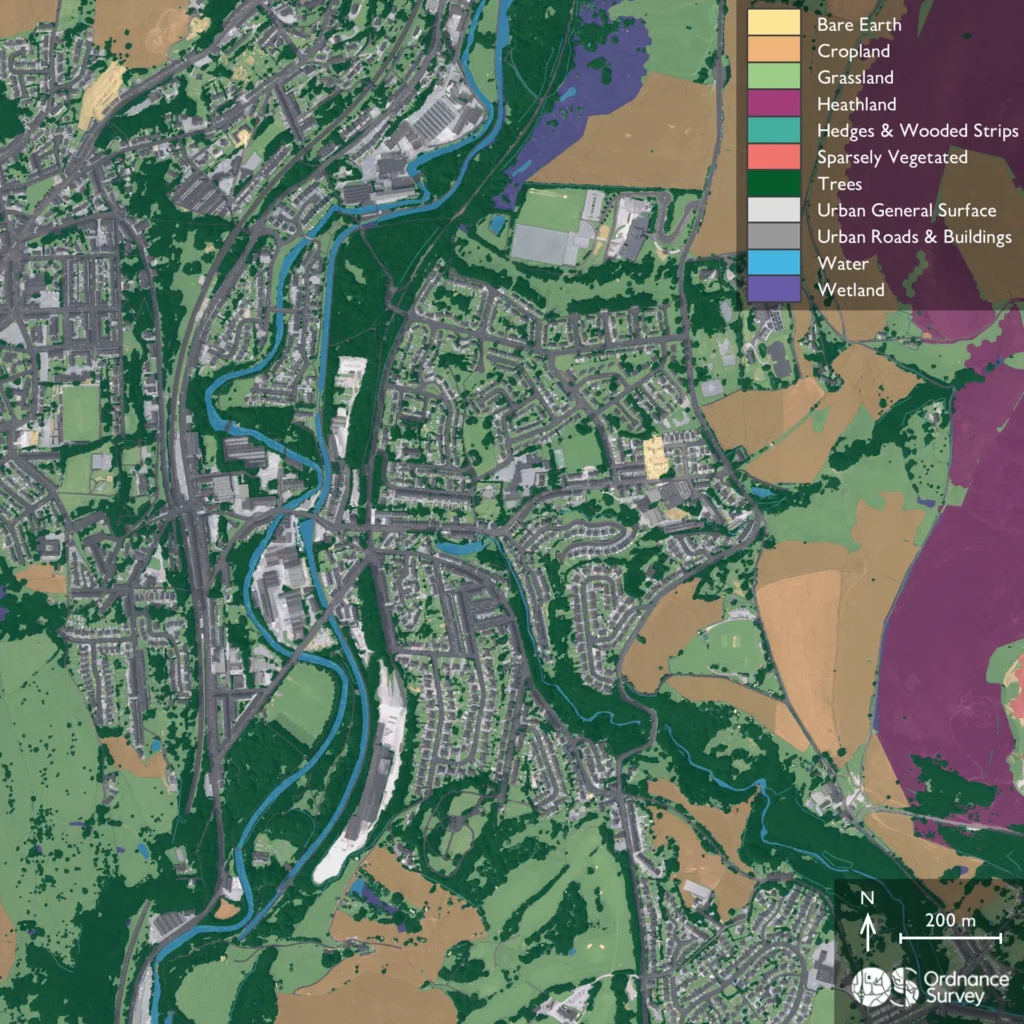
A new digital tool developed by Ordnance Survey could help developers in England meet environmental requirements while accelerating housebuilding plans.
The tool, known as Enhanced Land Cover (ELC), is designed to support the government’s Biodiversity Net Gain (BNG) policy, which requires developers to leave natural habitats in a better condition than before construction begins. Under rules set by Department for Environment, Food & Rural Affairs, most developments must deliver at least a 10% improvement in biodiversity and maintain those gains for 30 years.
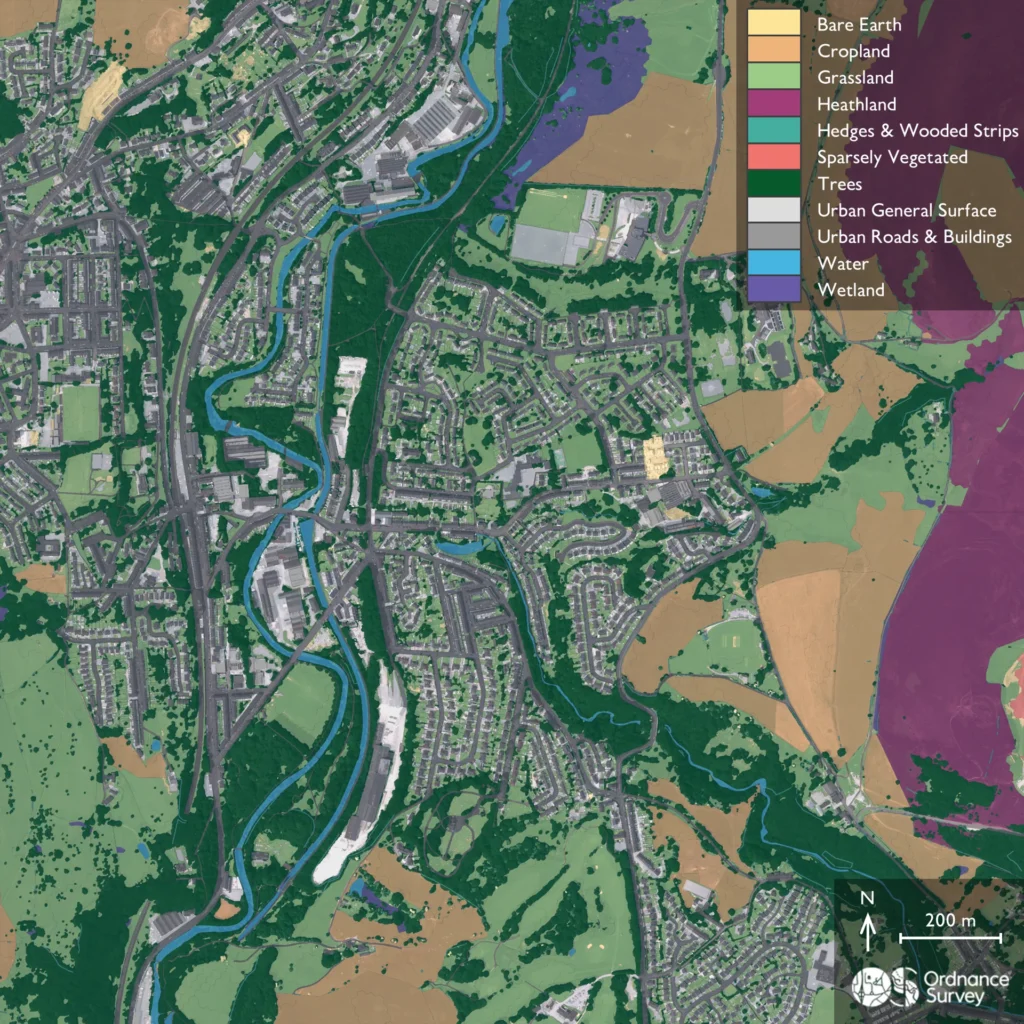
© Crown copyright and database rights. Ordnance Survey 2026
The ELC dataset brings together mapping, aerial imagery and environmental data into a single, ready-to-use platform. It combines Ordnance Survey’s own geographic information with external datasets, including habitat information from Natural England and agricultural data from the Rural Payments Agency. It also aligns with the UK Habitat Classification system, which underpins the biodiversity measurements required in planning applications.
This integrated approach allows developers, landowners and environmental consultants to assess land more quickly and at a larger scale. The tool can be used early in the planning process to understand existing habitats, and later to support detailed ecological surveys and long-term monitoring.
The timing of the tool’s release is significant, as the government aims to build 1.5 million homes during the current parliament while ensuring environmental protections are met. BNG requirements already apply to many developments and will extend to major infrastructure projects later this year.
By simplifying access to reliable environmental data, the ELC tool could reduce the time needed to carry out biodiversity assessments, which are a key part of planning approval. Early users have applied it to analyse multiple sites at once and to model how habitats might change over decades.
The data is also being used in combination with other digital platforms. Environmental technology firm Linckia integrates the dataset into its Habitat Fabric system, helping organisations manage biodiversity planning and reporting. Tools from Esri have also been used to process and deliver the data to ecologists working on the ground.
Beyond housing, the dataset has potential uses in wider environmental planning. It could support projects such as habitat restoration, flood management and the creation of green corridors, where understanding land composition is essential.
Dr Jack Parkin, product manager for the built and natural environment at OS, said: ‘The Government’s home-building target, combined with Defra’s BNG legislation, has made a market condition where ecologists are in high demand. One of the benefits of OS Enhanced Land Cover is to boost the productivity of those ecologists and to make their time count.
‘We aggregate multiple geospatial datasets together to provide a provisional assessment of habitats on the ground which saves ecologists time both in desktop analysis and pre-screening in the field. This can shave days, or even weeks, from development times, and with 1.5 million homes in the pipeline, that could really add up.’
Photo: Lucas Gallone