European governments need to step up and organise the defence of critical infrastructure against drone attacks at the national level, rather than leaving it to private operators, drone expert Robert Garbett told Euractiv.
More than six months after drones believed at least in some cases to be linked to Russia were sighted hovering around critical infrastructure in Denmark and other European countries, Garbett – who heads one of the world’s leading drone consultancies – says he does not see “any major preparations going into the defence of our critical national infrastructure”.
“We are not at all prepared,” he said.
Protecting Europe’s airports, gas storage and power stations is a national responsibility, according to the adviser on counter-drone systems.
At the moment, “it’s being left to those organisations responsible for that critical national infrastructure, and that is a mistake,” Garbett said.
While airport closures are costly in peacetime, power stations would likely be prime targets in any potential drone attack.
Germany registered more than 1,000 suspicious drone sightings in 2025, while the UK reported 250 incursions near military facilities.
“If somebody put a drone into a nuclear power station in the UK or anywhere else in Europe, or destroyed masses of offshore wind or offshore oil, we would be in trouble,” Garbett pointed out.
In February 2025, the Ukrainian nuclear plant Chernobyl was hit by a Russian Shahed drone, damaging the protective structure shielding the environment from the reactor destroyed in the 1986 disaster.
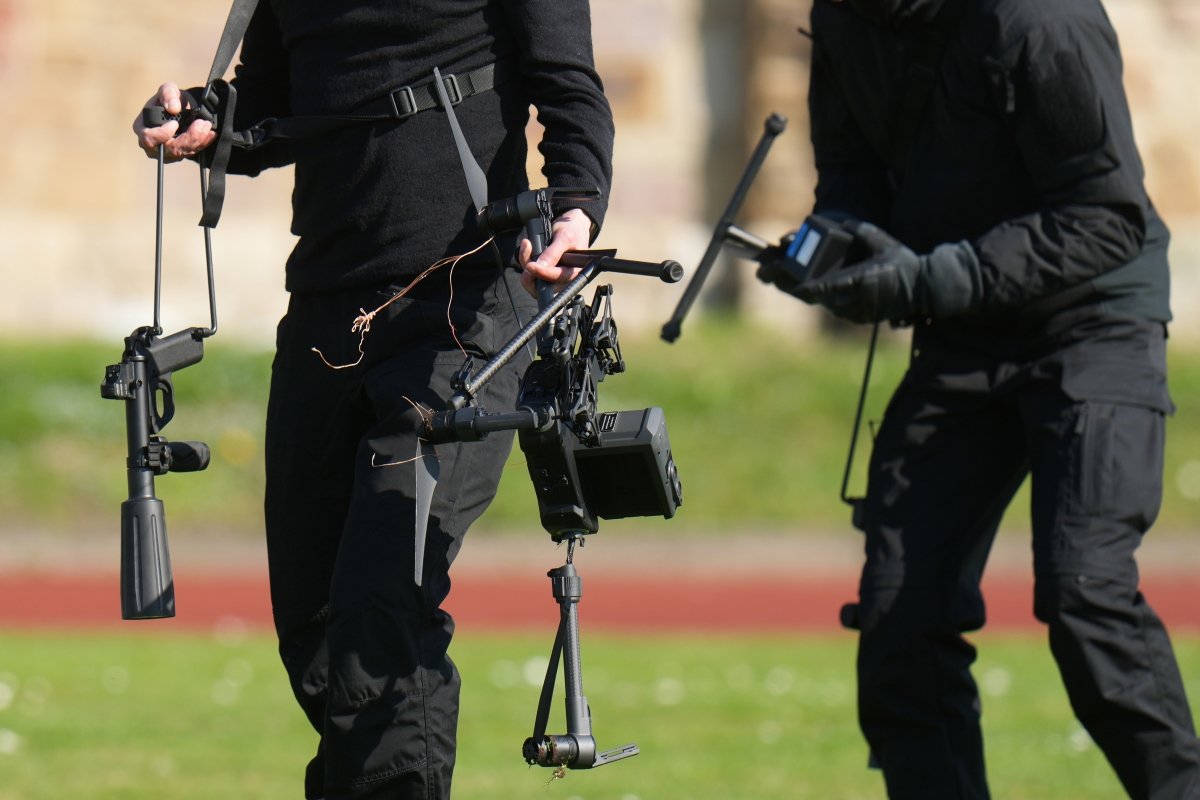
Greater focus should be placed on the forward deployment of counter-drone defence systems, such as aircraft equipped with capabilities ranging from lasers to interceptors, Garbett suggested.
The goal needs to be to catch any foreign drone way before it enters airspace near its target or cities, according to the CEO of Drone Major Group.
Any of these systems would be made up of multiple layers to detect, identify and track the incoming threat. The second step, Garbett pointed out, is then to eliminate the threat.
Garbett, who advises both industry and governments, suggested focusing first on key vulnerabilities and gradually expanding the system.
Internal threats – where drones are launched by actors already close to the target – should fall within the remit of national intelligence services, he added.
(aw)