It is just over a decade since Italian crime drama Gomorrah was released by Sky Italia and forever changed the perception of how successful an Italian TV series could be.
Its prequel, Gomorrah: The Origins, has just finished its run in Italy and is soon to be released in the UK. The original broke all the rules: it was filmed in a dialect many Italians couldn’t understand, and its subject matter was death, corruption and violence.
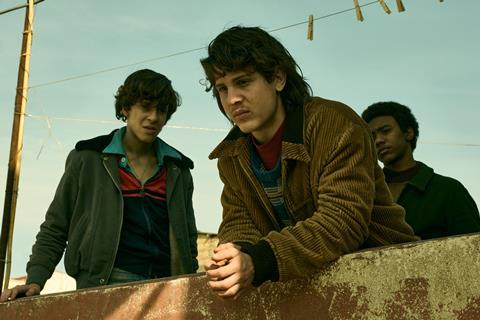
Extending the universe of such a treasured show is a very different but no less challenging endeavour for Sky Italia.
“My biggest concern was to not use the success of the original show simply as a marketing tool for the new series,” Nils Hartmann, executive vice president of Sky Studios Italy, tells Broadcast International.
Origins needed to be different from the original, yet somehow completely authentic to its DNA. For this reason, an idea the writers had stumbled upon when collating material for the original series was developed.
The multiple sources they had interviewed often referred in passing to a time when Pietro Di Lauro – the Camorra godfather who is fictionalised as Pietro Savastano (played by Fortunato Cerlino) in the original series – was a just child. This was before Scampia (the region of Naples that Di Lauro controlled) would become the biggest drug market in Europe.
Rather than being the decaying concrete jungle viewers know from Gomorra: La Serie (as the original is known in Italy), it was still just countryside inhabited by a poor rural community. “How did everything change in just a few years? Not just the landscape, but the people,” says Leonardo Fasoli, co-creator of both Origins and the original series.
Scampia was still bearing the brunt of pivotal historical events in the 1970s. After the Second World War, Italy was devastated, particularly in the south and particularly in the poorest regions such as Scampia. The industrial revolution provided a generation with employment but these jobs were taken away following automation. Many communities were abandoned and desperate.
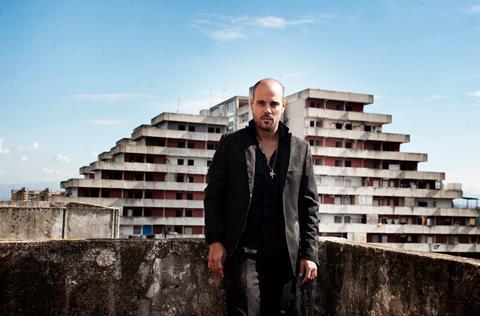
By the seventies, criminality was rife, though not of the brutally violent nature of the ‘cocaine’ wars – a subject that drove the narrative of the original series, which is adapted from Roberto Saviano’s non-fiction book of the same name.
Instead, it was of a more tolerated nature, with activities such as cigarette smuggling and prostitution – the latter an area in which Di Lauro’s mother was involved. Other social undercurrents were also taking place: women’s liberation; student and working class uprisings, and the ‘years of lead’; the wave of far-left and far-right political terrorism that took place during the 1960’s and 1980’s.
Whilst material from this time was of no use to the original contemporary-set series, it was ideal fuel for a prequel. Currently envisioned as three seasons, Origins will take the viewer up to the time when Pietro has evolved into the crime boss viewers know from the original show.
“The 1970’s was a more innocent time in Italy,” says Maddalena Ravagli, co-writer of Origins and a member of the main writing team of the original series.“What if Pietro Savastano’s soul was innocent then too?”
Emotional shift
The feel of Origins is markedly different to Gomorra: La Serie. “The original series was about power and money and about the level of violence required to get them,” says Riccardo Tozzi, founder of ITV Studios-backed Cattleya, which produced both series. “Pietro Savistano and his wife Ima have become simply partners in crime.”
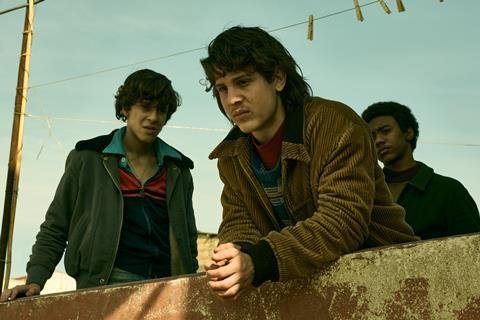
In Origins, however, the love story between the young Pietro (played by Luca Lubrano) and his future wife Ima (Tullia Venezia) take centre stage. “Origins is very moving and about emotions,” he says.
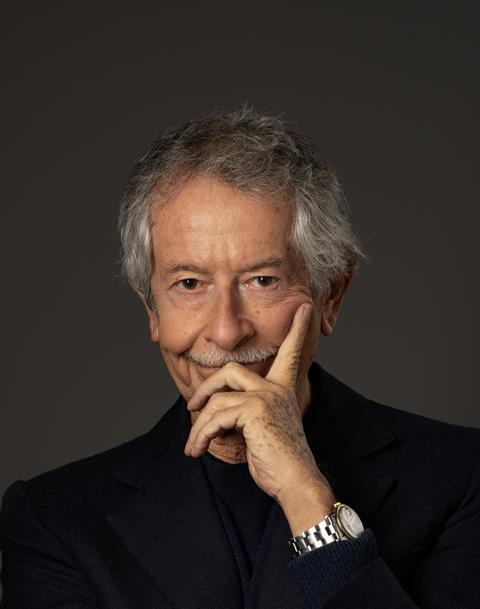
In 1977, when Origins starts, “Naples is a city full of music, promises of change, modernity, and freedom for everyone,” says Ravagli. Visually this couldn’t be in starker contrast to the famous Le Vele di Scampia (Sails of Scampia), the neglected brutalist housing estate that Pietro Savastano turns into a fortress and which Stefano Sollima – creative force and main director of the first two seasons – uses as a motif throughout the original series.
“Changing the tone and the atmosphere so much was a huge risk in terms of disappointing the fans,” says Tozzi.
A vital link between the DNA of Gomorrah: La Serie and Origins is that Marco D’Amore, who starred as the ruthless Ciro di Marzio in the first five seasons, directs the first four of the six hour-long episodes. Francesco Ghiaccio takes over for the fifth and sixth episodes.
For a year, D’Amore, who also serves as co-writer and artistic supervisor, had said ‘no’ to Origins.
“I thought that creatively I had given everything to this project. I also feared that it would be a nostalgic endeavor. That there was a risk of making something too similar to the original series. That no one wanted to take any risks.”
However, after reading an outline of the pilot episode, he changed his mind. “I felt the possibility of doing something profoundly innovative,” he says. D’Amore, also directed episodes of the original and the spin off movie L’Immortale and Tozzi recalls how D’Amore learnt from Sollima.
“We noticed that Marco stayed on set like someone studying. He was always learning, asking questions. It was clear that he had the idea of being a director in his mind, so we offered him the chance to direct some episodes.” D’Amore has since made his own films (Napoli Magica (2022) and Caracas (2024)). He describes taking on Origins; “as maybe the biggest challenge of my life.”
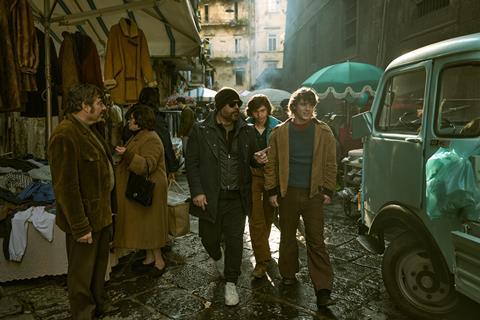
D’Amore’s main reference was the Italian film maker Sergio Leone’s Once Upon a Time in America and Origins has similarly epic ambitions. His experiences working with Sollima helped him execute this high-budget period series that involved shutting down parts of Naples and hundreds of extras.
“One lesson I learnt is the rigour in preparation and on set that is required to tell the story that is in your mind. Another was the ability to keep very calm all the time even in the most difficult and complex circumstances both with crew and actors.”
D’Amore also went to great lengths to prepare the cast of young actors (many of whom, as in the original, were discovered through street castings) and who are now set to experience the highs and lows of fame as well as the precarious careers of actors. “I can easily share the difficulties and the suffering that an actor goes through,” he says.
Placing the show
When Sky Italia started making drama more than a decade ago, they didn’t have a channel for TV series. Quo Vadis Baby (2008) was shown on its movie channel – but the intention was to give Sky Italia’s series cinematic values in order to offer subscribers something different to what the public service provider Rai and its commercial rival Mediaset offered.
Hartmann’s ambition was to create an environment at Sky Italia that was similar to the studios of Italy’s golden age of film – the neorealist period that lasted from the mid 1940’s to the early 1950’s – whereby directors could build a body of work.
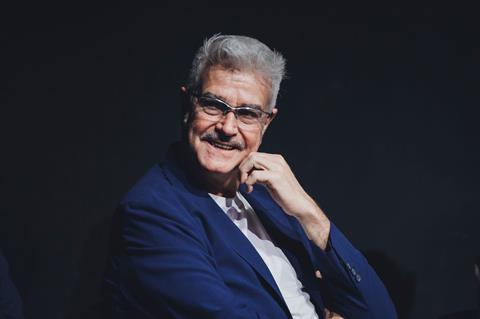
Sollima made Romanzo Criminale before Gomorrah and went on to adapt ZeroZeroZero, another of Roberto Saviano’s books, for Sky. Sollima has since become sought after in Hollywood, where he has directed films such as Sicario: Day of the Soldado, which stars Benicio del Toro and Josh Brolin.
Sky’s early shows were not only very successful in Italy (when Gomorrah’s second season was released it was reportedly watched more than HBO’s Game of Thrones) but on the international market too. Distributor Beta Film has sold the original Gomorrah to over 150 territories and Origins has already been acquired by HBO Max Germany and Canal+ in France, amongst many others.
However, while Origins epitomises the kind of ambitious TV that Sky Italia has become known for, such series are becoming increasingly difficult to make in today’s climate.
Most of the platforms that entered the market after Sky Italia first launched drama series have either retreated or drastically lowered their output. “Everyone was making a little too much, we were making a little too much,” says Hartmann. Ongoing revisions to the tax rebate system for productions shot in Italy are holding back productions and also adding to a general sense of insecurity.
The buoyant market that Gomorrah once helped create has been disrupted and a risk averse culture is becoming more prevalent. Origins is an exception.
“Compared to other projects, it opens doors more easily because it’s such a loved brand within Sky,” says Hartmann. However with fewer players and fewer productions being made, the power is shifting to the outlets and away from those who have the creative vision. The mood has changed.
“We are not struggling but I’m a little afraid for the future,” says Fasoli. “Fifteen years ago when Sky came to Italy and the streamers followed, it seemed a very free world. But now, it seems more restricted.”
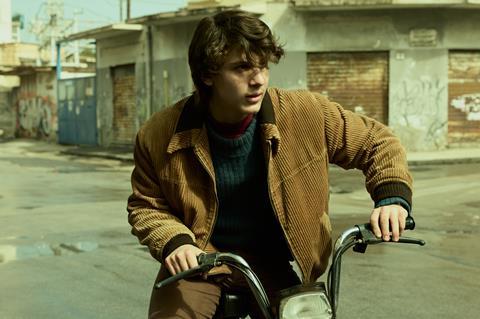
When Gomorrah first aired in 2014 it was a far cry from the world of good priests and policemen doing good deeds in sunny settings that Italian TV audiences had been used to.
Hartmann has previously stated – only half-jokingly – that when executives at Sky first saw the rushes of the original Gomorrah he was worried he would be sacked. So he phoned Stephano Sollima to ask if he and his sons could come and stay with him.
Today, he believes taking such risks is equally vital in order to create a groundbreaking show.
“If I am not at risk of getting sacked I am doing something wrong,” he says.