






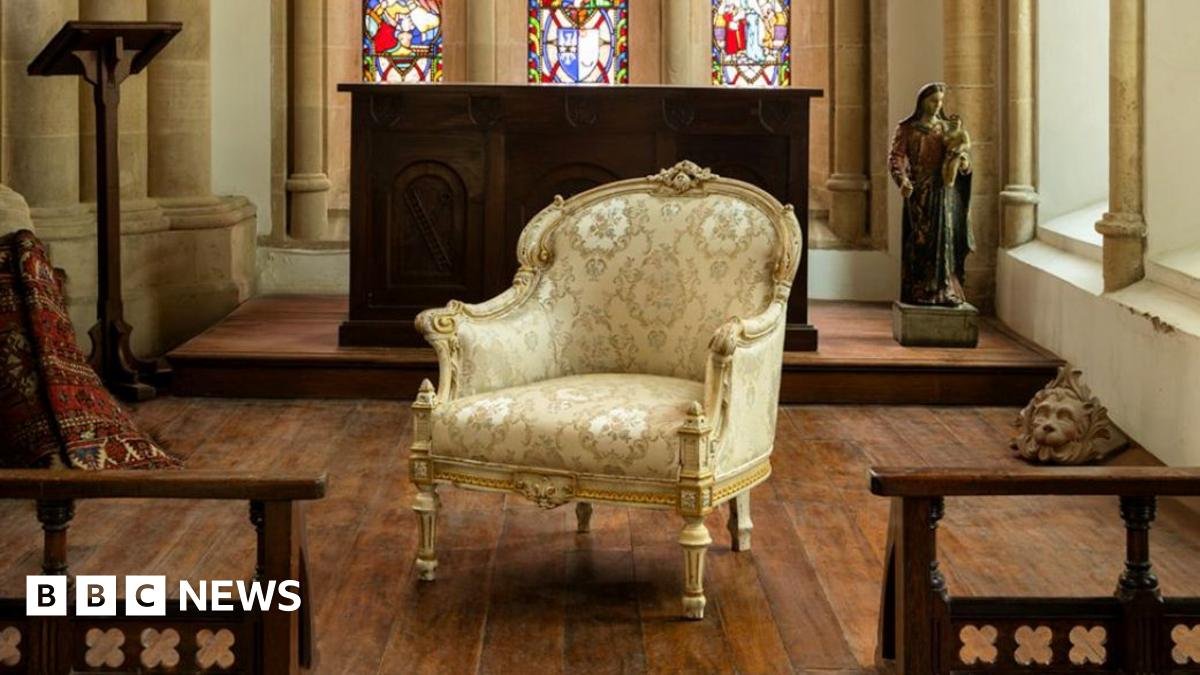
Who knew chairs could tell stories of invasions and class hierarchies?
At a recent exhibition in Mumbai city – called A History of India through Chairs – more than 200 chairs mapped the country’s cultural history through their unique designs and woodwork.
The exhibition, organised by restoration firm House of Mahendra Doshi, displayed chairs sourced over decades from different corners of India by Anand Gandhi and Chiki Doshi, the custodians of the brand and restoration experts.
The chairs were arranged chronologically to showcase seating traditions in India from pre-colonial to contemporary times, and highlighted global art movements that became popular in the country. Their designs also opened a window into the colonial invasions of India between the 16th and 19th Centuries by the Dutch, Portuguese, French and the British.
“When they came to India, they brought their furniture with them and also commissioned Indian artisans to design chairs and other items that replicated European designs they were familiar with,” says Vivek Gandhi, co-curator of the exhibition.
“That’s why India possesses an interesting mix of chairs that are very British or European in design or blend Indian and Western aesthetics,” he adds.
Over the years, many of these chairs found their way into homes, estate sales, old furniture shops or private collections, from where the curators sourced them, Gandhi says.
When the chairs reach him and his father Anand, they are usually in bad shape with torn cushions and missing legs. The old chairs are then painstakingly restored with the help of skilled craftsmen, a process that can take months.
One chair in the collection, which is covered with ceramic beads and was sourced from an estate sale in Gujarat, took eight months to restore, Gandhi says.
Another interesting item in the collection was a rare lounge chair designed by Swiss-French architect Le Corbusier, who was invited to India in the 1950s by then prime minister Jawaharlal Nehru to help design Chandigarh city. There were also several 19th Century chairs in the Anglo-Portuguese style sourced from Goa, which was once a Portuguese colony.
The exhibition also spotlighted India’s diverse range of high-quality hardwoods such as teak, rosewood and ebony, and the country’s deeply-rooted traditions of intricate handcrafting by local artisans.
Here are some of the chairs that were part of the exhibition: