






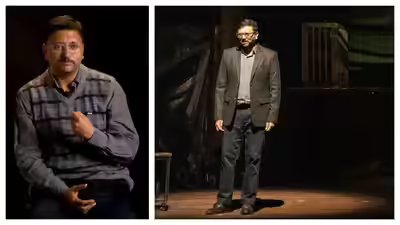
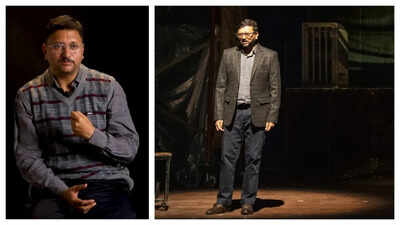
Gopal Datt has spent enough years on stage to know the difference between noise and resonance. The actor, who built his craft in theatre before navigating the overlapping worlds of film and streaming (Filmistaan, Shubh Mangal Zyada Saavdhan, Atrangi Re, Bunty Aur Babli2, Delhi Crime), has now stepped into his most technically demanding role yet, a horror play, Ankahi. Excerpts from a candid interview… THE CRAFT DOESN’T CHANGE, THE FRAME DOES For an actor who trained in theatre, the constant question is how that background translates to the intimate grammar of a close-up. Datt has little patience for the mystique around that transition. “It’s not about training, it’s not about the forms. The core of every acting is the same. Once you know how to emote, how to generate emotion, how to transfer it to the audience — close-up or wide shot, stage or bigger stage; these are all technical things. They’re not a big deal.” It’s a disarmingly simple view of a skill that actors often spend years over-complicating. For Datt, technical adjustments, like knowing how much to pull back for a lens, are secondary to the foundational work of genuine emotion. The rest, he implies, follows. THE OTT PROMISE, AND ITS LIMITS Streaming platforms arrived with the promise of a new order, more stories, more kinds of faces, more room for actors who had long been categorised and sidelined. Dutt acknowledges the early energy, but is clear-eyed about where things now stand. “People who are putting their money into something don’t want to take a risk. In our industry, people only understand hit or flop. If something is a hit, they’ll cast you in that same style of roles. In the early days, a lot of OTT platforms were trying to tell different stories. But I think now the same people are in these channels, and the same thing is happening that used to happen in films.” It’s a diagnosis that cuts to the heart of a recurring disappointment. The infrastructure may be new, but the risk aversion that defines commercial entertainment has proved stubbornly portable. MAKING HORROR: A COLLECTIVE ACT With his new horror play now running, Datt speaks about the genre with the respect of someone who has had to genuinely reckon with its demands. When asked what’s harder – making an audience laugh or making them afraid – his answer is immediate, and it has almost nothing to do with acting. “Making a horror play is really difficult because you need lots of technical support – good sound design, set design, light design. Without those, you can’t make a horror play. In comedy, you depend on your own skills. That’s easy. Horror needs the stage to conspire with you.” It’s a telling distinction. Comedy, at its most elemental, lives in the performer; in timing, in instinct, in the relationship with a live audience. Horror, by contrast, is a collaborative architecture. An actor alone in the light cannot manufacture dread; the darkness has to be complicit. WAITING FOR SOMETHING INTERESTING In an era when every actor is expected to have a personal brand and a career roadmap, Dutt’s perspective on his own future is characteristically unguarded. He is not plotting a pivot. “I’m looking for exciting work, whether it comes in theatre, OTT, or films. Otherwise, I don’t care. The whole entertainment thing is a paradigm shift, people now don’t have much attention span. Vertical dramas are coming. I think something interesting will evolve from this manthan.”