








On 28 February, University of Queensland Press received an email from one of its authors warning of the publisher’s impending collapse.
UQP is one of the most celebrated literary houses in the country – the Australian Book Industry Awards’ small publisher of the year for four of the past five years – and its enviable stable of authors continues to win major awards.
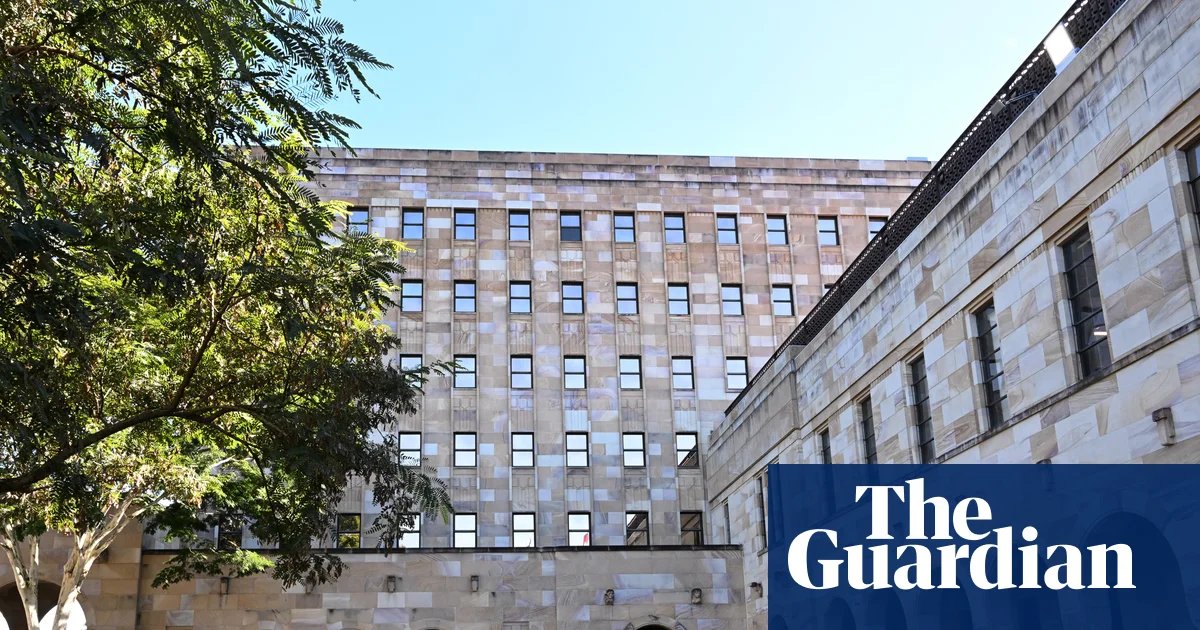
But poet Omar Sakr’s message to UQP’s director, Madonna Duffy, spoke to the turmoil roiling behind the publisher’s sandstone facade.
“We’ve seen in recent times entire festivals collapse when authors walked out en masse,” Sakr wrote.
“I assure you the same thing is possible for a publisher, and it would be heartbreaking if it were to happen to UQP, one of the very few decent publishing houses in the country.”
Now that warning has proved prescient as at least 17 authors have ended their contracts with UQP or vowed not to work with the publisher again, after a series of events stemming from responses to the Israel-Gaza war culminated in last week’s cancellation of a children’s book by the Indigenous poet Jazz Money over comments by the book’s illustrator, Matt Chun, about the Bondi terror attack.
How did it come to this?
Sakr’s discontent with UQP goes back at least to January 2025, when he was one of 55 UQP authors to sign an open letter in solidarity with Palestinian-Australian author Randa Abdel-Fattah who, according to the letter, was subject to a campaign by the “Zionist lobby and its allies” to prevent UQP from publishing her novel Discipline.
The University of Queensland vice-chancellor, Prof Deborah Terry, was quoted in the Courier Mail as committing to a “review” of Abdel-Fattah’s book deal, something Sakr and his fellow signatories described as “incredibly disheartening and concerning”.
The review found nothing to prevent Discipline’s publication but led to another review into UQP governance.
In February 2025, the publisher paused printing on Sakr’s own book, weeks out from its eventual release, to have it reviewed by an “academic expert in hate speech”.
A collaboration with the visual artist Safdar Ahmed, The Nightmare Sequence is described as a collection of poems and artworks bearing witness to the genocide in Gaza. The review found no issue with the poems but raised concerns about a reference to Israel as a “Zionist entity” in the introduction, written by Palestinian-American poet George Abraham, and an illustration that showed the former US president Joe Biden as a monster with an appendage that could be construed as a tentacle.
The book went ahead with no changes other than a brief explanatory footnote in the introduction but Sakr said the review left him feeling “insulted, offended and humiliated”.
After these two “hate speech” reviews, another of the country’s most esteemed writers, Tony Birch, became involved and wrote to the publisher making what he described as the “reasonable request that in future writers’ contracts stipulate that we should be informed and consulted before a manuscript can be sent to a party outside the Press”.
After his request was refused, Birch says, his longstanding and award-winning relationship with UQP became “untenable”.
Authors cut ties
The event that sparked the mass exodus of authors in the past weeks was UQP’s decision first to put on hold the publication of Money’s book, and then last week to cancel it altogether.
Five-thousand copies of Bila, A River Cycle, a lyrical tale about a river on Money’s ancestral Wiradjuri country with a message of environmental stewardship, now sit in storage while the university considers – in the words of its communications department – “recycling options”.
It came under scrutiny after Chun published a Substack post on 1 January about the Bondi beach attack, condemning “liberal capitulation” to the “Zionist framing” that “violence that impacts the affluent beneficiaries and perpetrators of imperialism is deserving of special attention, elaborate memorials, rolling media coverage, and international headlines”.
“Whiteness, Jewishness, and the backdrop of Bondi Beach were enough to bestow every person killed with default innocence and virtue,” Chun wrote. “White, Jewish settler victimhood demands exceptional, heightened grief.”
Fifteen people were killed in the terrorist attack on 14 December, including a 10-year-old child.
Chun told the Guardian last week he stood by “every word” of the article, which the Queensland Jewish Board of Deputies said contained the type of sentiments that “enabled hate and falsehoods to fester” and created a “putrid environment”.
Birch describes Chun’s article as “complex”, saying it had “merit”, but acknowledges the quotes “lifted” by media could “be read as deeply offensive”.
In another email exchange ending his relationship with UQP, Sakr told Duffy and the executive dean of humanities at UQ, Heather Zwicker, that the cancellation of Bila had tarnished “a once-great publishing house with an act that goes against its very traditions”.
“No amount of HR-speak is going to salvage this disgrace,” he wrote on Tuesday. “Long may it haunt you.”
Sakr was not alone. One of UQP’s most successful and longstanding novelists, Melissa Lucashenko, responded to Bila’s cancellation prosaically, by vowing to seek to cut ties with UQP, and poetically, by casting an “ancestral curse on the lot of them”. Another of its most awarded young poets, Evelyn Araluen, said she was paying to rescind her UQP contract – and encouraging others to join her.
Birch says “the destruction” of Bila was “an act of cultural vandalism”. Birch, like Lucashenko, Araluen and Money, was part of the publisher’s proud and decades-long history of championing First Nations voices.
“I think that the damage will be generational,” Birch says.
‘Collateral damage’ concerns
The La Trobe University professor Dennis Altman says he was shocked when he read Chun’s online essay, originally titled “We don’t mourn fascists”.
Altman, a seminal gay rights activist and author, is the son of Jewish refugees.
“Apart from the fact that it is extraordinary to write something like that straight after a mass shooting, I certainly read it as clearly antisemitic,” he says.
Yet Altman’s first reaction to Bila’s cancellation was “to feel enormous sympathy to its author”, to whom “a huge disservice” was done.
He says the issue raises an interesting philosophical question: “do you ban someone for unacceptable views, even when those views are not relevant to the work?”
Should we read Harry Potter, Altman asks, if we consider JK Rowling “a transphobe”? Or Lionel Shriver, if we accept accusations against her of cultural appropriation?
“Agatha Christie was appallingly antisemitic and snobbish – does that mean we don’t read her?” he asks. “Once we start cancelling works of art – and I hate the cliche – but it becomes a slippery slope.”
This was a point Sakr expanded on when he cut ties with UQP: should he “morally vet” his copyeditor? What about his cover designer?
Altman says the Bila decision comes at a time when universities are risk-averse and “terrified of falling afoul of the antisemitism envoy”.
“We see universities fearful of public debate,” Altman says. “But do they not think through the reputational damage that they do in their concern to avoid controversy? They actually generate greater controversy and do great harm to their reputation.”
Altman is also critical of creative boycotts. Though he is more circumspect about the UQP case, he fears for emerging writers and poets who may struggle to find an alternative publisher.
“I do get really concerned about the collateral damage”.
Staff ‘heartbroken’
Among the collateral were UQP staff. Last Friday, nine members of the small team put their name to an open letter in which they said they felt “distressed and betrayed” by the decision to cancel Bila.
Greatly “concerned about the precedent” it set, they called on the university to overturn its decision.
Several staff members spoke to the Guardian on the condition of anonymity.
“The staff here are heartbroken,” one said. “This is a really sad period of time in publishing history, a really dark time.”
The staff member said they wished UQP could have put out a statement saying the press did not condone what “Chun wrote in that piece and that we will not work with him again in light of that”.
“But we should have said we stood by Jazz Money and proudly published Bila,” they said. “And that we don’t pulp books.”
Several staff spoke of a gradual sense that their editorial independence was being eroded over the past year.
Money’s former publicist Chloe Mills says she was censured for liking a social media photo of UQP writers at a festival wearing Readers and Writers Against Genocide shirts, and quit in August.
Watching Bila’s cancellation from afar, she says, was “incredibly heartbreaking”. For her former colleagues; for Money, whom she describes as “very kind, sweet and universally adored”; and for the legacy of UQP.
There aren’t many places you can publish poetry in Australia, Mills says, before rattling off a list of UQP’s “crazy amazing backlist”: Lisa Bellear, Samuel Wagan Watson, Araluen, Sarah Holland-Batt, John Kinsella.
“What is the alternative for those people?” she asks.
“Seeing it all unravel like this … it’s really sad.”
Birch says UQP had been a “great supporter of Aboriginal writers” but that “any writer working with a publisher attached to a university would be anxious about the independence of their work”.
Birch says “all writers must take responsibility for their words” but believes debates around “whatever offence any writer causes” have “no perspective”.
“Post 7 October [2023] we have dealt with the appalling hypocrisy of some publishers, bureaucrats, creative board members, media and politicians,” Birch says. “Australia has failed to adequately support the people of Gaza, who have witnessed the destruction of their country and the murder of tens of thousands of people.
“This failure will be remembered as a shameful history.”
Duffy and Zwicker did not respond to a request for an interview.
A UQ spokesperson said the university remained “firmly committed to UQP’s editorial independence and values the critical role it plays in publishing diverse works of authors that engage with complex and challenging issues, provoking conversation and debate”.
“While the university supports freedom of speech and UQP’s editorial independence, this is not unlimited,” the spokesperson said.
“We cannot overlook or condone the abhorrent statements made by [Matt Chun] about the victims who were shot and killed in the Bondi terror attacks. It is because of these statements that this publication of Bila, A River Cycle will not proceed.
“We have acknowledged that this outcome may not align with the views of some authors and staff.”