





While large corporations tend to dominate the headlines of business pages, statistics show small businesses serve as the backbone of the American economy.
According to the most recent U.S. census data, companies with fewer than 100 employees generate $11.6 trillion in annual business revenue and account for more than 32% of all jobs at firms with employees nationwide.
In Louisiana, which had just three companies on last year’s Fortune 1000, such firms employ an even larger share of the workforce — 37.6% of employees — and generate $145.7 billion in revenue every year.
In honor of National Small Business Week, which kicks off Sunday, May 3, we wanted to hear from small business owners across the state. In the latest installment of our occasional One Big Question feature, we asked six business owners “What is the biggest challenge of running your small business?”
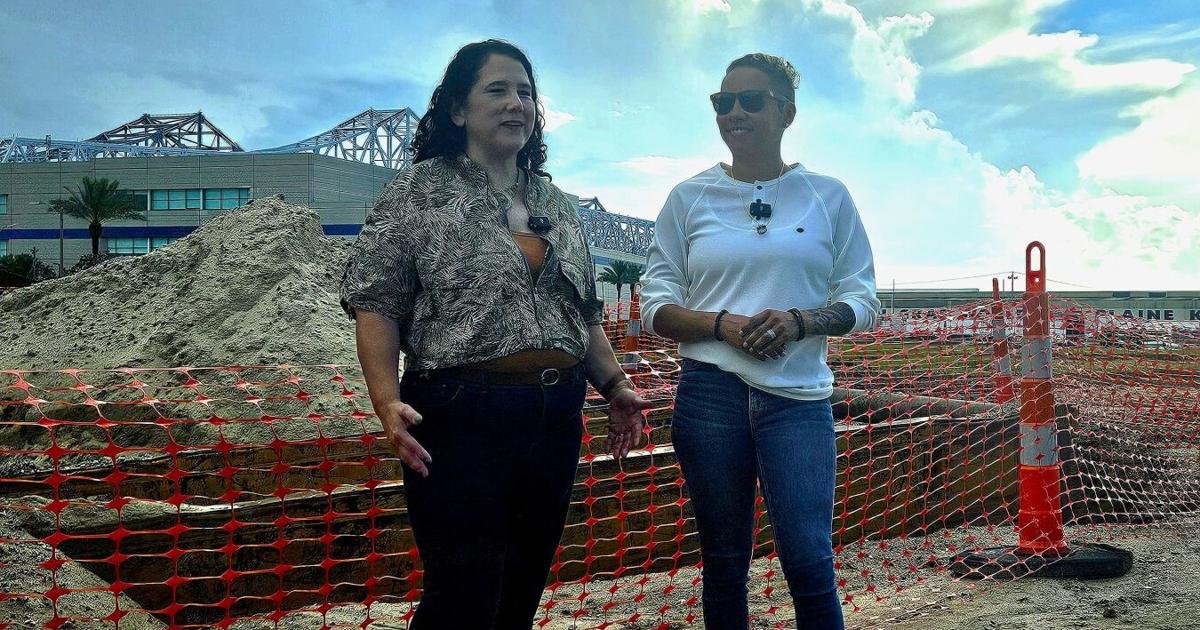
Iam Christian Tucker, president and CEO, ILSI Engineering, New Orleans civil engineering firm
Between the budget shortfalls of the city and Sewerage & Water Board and other various different agencies, it’s a lack of opportunity. Funding is limited, the federal government isn’t spending like they were before and that lack of trickle-down is real. I mean, meaningful opportunity to lead to prime work and to be trusted with projects that match our actual capabilities.
The expertise is here, the experience is here, the past performance is here. What’s missing is the trust from public agencies to put that work in our hands as locals only, instead of constantly giving projects to large multinational firms that depend on small firms like ours to really get the local work done and to understand what’s under the street and what’s under the surface and what’s above it, how to navigate the agencies and how to get real results that keep projects moving forward. We live here. We hire here. We invest here. We regenerate dollars here. We’re a part of the tax base. The challenge is not whether small business can do the work, it’s whether we’re given the opportunity to prove it at the level that we know we can deliver.
Russell Perrone, president and owner, Perrone & Sons, New Orleans produce distributor

Rusty Perrone, president of Perrone and Sons, speaks during the grand opening of the company’s new production facility in Metairie on Tuesday, Feb. 18, 2025. (Staff photo by Brett Duke, The Times-Picayune)
The hardest part is insurance, both auto and wind-hail insurance. You can drive down our streets and you see billboard after billboard of personal injury attorneys going after trucks. Every time one of my trucks gets on the road with our name to advertise, we are a target for these lawyers to go after if we’re in an accident. That’s really put a damper on wanting to do business in the state. We’ve been through the Great Depression, we’ve been through World War II, and each generation has faced their problems, but most of our problems are not related to a particular industry taking advantage of bodily injury payouts. Every time I wake up with an alert on my phone, I hope it’s not an accident because even a little 5 mph fender bender winds up costing a couple hundred thousand dollars.
Lakeisha Robichaux, CEO, Chief of Minds, Baton Rouge organizational development firm
Maintaining the visionary role, because oftentimes we tend to want to put our hands in a little bit of everything, so getting out of the day-to-day operations of things can be a challenge. We’ll get a project that I’m very interested in, and I want to jump in and say, “Hey, what’s going on? I think we should do this.”

Lakeisha Robichaux, CEO of Chief of Minds speak during the New Orleans Regional Black Chamber of Commerce’s Annual Luncheon and Meeting at the Hyatt-Regency Hotel Downtown in New Orleans on Friday, May 18, 2018. (Photo by Peter G. Forest)
We have to trust our team to do the work and implement it, even though we’re excited about it. You have to be positioned to let that work flow like it’s supposed to flow, so I can make sure we’re getting the revenue, the projects, that we have great culture across the organization and that the systems are working like they’re supposed to.
Alfonzo Bolden, co-founder and co-CEO, Cajun Nation Cajun Seasoning Co., Lafayette food producer

Alfonzo Bolden, left, with his brother, Troy.
Everybody has a seasoning now — everybody — and the biggest challenge has been staying ahead of that. We use a major co-packer in this area, and those same seasoning companies are using the same co-packer. The lead time, at one time, was two weeks. Now, it’s four to five weeks. So, we’re trying to locate a second co-packer so we don’t have all of our eggs in one basket. That’s been the biggest challenge. Also, as of late, a big challenge is the fuel surcharges impacting our shipping. Recently, it may be up as much as 10%, so it really impacts the bottom line.
Greg and Lisa Roache, president and CEO, Gainey’s Concrete, Holden precast concrete manufacturer
Lisa Roache: The most difficult thing is communication and making sure that everyone is on the same page and aligned. Greg has a lot of ideas. He has more ideas in an hour than most people have in a lifetime. Someone needs to be able to hone those, take them and execute them. If not, it’s chaos in a company.
Greg Roache: I’m the president, Lisa is CEO, and we’re husband and wife and we’re 73% owners, so it’s very unique that owners actually can fulfill these roles. In order to run a precast plant, we need lots of skilled positions — project managers, estimators, safety, plant management, all with strong semi-engineering skills. But then we need unskilled people, too. So, getting quality people into the company is a challenge.
LR: Contributing to it is the fact that people can get medical marijuana cards so readily. We have a zero tolerance for drug and alcohol at our company, and after we make them a job offer, they fail the pre-employment drug screen. It’s a really bad problem when you think of all the effort, because everyone gets interviewed three times.
Nenette Gray, founder and CEO, Lemonade Creative Marketing, Baton Rouge marketing firm
Navigating through uncertainty would be my biggest challenge — dealing with the erratic nature of tariffs, the instability of the economy, supply chain disruptions, managing changing client expectations. Another big one is handling the cash flow crunches while still being able to grow. Resiliency is absolutely necessary as an entrepreneur if you want to succeed. Entrepreneurship is not for the faint at heart. It’s just absolutely not.