






Opposition lawmakers and Sámi representatives have reacted angrily to plans by Sweden’s centre-right government to remove protections for reindeer herding, in a move aimed at opening up the country’s north to mining and nuclear power.
Birger Lahti, a member of the Swedish parliament and The Left Party’s energy spokesperson, told regional newspaper Norrländska Socialdemokraten (NSD) on Monday that he was “shocked” by the proposal. (Please check. If this is the Swedish party, what I see as the formal name is: The Left Party)
A cornerstone of traditional Sámi culture, reindeer herding involves around 4,600 people in Sweden, according to recent research.
The designation of ‘national interest’ for the practice carries deep symbolic weight for the EU’s only recognised Indigenous people, a community that has faced decades of forced displacement, assimilation and the loss of grazing lands.
“Reindeer herding encompasses language, knowledge of the land, and our relationship with the land and water,” said Sara-Elvira Kuhmunen, leader of Sáminuorra, the national Sámi youth organisation.
“Without these, the very foundations of Sámi culture risk being undermined,” Kuhmunen said.
‘International situation’
Ebba Busch, Sweden’s energy minister, called last month for scrapping the ‘national interest’ status for the traditional, nomadic way of life, claiming it was hindering the exploitation of mineral resources and nuclear energy deployment in the sparsely populated region.
Busch, and rural affairs minister Peter Kullgren, both of the Christian Democratic Party, cited a “particularly unstable international situation” in an opinion piece published in the daily newspaper Svenska Dagbladet on 20 April.
Planning authorities are currently required to factor in the impact of grazing, migration and animal husbandry when making land-use decisions, prioritising reindeer herding, particularly where projects may affect migration routes.
With its rich deposits of critical minerals, northern Sweden has become a strategic priority for both Stockholm and the EU, which is seeking to reduce dependence on imports, particularly from China.
Busch and Kullgren said reducing reindeer numbers would therefore be “the most effective way of mitigating conflicts between reindeer herding, forestry, energy, mining, infrastructure, hunting, fishing and communities seeking to develop.”
Indigenous rights
Opposition lawmaker Lahti argued that a fairer distribution of mining revenues would encourage local support for new projects.
He cited the case of LKAB, a state-owned mining company planning to expand operations in the north.
“What if some of LKAB’s dividends stayed in Norrbotten,” Lahti said. “Since 2015, LKAB has paid out 50 billion Swedish kronor to its owner, the state,” he said, echoing comments by Swedish MEP and fellow party member Jonas Sjöstedt in a recent interview with Euractiv.
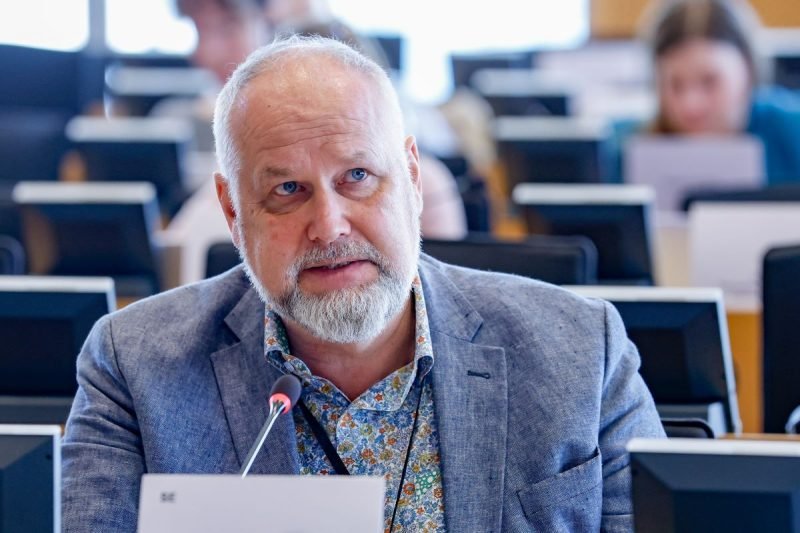
Green lawmakers share The Left Party’s concerns. Swedish MEP Pär Holmgren said his country should prioritise human rights and environmental protection.
“We are seeing a very worrying increase in weakening environmental standards to open new mines,” Holmgren told Euractiv. “In many cases, this is not about critical raw materials, but about extracting uranium from alum shale to pursue our right-wing government’s delusional ambitions for new nuclear power.”
Energy crisis
Rising oil and gas prices linked to the US-Israeli conflict with Iran have intensified the government’s push to expand Sweden’s nuclear power sector. Stockholm argues this is needed to meet growing electricity demand, ensure energy security and reduce reliance on imports.
The country’s powerful mining and metal processing industries are, with government support, also pushing for exemptions from the EU’s Water Framework Directive. In their view, pollution limits under the legislation are slowing the approval of new projects.
Following a public consultation, the European Commission is expected to present a proposal within weeks that could include amendments to the directive.
INTERVIEW: Europe must not sacrifice lakes and rivers for critical minerals
Veteran Swedish socialist Jonas Sjöstedt was a newly elected MEP with the European United Left/Nordic…
6 minutes

(rh, aw)