







India (MNN) — India’s political landscape has shifted, with several concerning implications for religious minorities.
Elections this week in four of India’s states and one territory have returned the Hindu nationalist Bharatiya Janata Party (BJP) to dominance.
Under Prime Minister Narendra Modi, the BJP leads a coalition of parties called the National Democratic Alliance. With the BJP’s landslide victory in West Bengal State this week, it now leads 18 of India’s 28 states. That’s nearly 80 percent of India’s population, according to a poll analysis by the TV network India Today.
Add to that the fact that the NDA coalition (including the BJP) governs 21 of India’s 28 states, and you have a major political force.
A man we’ll call Paul serves as a pastoral coach in support of work in India. According to Paul, the BJP’s campaigning in West Bengal was less than honorable. It involved the presence of many soldiers.
“My friend who lives there [said], ‘It looks like there’s a war taking place in West Bengal,’” says Paul. “They went ‘all out’ and did every unethical, immoral way to defeat [the incumbent chief minister]. And they won — a massive victory, 200-plus seats.”
Irregularities included a voter list overhaul that removed some 2.7 million voters. A disproportionate number of those voters were Muslims. That’s according to an analysis from independent research organization SABAR Institute, based in Kolkata.
What’s next for India?
Several concerning realities may come from the BJP’s expanded reach.

Sonajhuri Haat Bolpur, West Bengal, India (Photo courtesy of Ratul Pal via Unsplash)
The first thing to expect comes from the party’s record, says Paul. “Every state they [the BJP] captured, they immediately brought in this anti-conversion law,” he says.
Anti-conversion laws can be framed as protections for religious freedom. But in practice, they are anything but. Such laws are currently present in at least 12 of India’s states.
Then, on a national level, Paul believes the BJP will push to change India from a secular republic to a Hindu republic.
“They were short one state, and now they won West Bengal. So we can expect that a constitutional amendment will be happening very soon,” he says.
If these predictions come true, Christians and Muslims in India have testing times ahead.
“Especially in terms of missions,” says Paul. “We’ll have to relook at how we do missions completely — probably have to go underground. It’s already happening. Many churches are shut down in the states where these [leaders] have passed this anti-conversion law. Many churches have closed down.”
These changes and challenges are no surprise to God. Please pray!
“Pray that the Church will stay strong, united,” says Paul. Pray for wisdom for churches about complying with government regulations.
“Pray for us [that] as a church and leadership will come together and come up with some more concrete plans and strategies to live out our faith in the midst of this context,” says Paul.
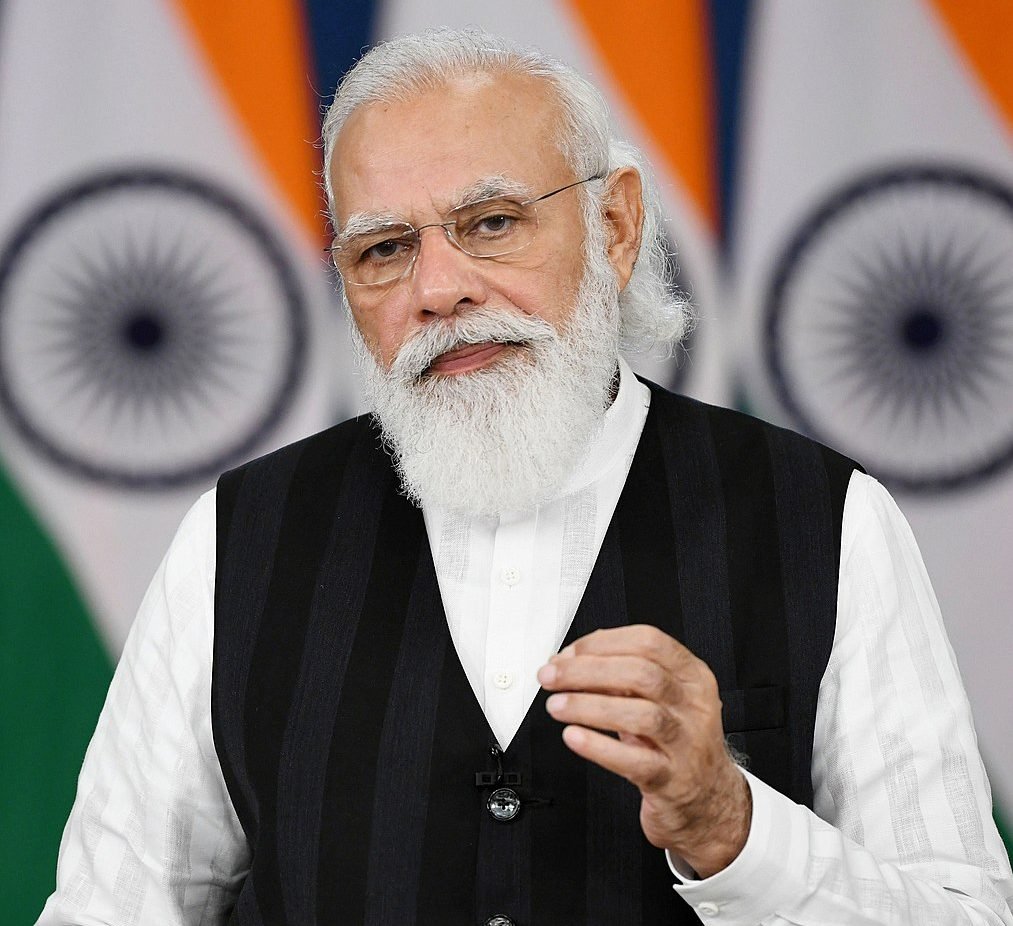
Header photo: Prime Minister Narendra Modi addressing at the joint SCO-CSTO Outreach Summit on Afghanistan, through video conferencing, in New Delhi on September 17, 2021. (Wikimedia Commons)