







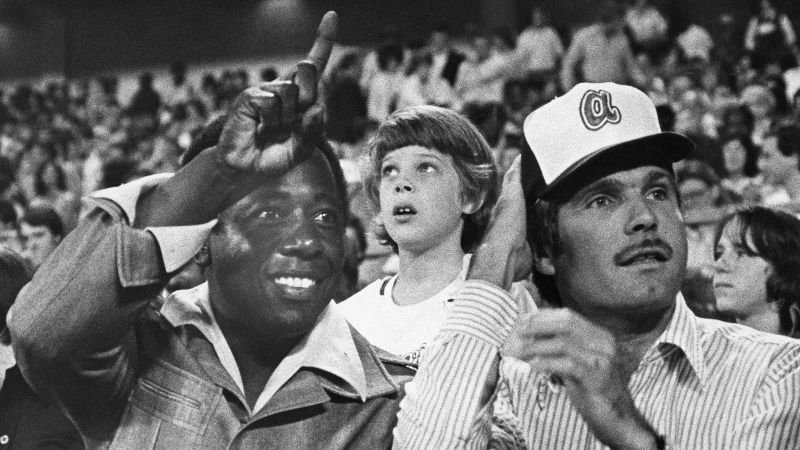
When Ted Turner bought the Atlanta Braves in 1976, he was not buying a baseball dynasty. He was buying content.
The Braves at that time were perpetually near the bottom of the league. They were not yet “America’s Team,” and on most nights they barely even looked like Atlanta’s team. A decade after relocating from Milwaukee, the team routinely played before thousands of empty seats. There were rumors of relocating once again.
But Turner, who died Wednesday at age 87, saw an opportunity: He had a national TV station in need of programming. The FCC had cleared the way for WTCG, later known as TBS, to become the first-ever “superstation,” using satellites to transmit across the country.
And so, starting in 1977, Turner turned the Atlanta Braves into a nightly content machine. Their games began beaming into households across the country, night after night, summer after summer.
It was an audacious, deeply Turner-esque media play. The Braves did not have to be good to be valuable; they just had to be on. And in an era before every MLB game could be summoned on a smartphone, being on every night mattered.
Turner was just a few years away from launching CNN as the world’s first 24-hour, all-news cable network, but the playbook was already visible. And just as banks, potential partners and newspaper owners scoffed at his CNN idea, fellow team owners scoffed at his idea of taking a regional sports team national — especially when he put himself in uniform for one game in 1977 as the team’s manager, leading to a rule that would ban that from ever happening again.
But the vision worked: Braves games often drew strong ratings and, over time, developed a significant out-of-market fan base, leading the franchise to often be dubbed “America’s Team.”
That nickname cemented itself in the 1990s, when the team became one of baseball’s foremost powers, winning the division title year after year, reaching the World Series five times and winning in 1995, and producing five Hall of Fame players.
As a result of national availability and, later, on-field success, cable viewers in Oregon, Nebraska, New York or anywhere else that TBS reached had the potential to become Braves fans. The team became a childhood default for millions of people who had never been to Fulton County Stadium or set foot anywhere close to Atlanta.
I can attest to that: I was one of those young viewers who became a Braves diehard thanks to Turner’s big media swing. It’s not often you hear of someone from Long Island, the heart of both Yankees and Mets country, rooting for an Atlanta team — yet there I was, every summer evening, mimicking Greg Maddux on the mound while standing in front of the family TV.
Turner gave up control of the Braves when Turner Broadcasting merged with Time Warner in 1996, but he never really left the franchise, remaining a fixture at games and a beloved figure among fans.
“There’s a lot of baseball fans around the country and the world because of what Ted did through TBS,” Dale Murphy, a Braves legend during the 1980s, recently said. “Ted should be in the Hall of Fame.”